Automatic High-Temperature Tape Pasting Machine for Battery Cells up to 150 × 150 mm WM-477
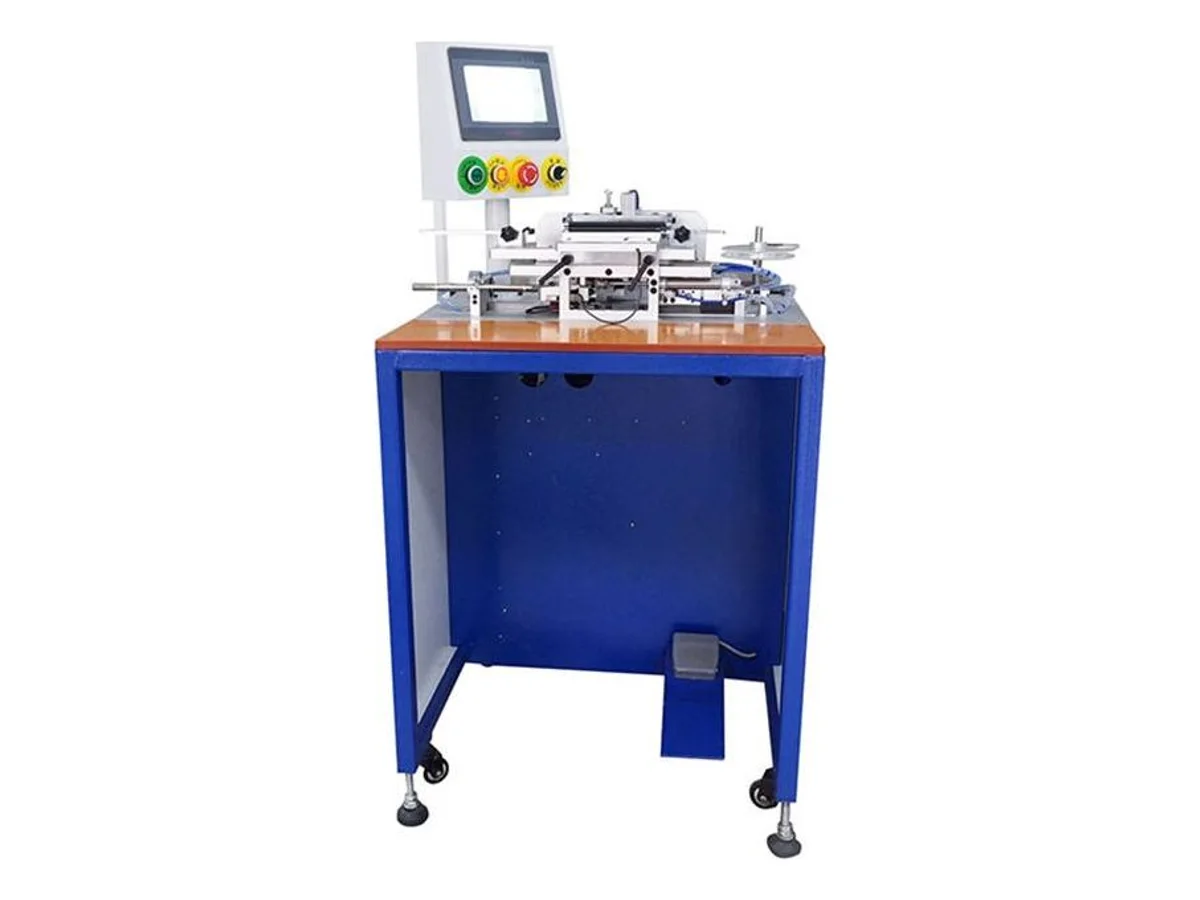
The WM-477 is a compact taping cabinet for small flat battery cells. The operator lays the cell on the located nest, the machine feeds high-temperature tape off a tensioned reel, cuts it and presses it onto the side the recipe calls for — all in one pneumatic stroke, at 1,500 to 1,800 pieces per hour and ±0.15 mm placement. It takes workpieces up to 150 × 150 mm and 1 to 8 mm thick, runs on a Mitsubishi PLC with touch screen, and the whole station is 500 × 700 × 540 mm and 60 kg — small enough to sit at the end of a cell assembly bench instead of taking a floor bay.
Specifications
| Function | Automatically pastes high-temperature tape onto the sides of a flat battery cell |
|---|---|
| Max. taping size | 150 × 150 mm |
| Taping thickness | 1 – 8 mm (over 8 mm can be customized) |
| Accuracy | ±0.15 mm |
| Production efficiency | 1,500 – 1,800 pcs/h |
| Electrical control system | Mitsubishi (Japan) PLC with touch screen man-machine interface |
| Pneumatic components | SMC and AirTAC (Taiwan) |
| Weight | 60 kg |
| Dimensions | 500 × 700 × 540 mm |
| HS Code | 8479.89 (common reference — final classification confirmed by your customs broker) |
| Certification | CE (certificate provided with shipment) |
Key features
- One stroke does the whole job — the machine feeds tape off the reel, cuts it to length and presses it onto the cell, so the operator only loads and unloads
- Sized for small cells — up to 150 × 150 mm and 1 to 8 mm thick, with ±0.15 mm placement accuracy in the specification, at 1,500 to 1,800 pieces per hour
- No vacuum pump and no air receiver in the cabinet — we build it around a plain filter-regulator, which is why the whole station weighs 60 kg and fits in 500 × 700 mm of floor
- Foot pedal under the open knee space starts the cycle, so both hands stay on the cell rather than reaching for a button
- Located nest with a knurled adjustment knob and T-slotted table — set the tape position once and it repeats piece after piece instead of relying on the operator's eye
- Mitsubishi PLC and touch screen, SMC and AirTAC pneumatics, levelling feet and casters — spares your maintenance team can buy locally, and a machine two people can roll to a new cell line
- Free sample test — send us your cells and your tape, we run them on this machine and send you the video before you order
What it processes
- Insulation taping of small prismatic and pouch lithium cells up to 150 × 150 mm in pack assembly
- High-temperature tape on cell faces, edges and cover plates from 1 to 8 mm thick
- Small-format cell lines where a 400 × 400 mm taping station would be oversized for the part
- Harness shops adding a battery module cell to their build, needing one taping station rather than a floor bay
Suited for: small flat lithium cells, cover plates and insulation pieces up to 150 × 150 mm and 1 to 8 mm thick, taped at 1,500 to 1,800 pieces per hour with ±0.15 mm placement. It is the compact end of our flat-cell taping range: a 60 kg cabinet on casters with a 500 × 700 mm footprint, a foot pedal in the knee space, and a filter-regulator instead of a vacuum pump and air receiver.
Not suited for: cells or plates larger than 150 × 150 mm — that is where the WM-476 lithium battery tape sticking machine takes over, with the same 1–8 mm thickness, the same ±0.15 mm accuracy and the same 1,500–1,800 pcs/h, on a 400 × 400 mm table and a 150 kg frame. It is also not a rework tool: for taping cell edges and tab stacks by hand at a repair or prototype bench, with no bench footprint at all, use the cordless WM-4112 battery cell taping gun. And it is not a harness machine — round bundles need a rotating head, so use the WM-4136 extended-height taping machine for Φ3–40 mm, the WM-465 desktop continuous taping machine for Φ2–15 mm, or the WM-4105 spot taping workstation for programmed bands on Φ3–12 mm bundles. Cells thicker than 8 mm are offered as a customization — send the dimensions through custom machine inquiry and we will scope it.
Tell us the cell format, the material thickness and the tape you use. We run your samples on the actual machine and send you the trial video before you place the order.
Engineering knowledge
Choose and troubleshoot this process
- How to Choose a Wire Harness Taping MachineChoose harness taping equipment by harness geometry, tape material, overlap, branch handling, wrap length, tension control and production mix.
- Two-Point Taping of Small Wire Coils: Check the Fixture Before the MachineA small-coil taping application analysis: distinguish wire diameter from bundle size, check head clearance and define a two-band trial.
- Wire Harness Taping Defects: Causes and Corrective ActionsTroubleshoot tape gaps, excessive overlap, wrinkles, lifted edges, bundle deformation, tension variation and unstable start or finish positions.
WM-477 — common questions
How do I choose between the WM-477 and the larger WM-476?
By workpiece size, tape placement and the required workflow — the two machines quote identical taping thickness (1–8 mm), identical accuracy (±0.15 mm) and identical output (1,500–1,800 pcs/h). The WM-477 takes cells up to 150 × 150 mm on a 500 × 700 × 540 mm cabinet weighing 60 kg. The WM-476 takes plates up to 400 × 400 mm, and to carry that stroke it becomes a 60 × 60 × 118 cm frame weighing 150 kg. If your largest cell fits inside 150 × 150 mm, the WM-477 offers the smaller, lighter cabinet; validate tape placement on your actual cell.
What voltage and power does it need?
The SMC and AirTAC pneumatic components receive air through the cabinet filter-regulator, so the machine requires compressed air as well as mains power. Tell us your supply (110 V or 220 V, 50 or 60 Hz); electrical and air requirements are confirmed on the quote.
Is the touch screen available in English?
We set the voltage for your country and ship the English interface and manual. We demonstrate the supplied control layout during the sample trial.
Can it wrap tape all the way around the cell?
Not on this model. The WM-477 pastes tape onto the side of the cell that is presented to the head — it applies tape on different sides of a flat battery as the customer requires, with a repeat cycle for each side. It is not a rotary wrapper that spins a full circumference band. If you need a full loop around a bundle, that is a different machine family — the harness taping machines linked below.
How thick a cell can it take, and what if mine is thicker?
1 to 8 mm as published. Thickness over 8 mm requires customization, so a thicker cell is a scoping question, not a refusal. Send us the cell dimensions and the tape and we will come back with what the customization involves.
Related machines in Tape Wrapping
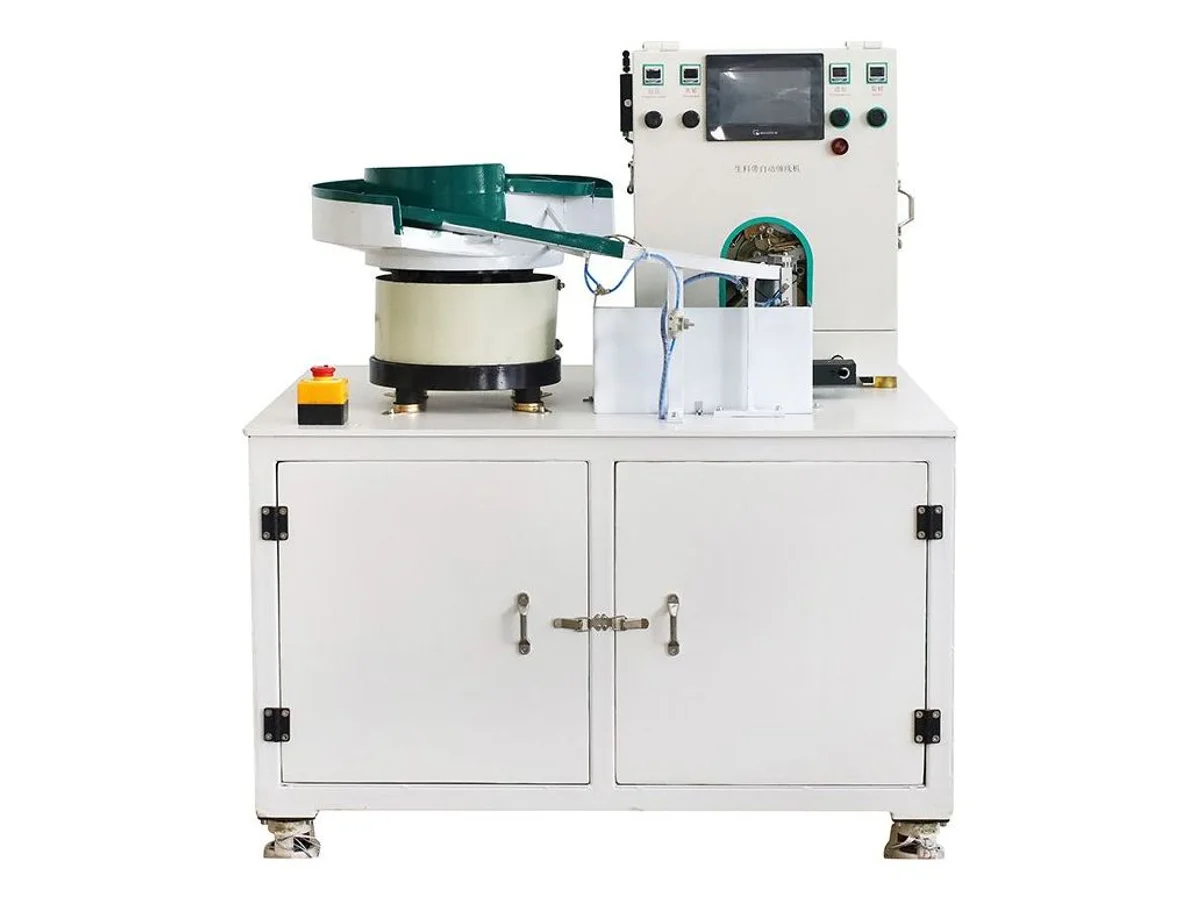
Automatic PTFE Thread Seal Tape Winding Machine for NPT and ZG Fittings
Model WM-461
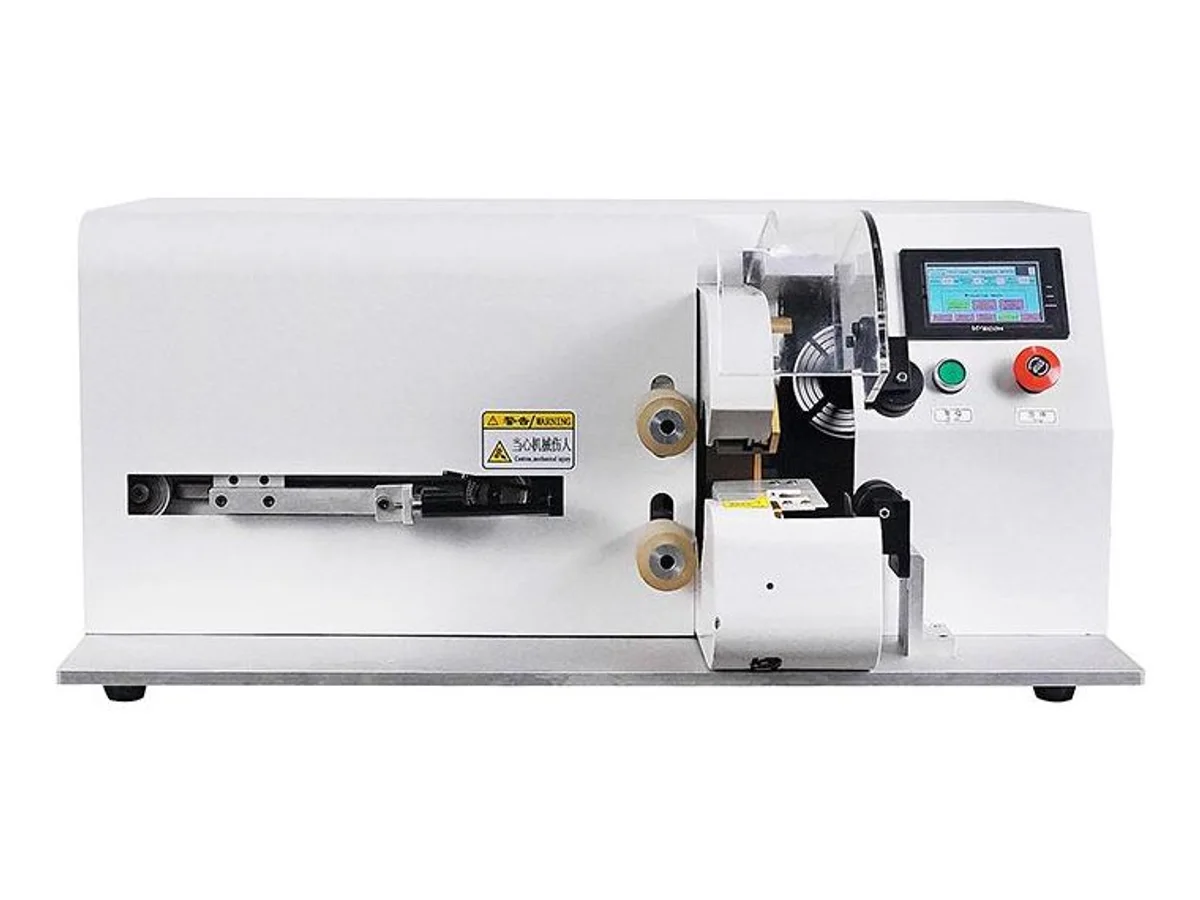
Automatic Wire Harness Taping Machine for Bundles Φ3–30 mm
Model WM-467
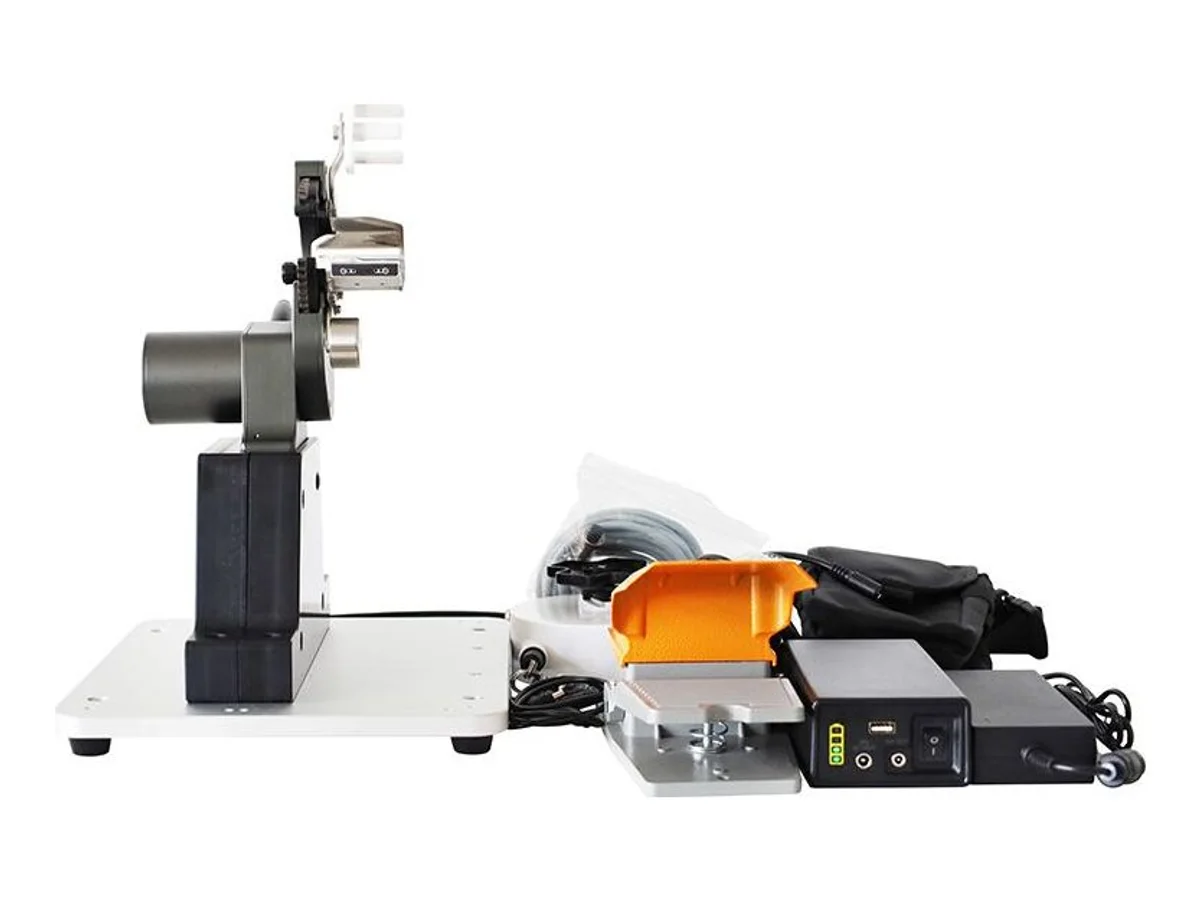
Battery-Powered Tape Wrapping Machine, Handheld and Desktop
Model WM-4111