Selection guide
Wire Harness Manufacturing: From Drawing to Final Test
Plan wire harness production from the drawing: cutting, stripping, seals, crimping, housing insertion, taping and final electrical checks.
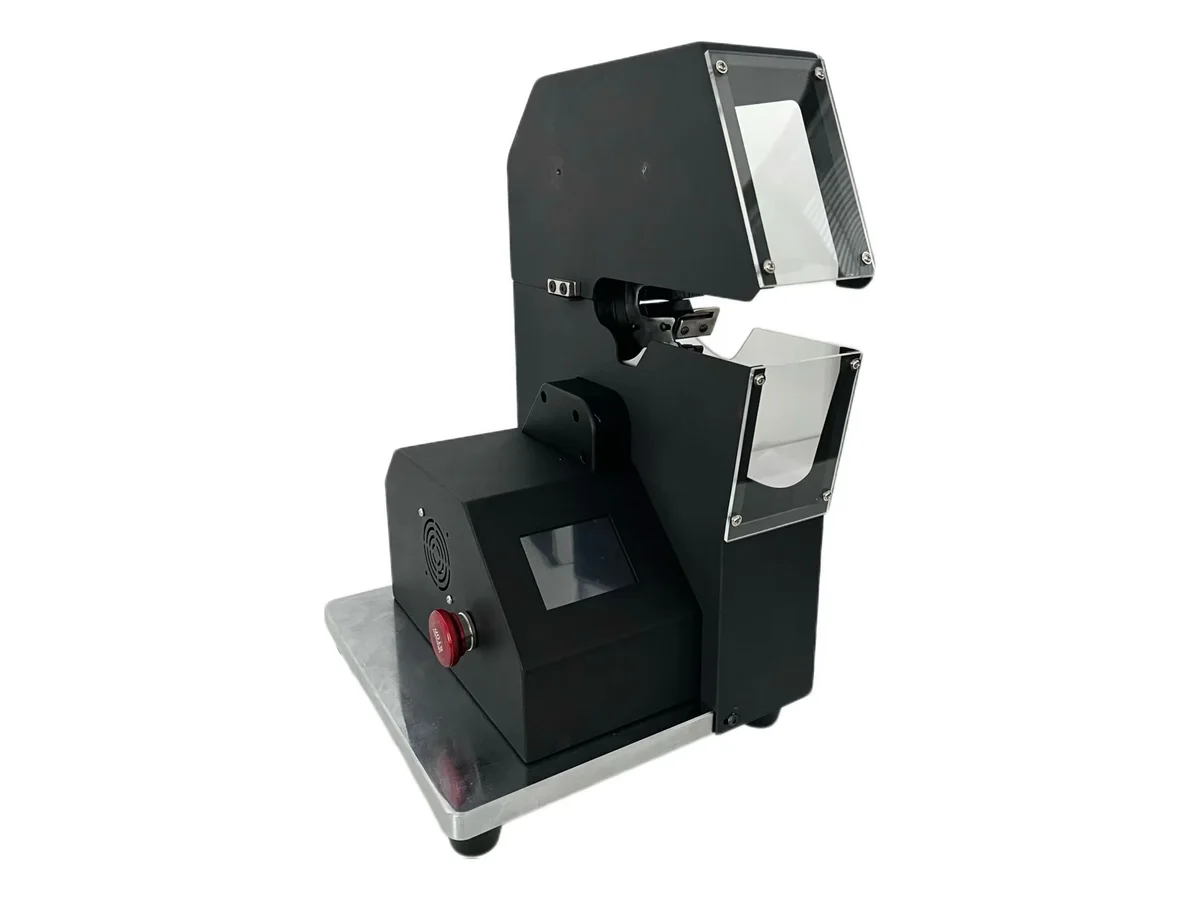
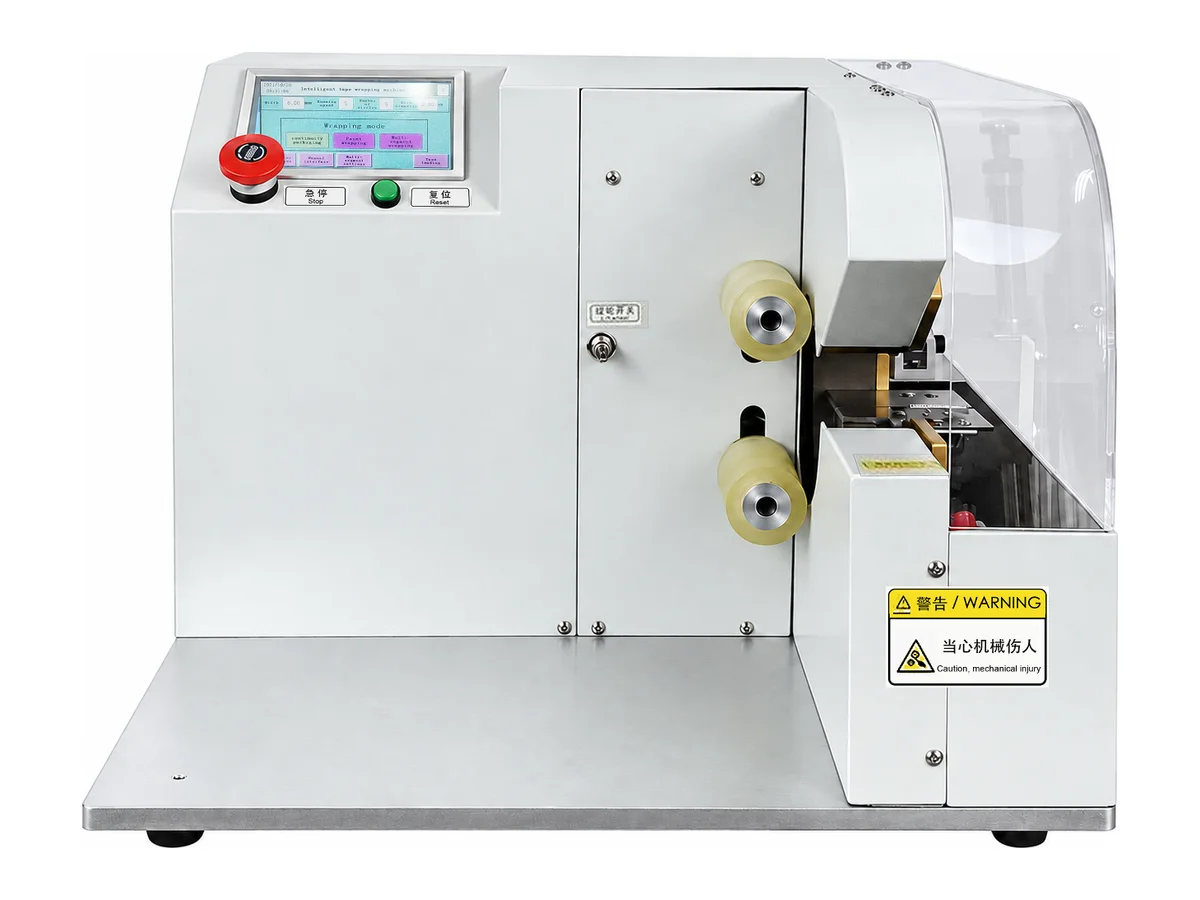
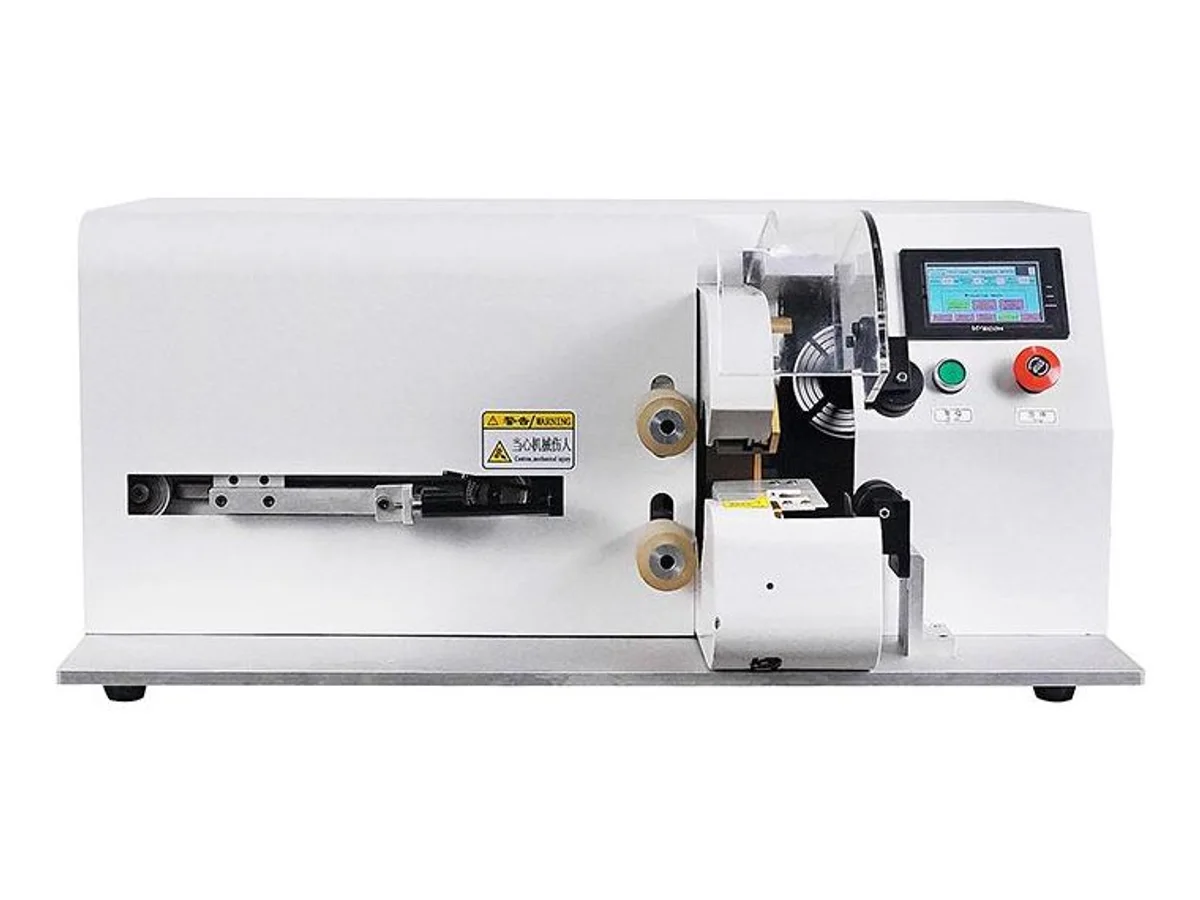
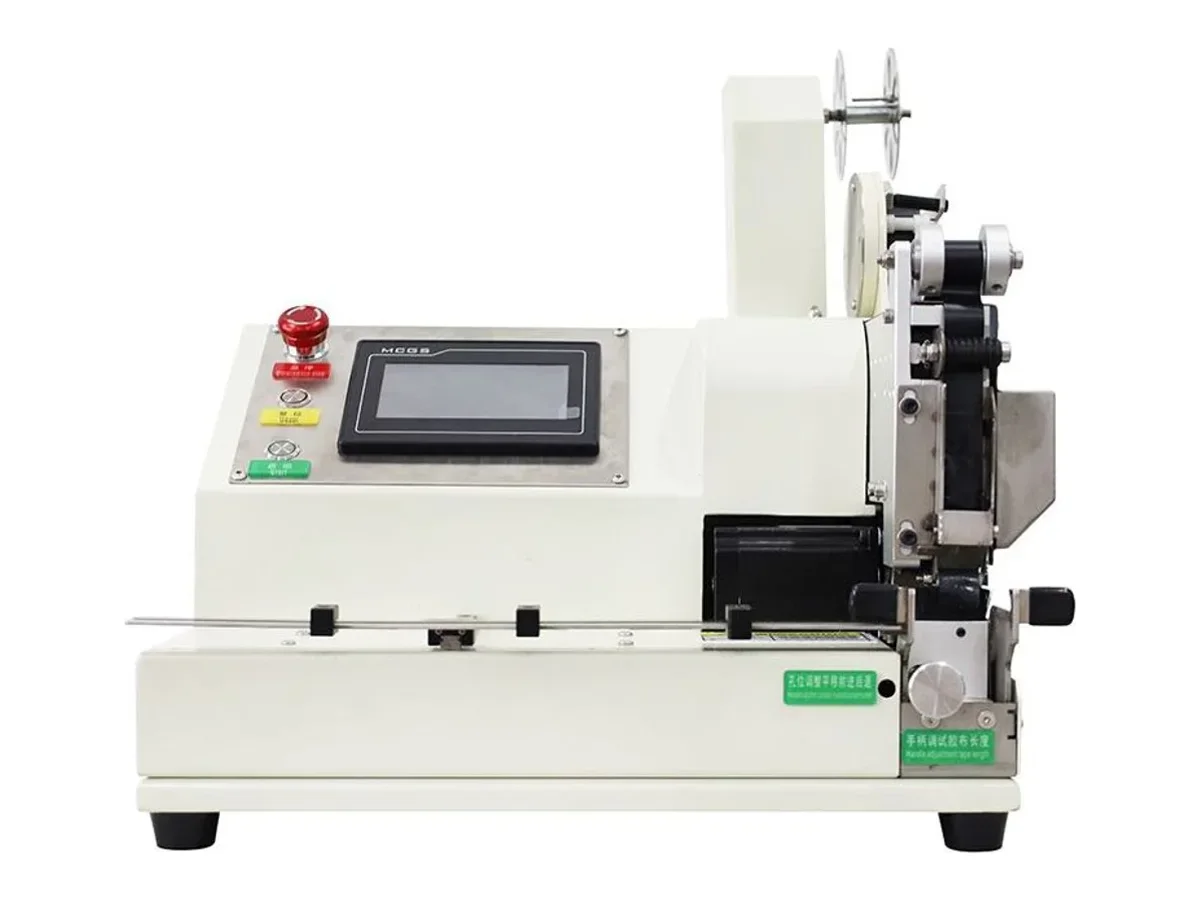
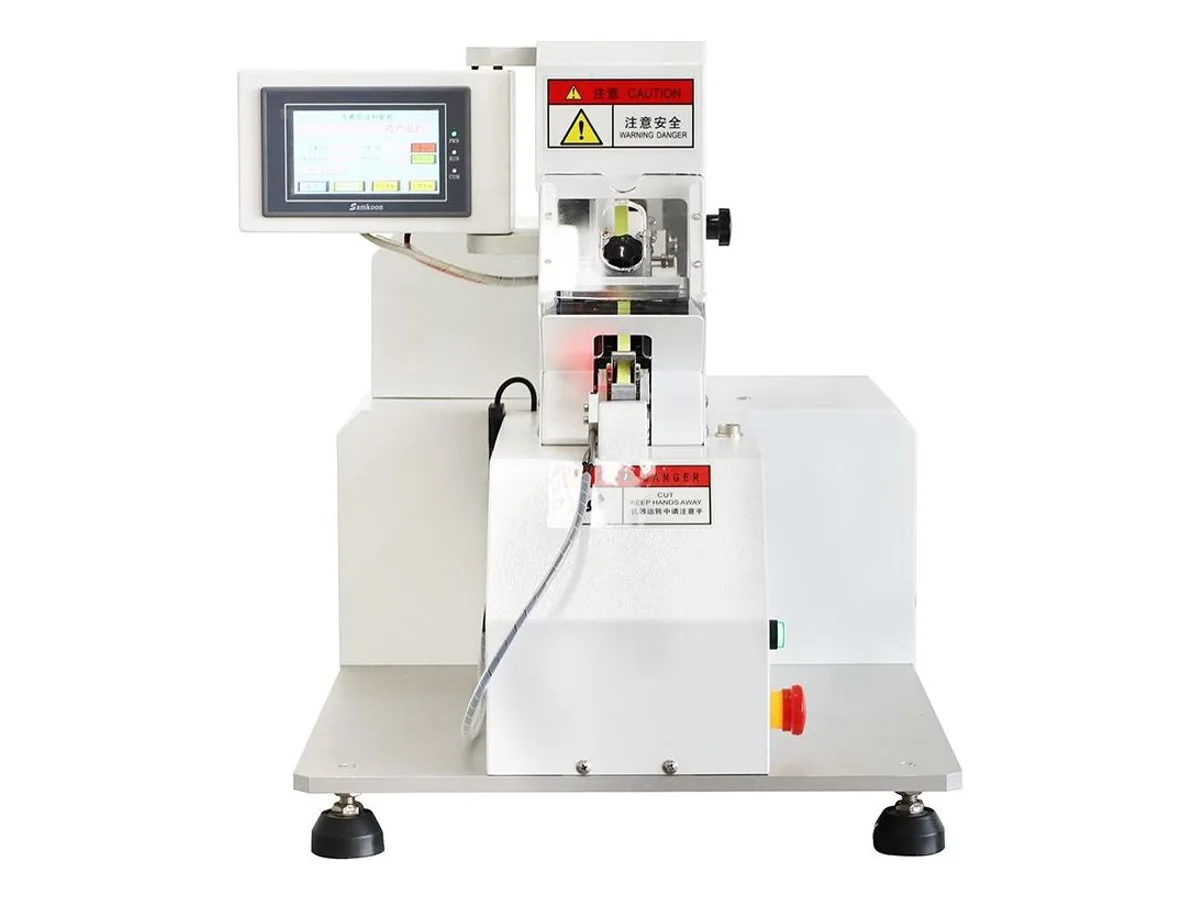
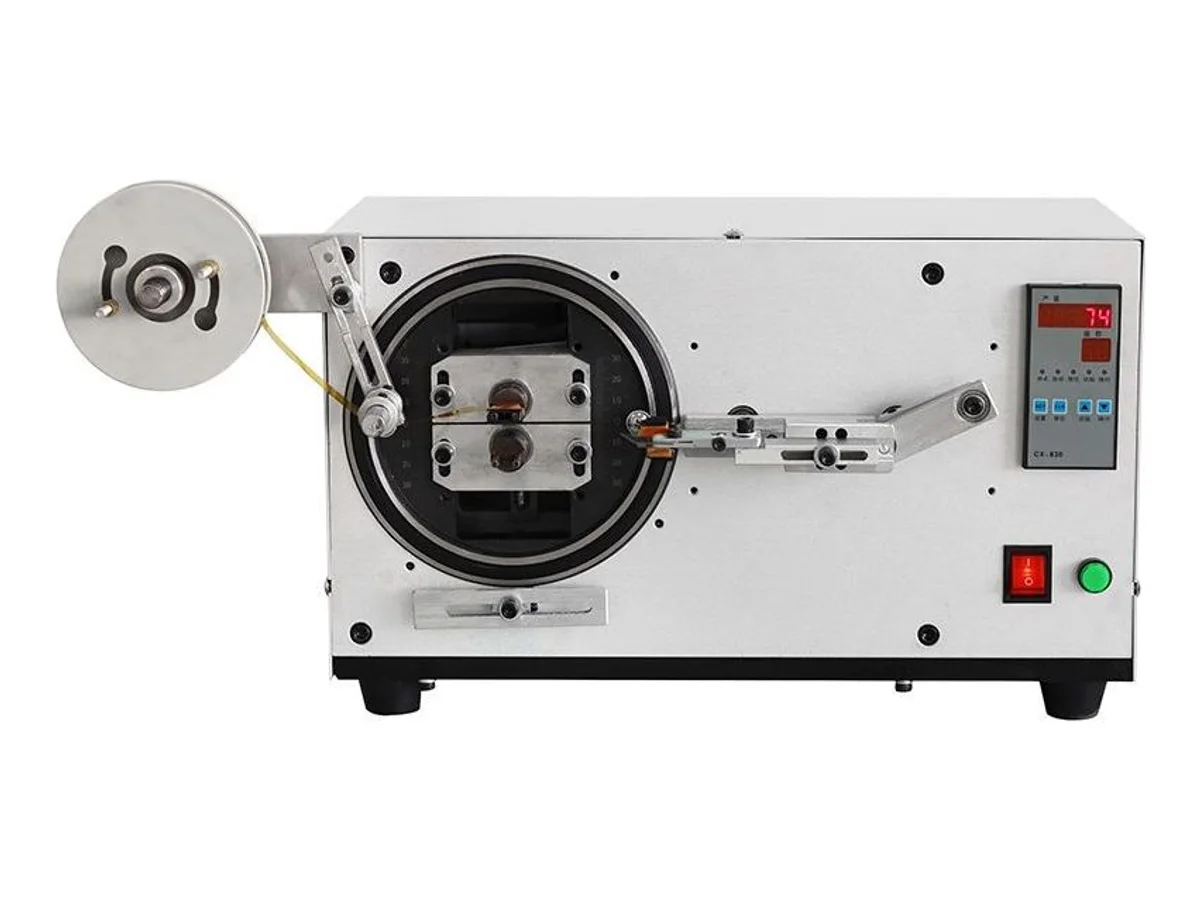
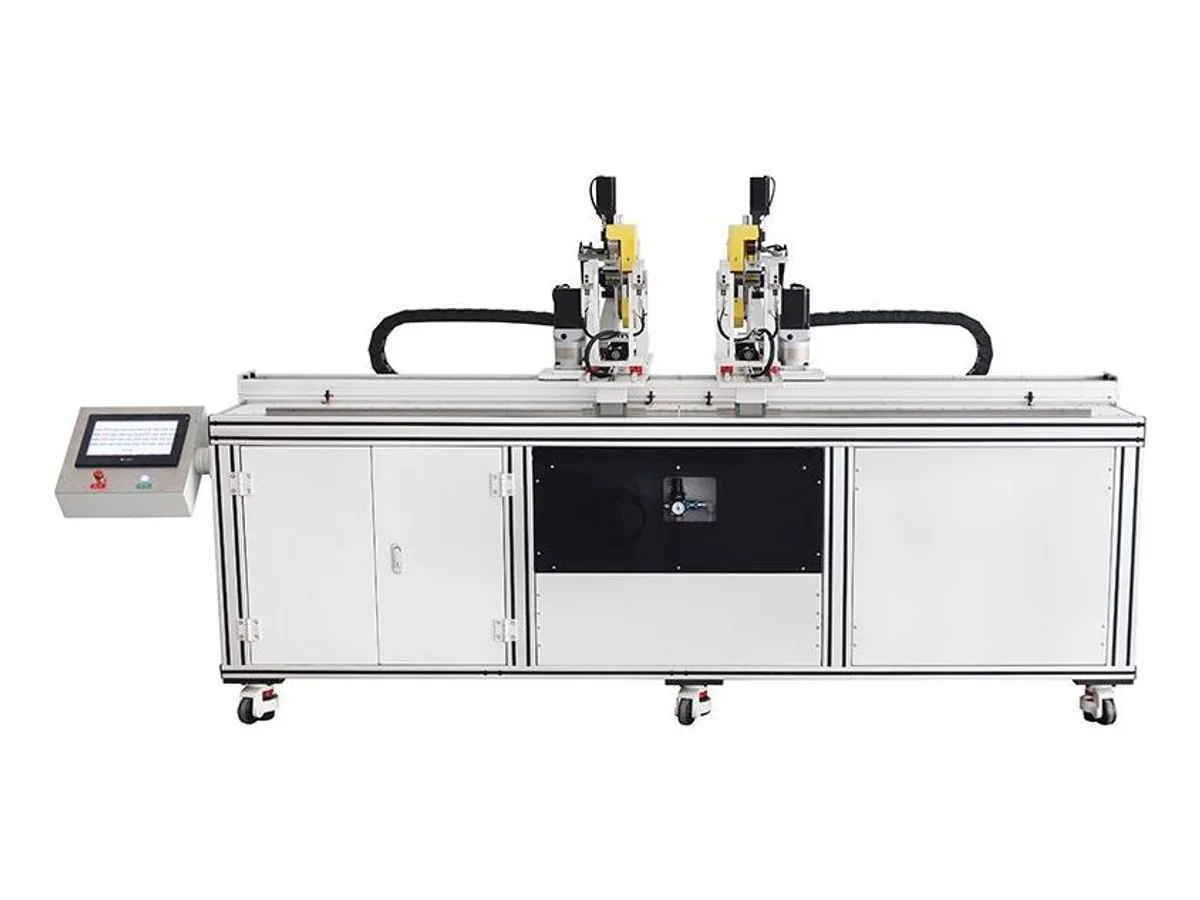
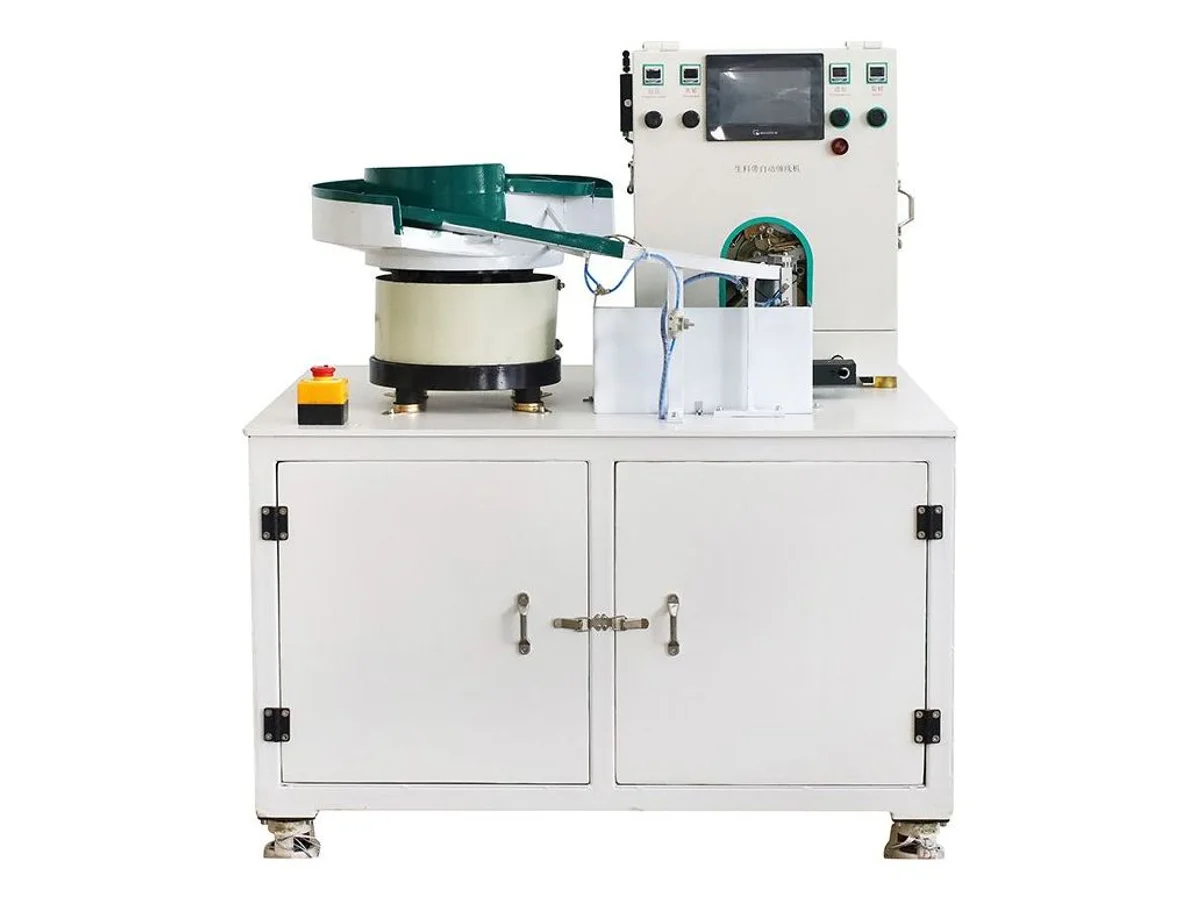
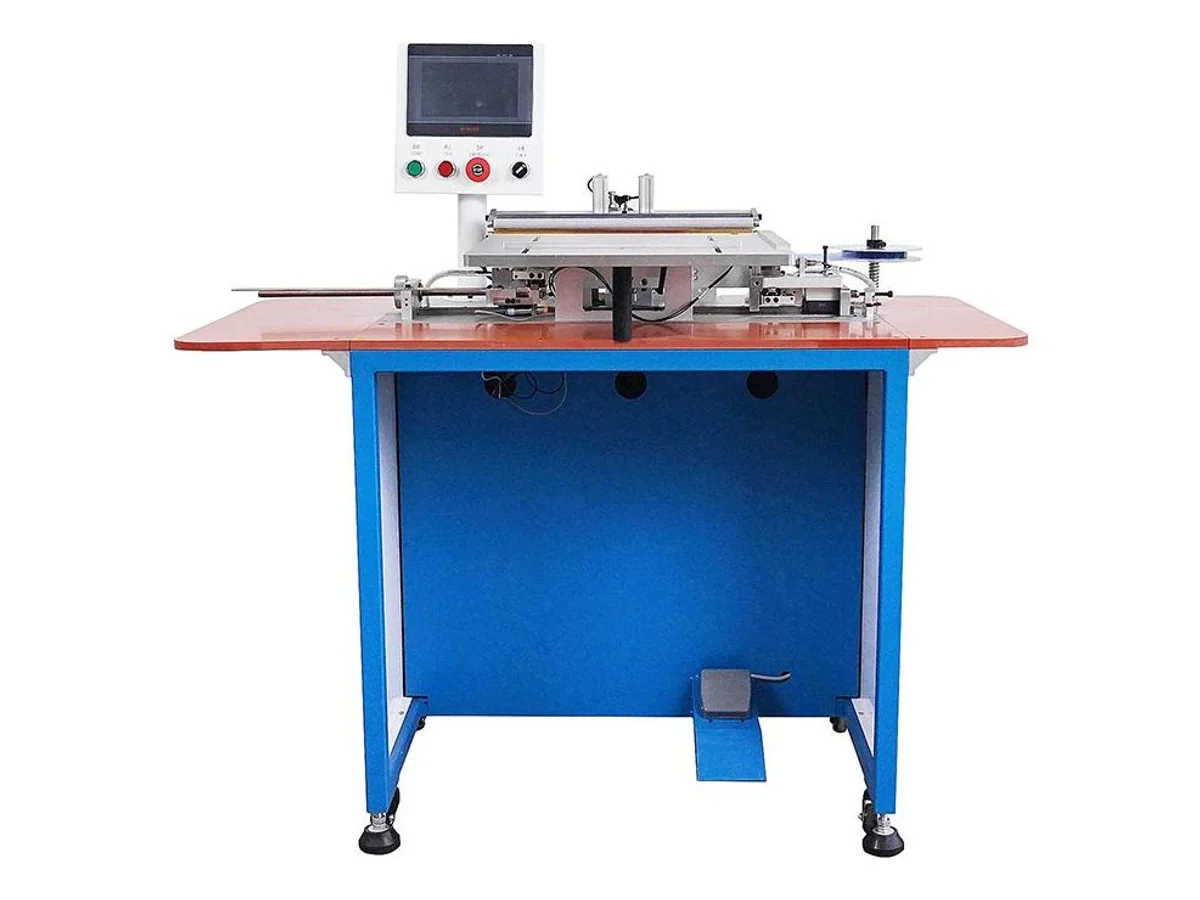
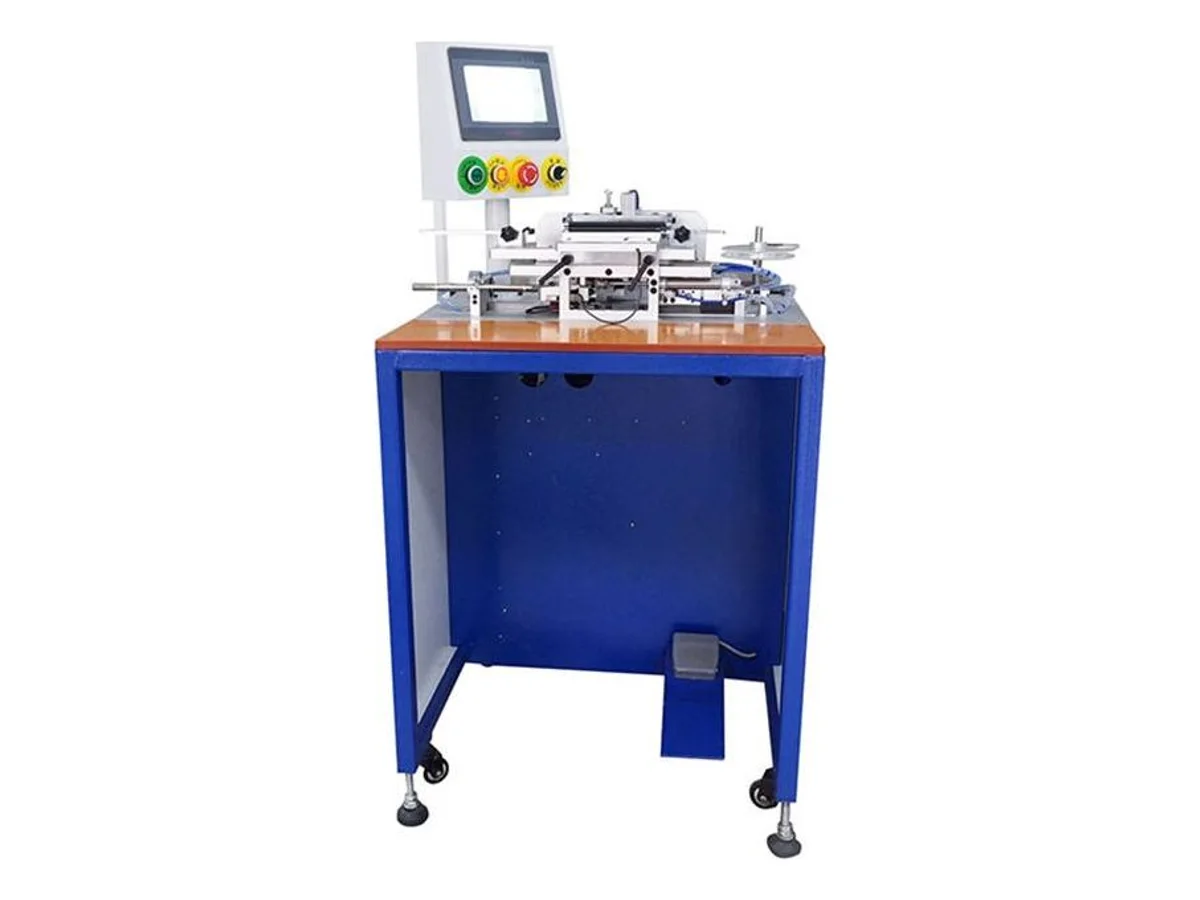
Read engineering guide →Tape wrapping machines apply controlled bands or continuous coverage to wire harnesses, coils, battery cells and fittings. Harness heads handle spot taping and spiral wrapping; PTFE machines wrap threaded fittings; coil and cell stations apply insulation to their specific workpieces. Select the workpiece below before comparing bundle size, tape width, overlap and output. Cable identification labels and direct marking have their own Labeling & Marking category. Send your bundle and tape roll, and we show the wrap position and finished coverage on video before you order.
Wire harness: compare continuous spiral wrapping with spot taping. Threaded fittings: go to the WM-469 PTFE thread-seal wrapper, or the WM-466 thread-cleaning and wrapping machine if cleaning is also needed. For batteries or wound coils, compare the dedicated groups below. Send the actual workpiece and tape so we can confirm holding, coverage and release.
This category covers five distinct jobs that all happen to involve tape. Harness taping — bundling, insulating and marking wire looms — is the biggest family, from handheld wrappers to bench machines with powered cable traction. Thread sealing wraps PTFE tape onto pipe fittings: the WM-469 covers 1/8–2 inch at 3–5 seconds a piece, and the WM-466 cleans the thread and wraps it in one pass at 3–5 pcs/min. Battery taping puts high-temperature tape on cells: the WM-477 tapes cell sides and the WM-476 tapes both faces and the top of flat cells, each at 1,500–1,800 pcs/h. Coil taping finishes wound parts — the WM-468 wraps a toroid in 1.5 s, the WM-470 runs bobbin coils two-axis at 46 pcs/min holding ±0.2 mm. And shielding wrap is its own discipline: the WM-463 lays copper foil onto round cable up to Ø10 mm.
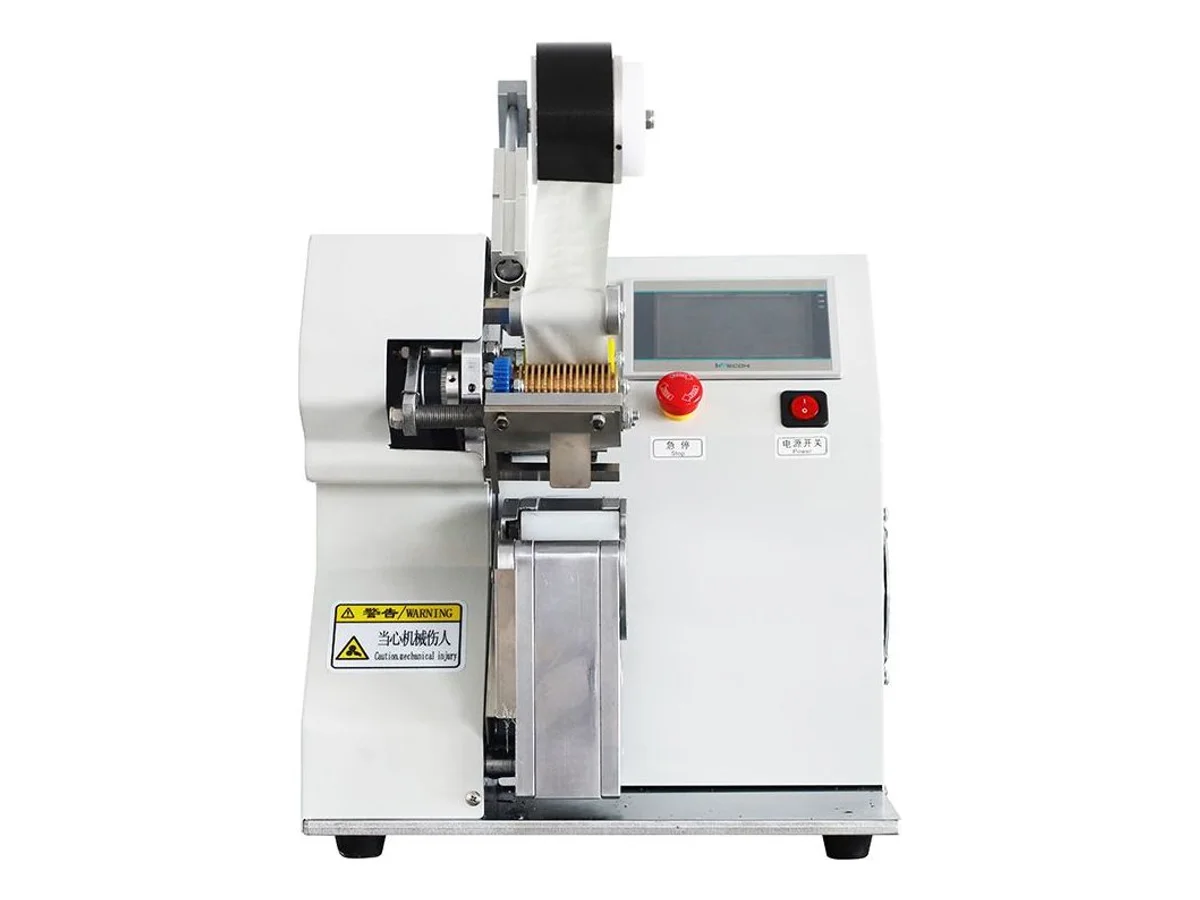
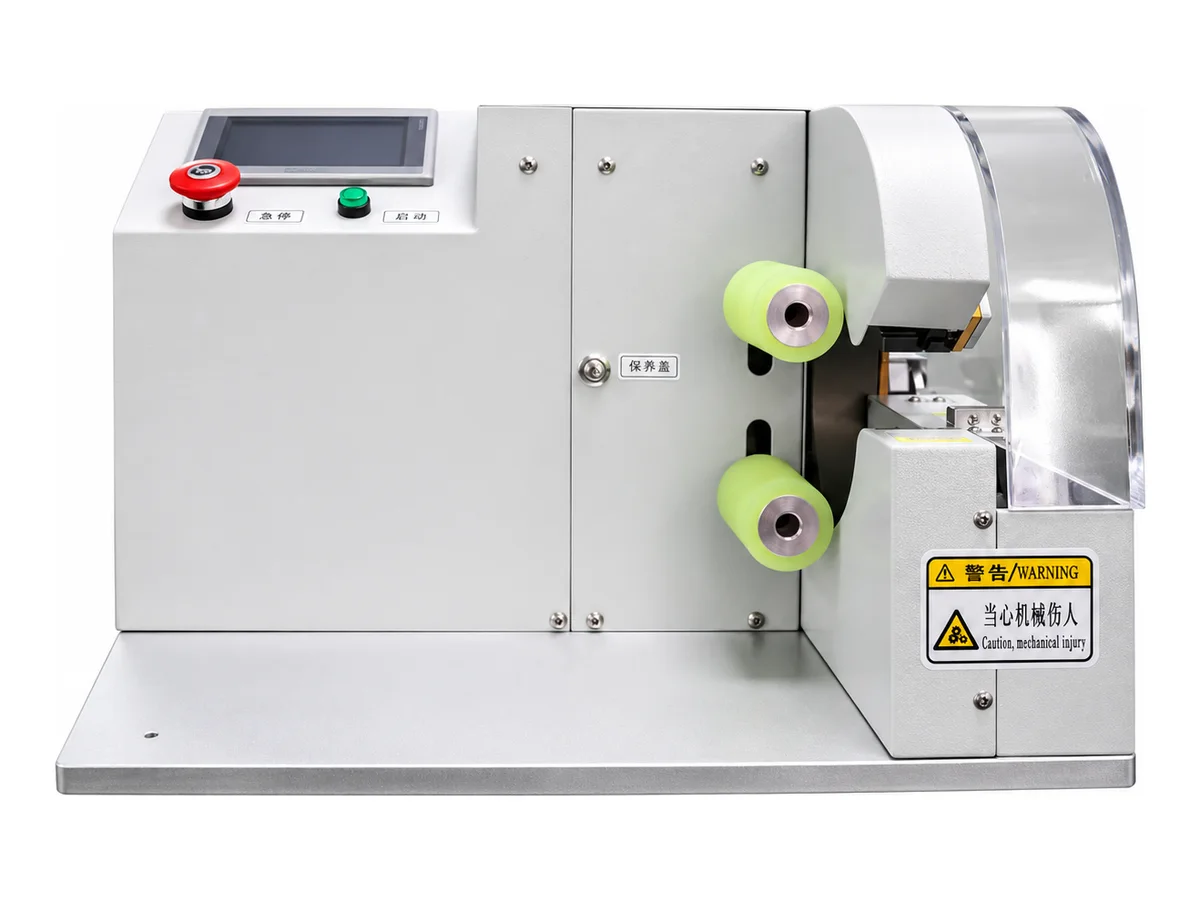
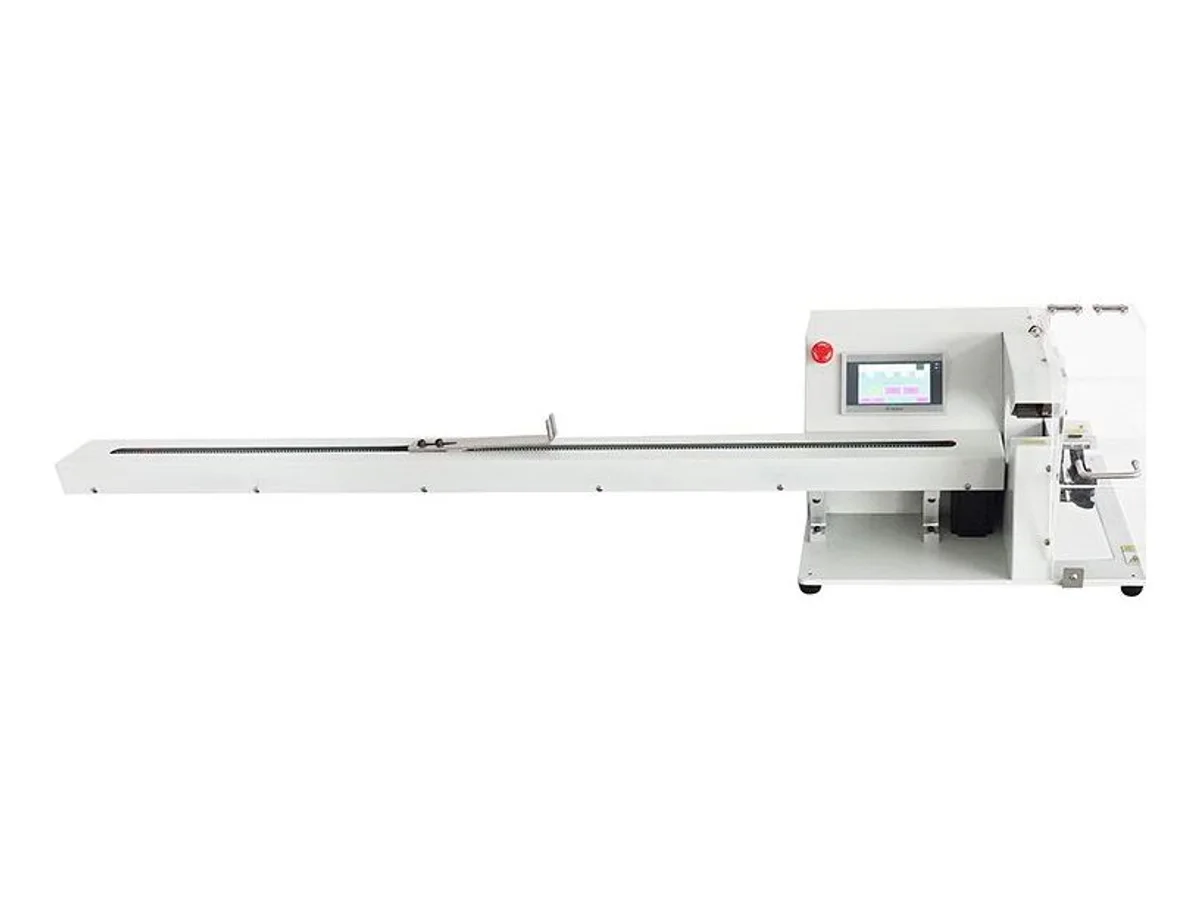
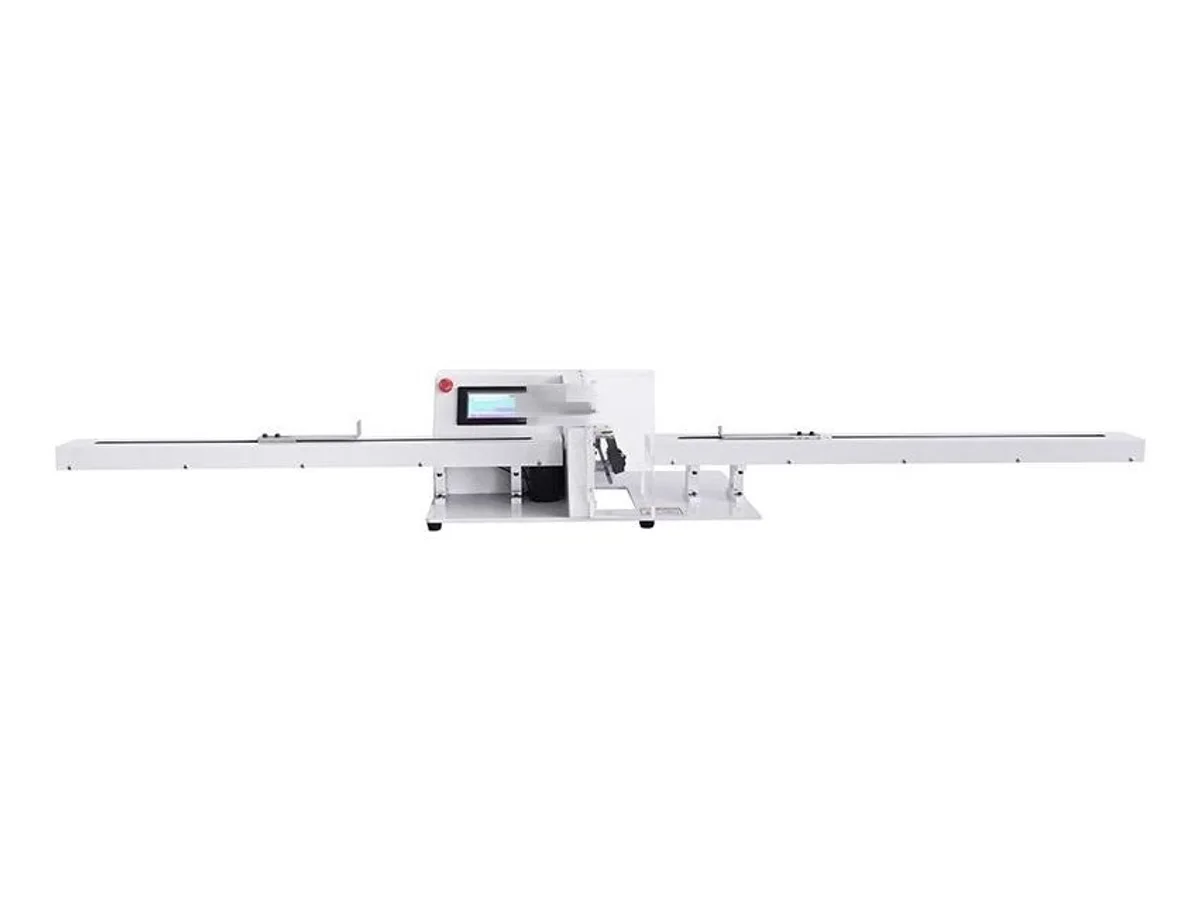
Continuous spiral covers the whole length — the WM-465 spins 1–6 turns per second on Ø2–15 mm bundles (an oversized build takes Ø16–35), the WM-467 feeds 2–30 mm tape onto Ø3–30 mm looms with no length limit, and the WM-4136 extends that to Ø40 mm bundles. Spot taping fixes discrete points instead: the WM-4105 handles Ø3–12 mm bundles with 15–45 mm tape, the WM-4205 places multiple spots along rigid pipe and wire of 6–28 mm pneumatically, and the WM-464 works 500–2,500 mm coils on two stations. Need the wrap at an exact position? the WM-471 pulls the cable itself — 1,050 mm of powered traction, wrap position held to ±1 mm. Handheld is for repair benches and small batches: the WM-4110 and the cordless WM-4111 both take Ø8–35 mm, and the WM-4112 is shaped for battery cells and tabs.
For flag labels, self-laminating labels, marker sleeves and direct marks, see wire labeling, printing and marking machines. Their main job is identification; harness tape heads bind or protect the bundle.
Watch harness taping demonstrations: the WM-4105 clip shows successive spot bands and the finished taped section; the WM-465 clip shows continuous wrapping. For formed coils and long bundles, compare WM-464 against the total length and wrap-point spacing. For short loops, use the small-coil fixture and clearance guide. For the full selection process, read how to choose a harness taping machine. We test your actual workpiece and tape so you can check loading, overlap and release.
| Machine | Type | Workpiece | Tape | Speed / output | Pick it for |
|---|---|---|---|---|---|
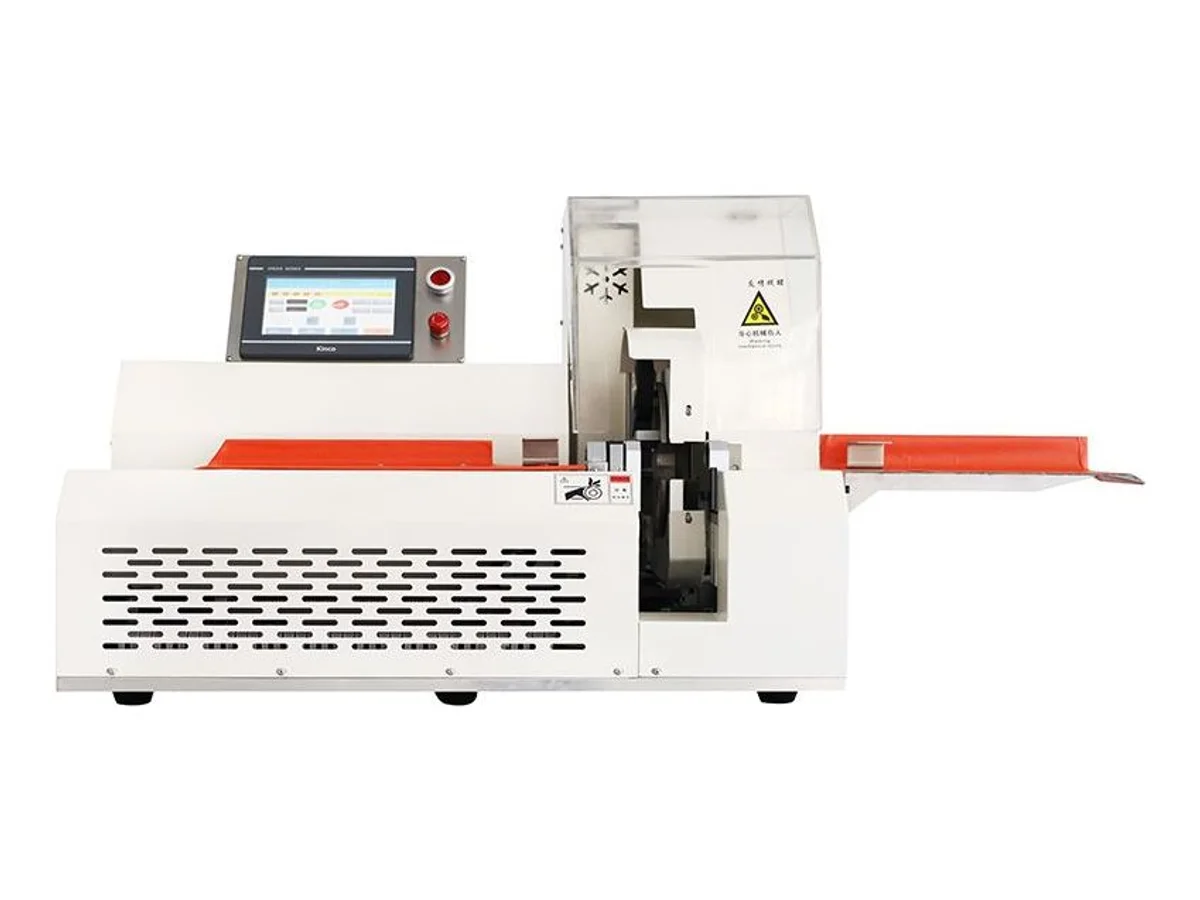
| WM-465 | Desktop continuous spiral | Ø2–15 mm (Ø16–35 oversized build) | — | 1–6 turns/s | Bench spiral wrap, speed on a dial |
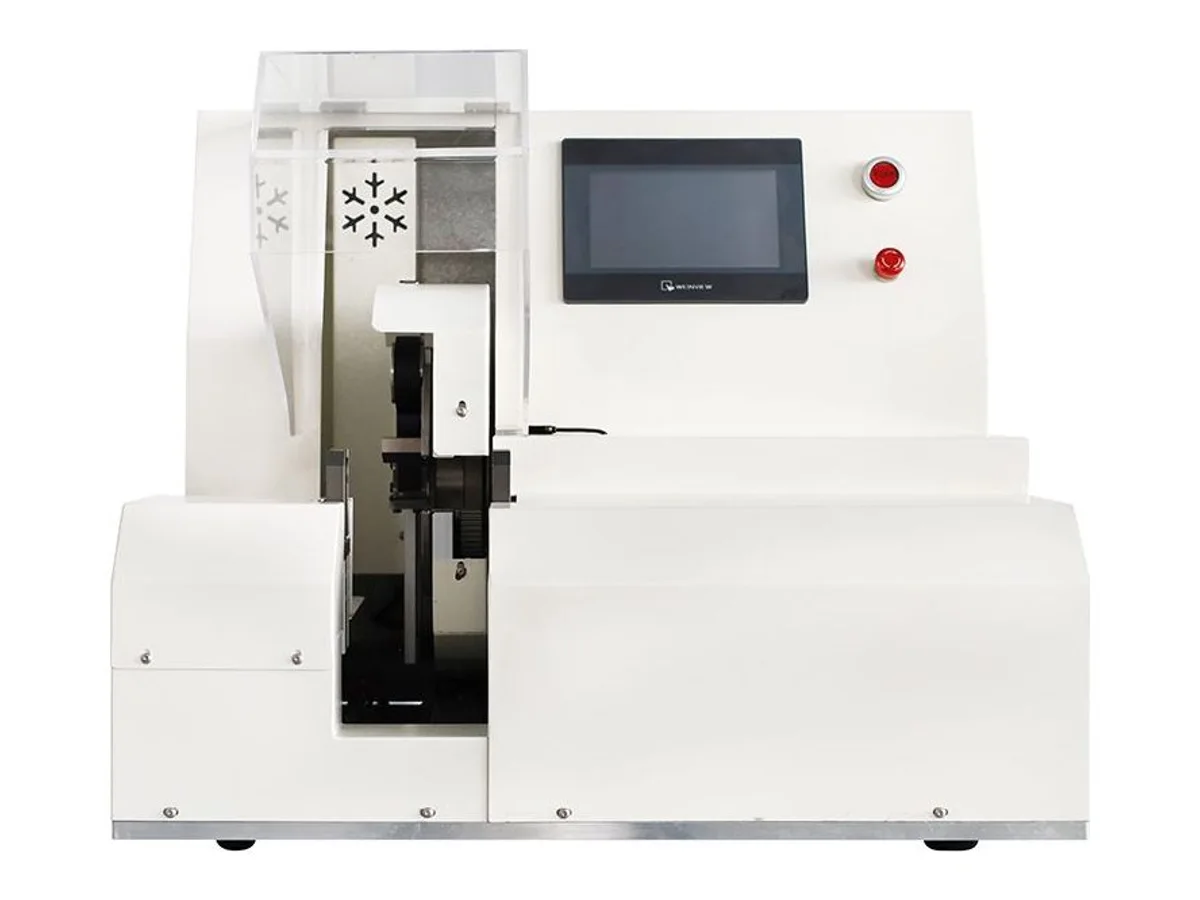
| WM-467 | Automatic harness taping | Ø3–30 mm | 2–30 mm | No length limit | Marking, fixing and insulating in one machine |
| WM-4136 | Extended-height spiral | Ø3–40 mm | 2–30 mm | No length limit | The biggest bundles in this family |
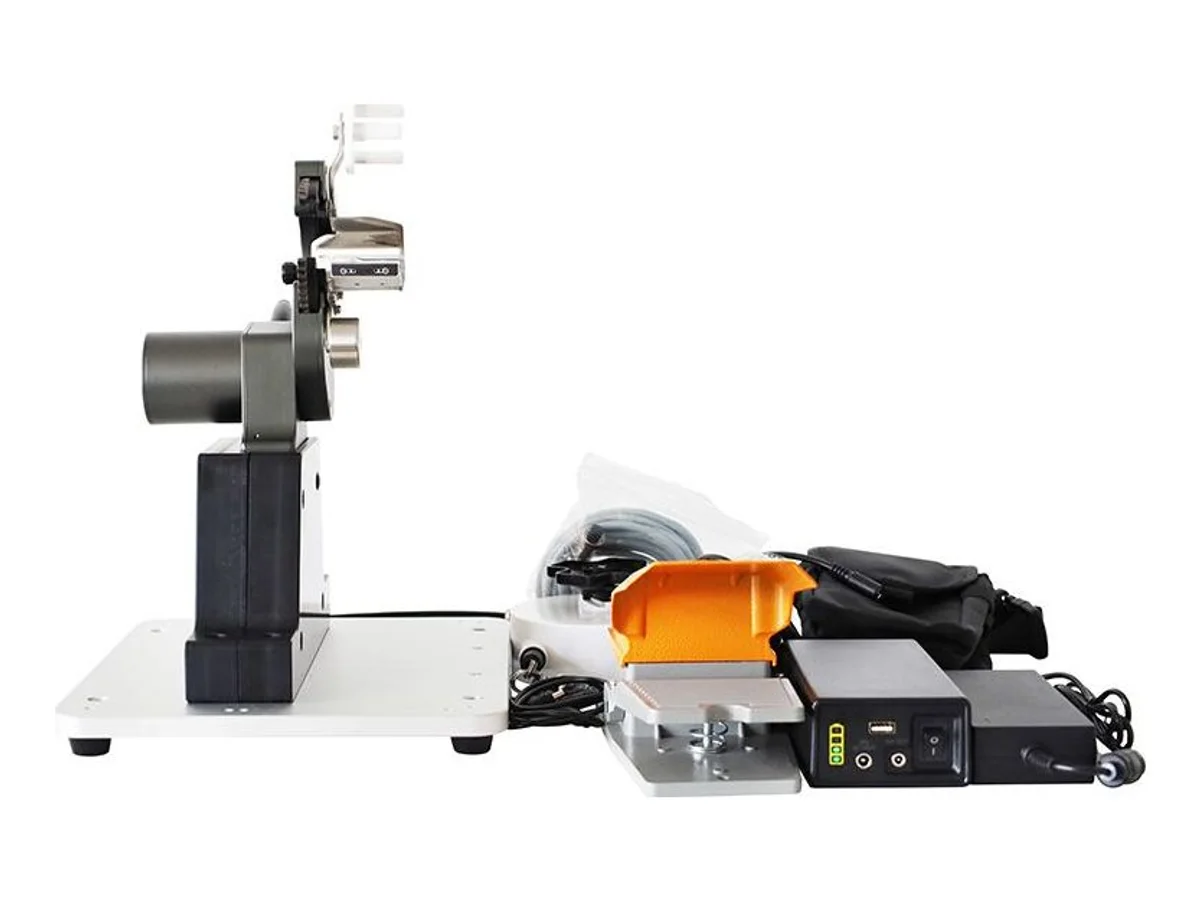
| WM-471 | Taping with cable traction | 1,050 mm powered pull | Flannel, acetate, electrical, polyester | Position ±1 mm | Wraps at exact positions along the harness |
| WM-4105 | Semi-automatic spot taping | Ø3–12 mm | 15–45 mm | 0–600 mm/s | Spot plus spiral on small bundles |
| WM-4205 | Pneumatic multi-spot | Rigid pipe & wire 6–28 mm | ≤40 mm | — | Several spots per rigid workpiece |
| WM-475 | Multi-point winding | Metal strips, rigid rods | — | 1 kW drive | Multi-point wraps, left-pull layout |
| WM-464 | Two-station spot taping | Coils 500–2,500 mm long | — | Two stations | Long bundles and wound coils |
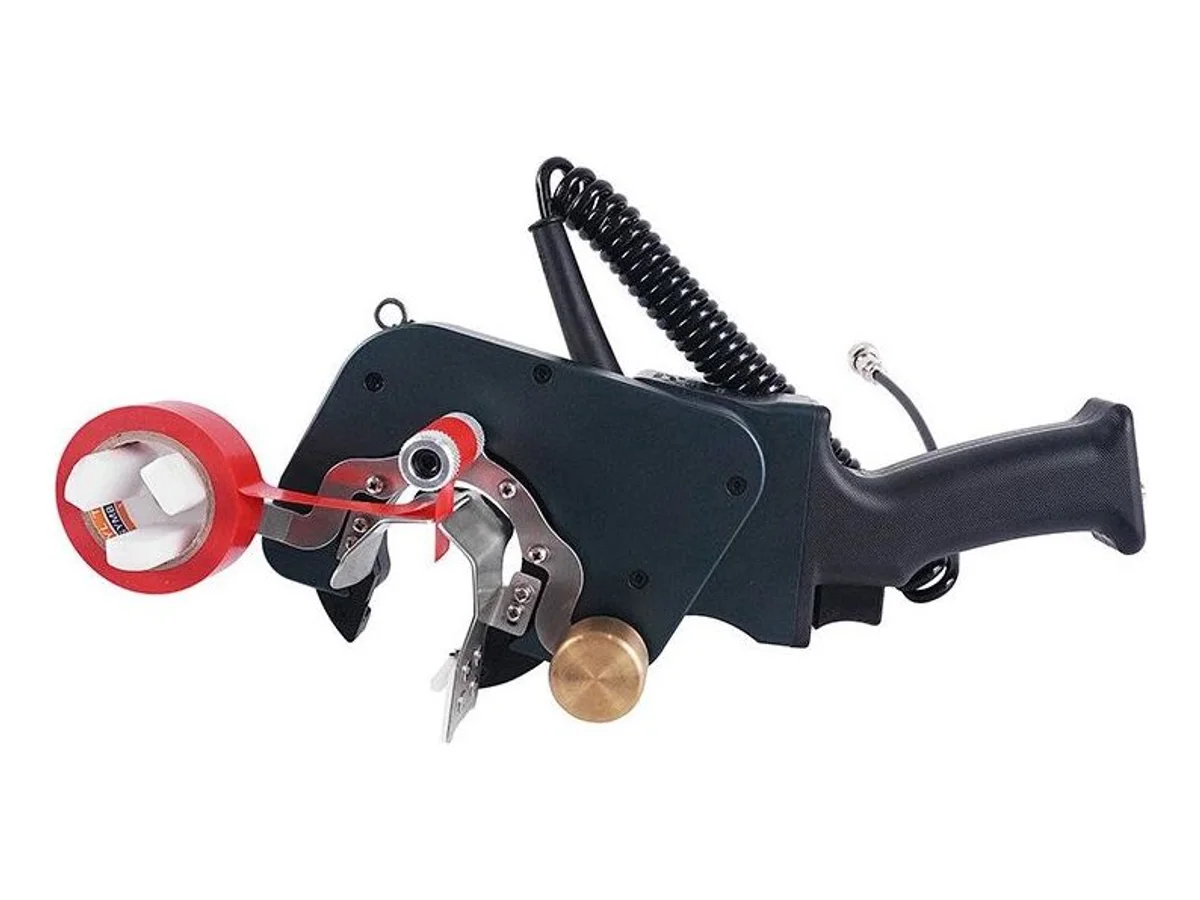
| WM-4110 | Handheld | Ø8–35 mm (5–55 custom) | 10–20 mm | Manual | Repair benches and small batches |
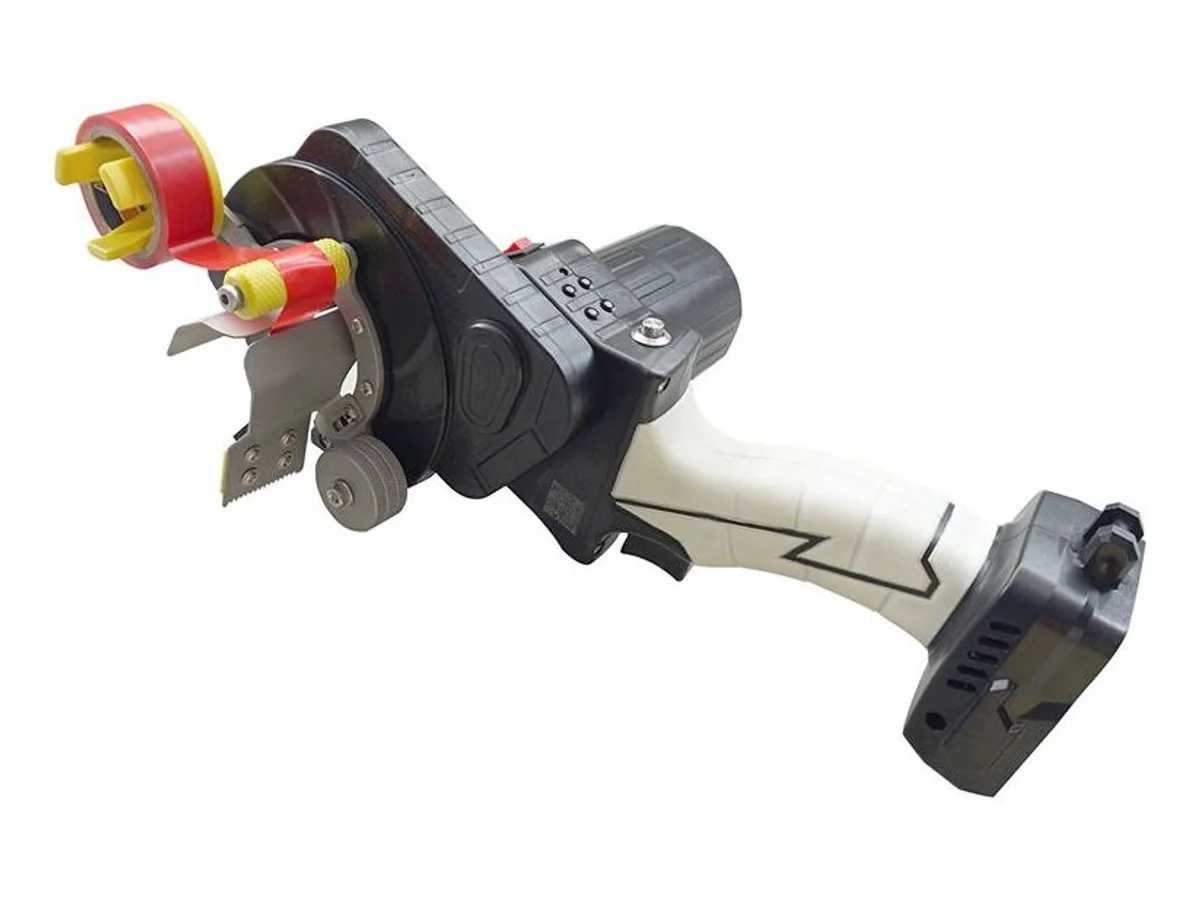
| WM-4111 | Handheld / desktop, battery-powered | Ø8–35 mm | 10–20 mm | Manual | Cordless taping anywhere on the floor |
| WM-4112 | Handheld for battery cells | Cells and tabs | PVC and cloth rolls | Manual | Pack-shop touch-ups without a bench |
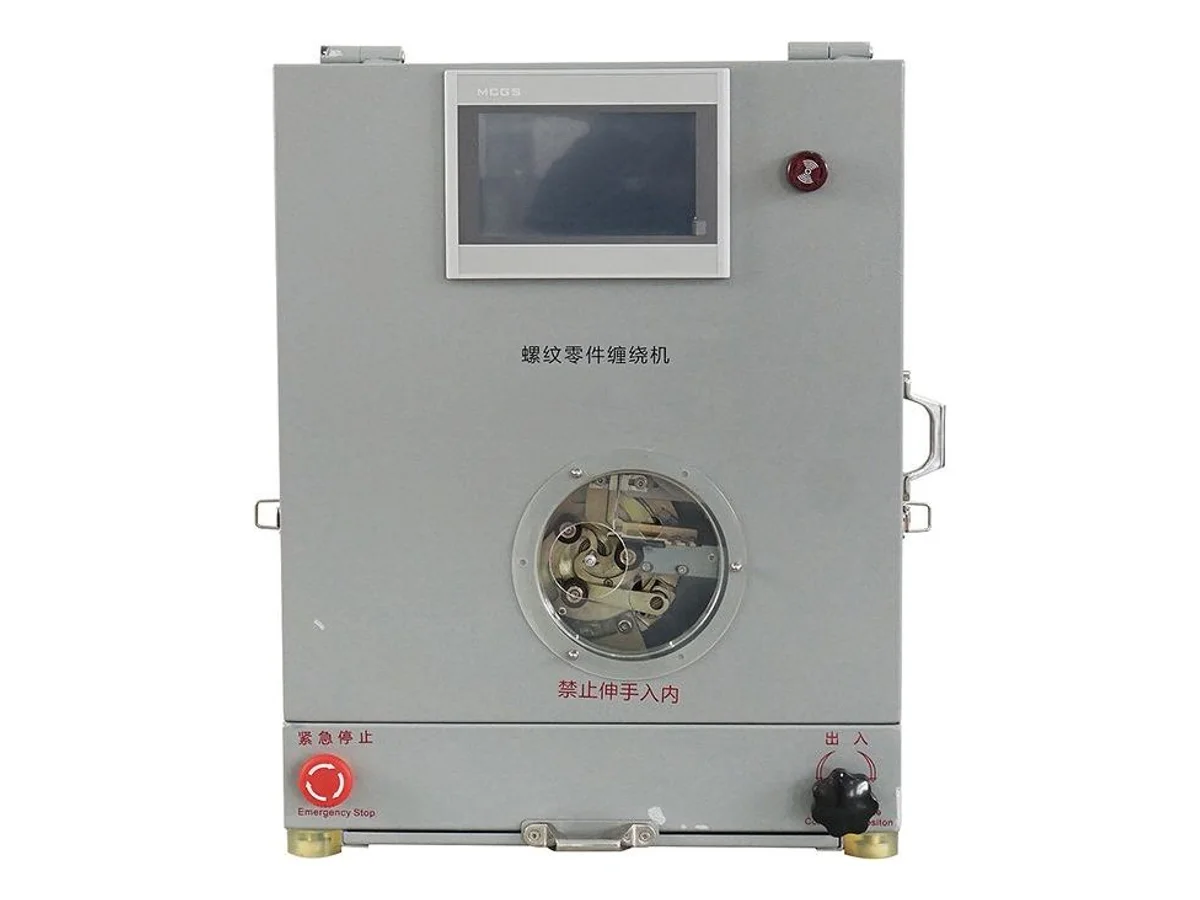
| WM-461 | PTFE thread-seal winding | NPT and ZG fittings | 5–14 mm × 0.1 mm | — | Automatic thread sealing |
| WM-469 | Compact PTFE wrapper | 1/8–2 in (2.5 in custom) | 5/7/10/14 mm | 3–5 s per piece | Fittings at a bench, 2–3 turns each |
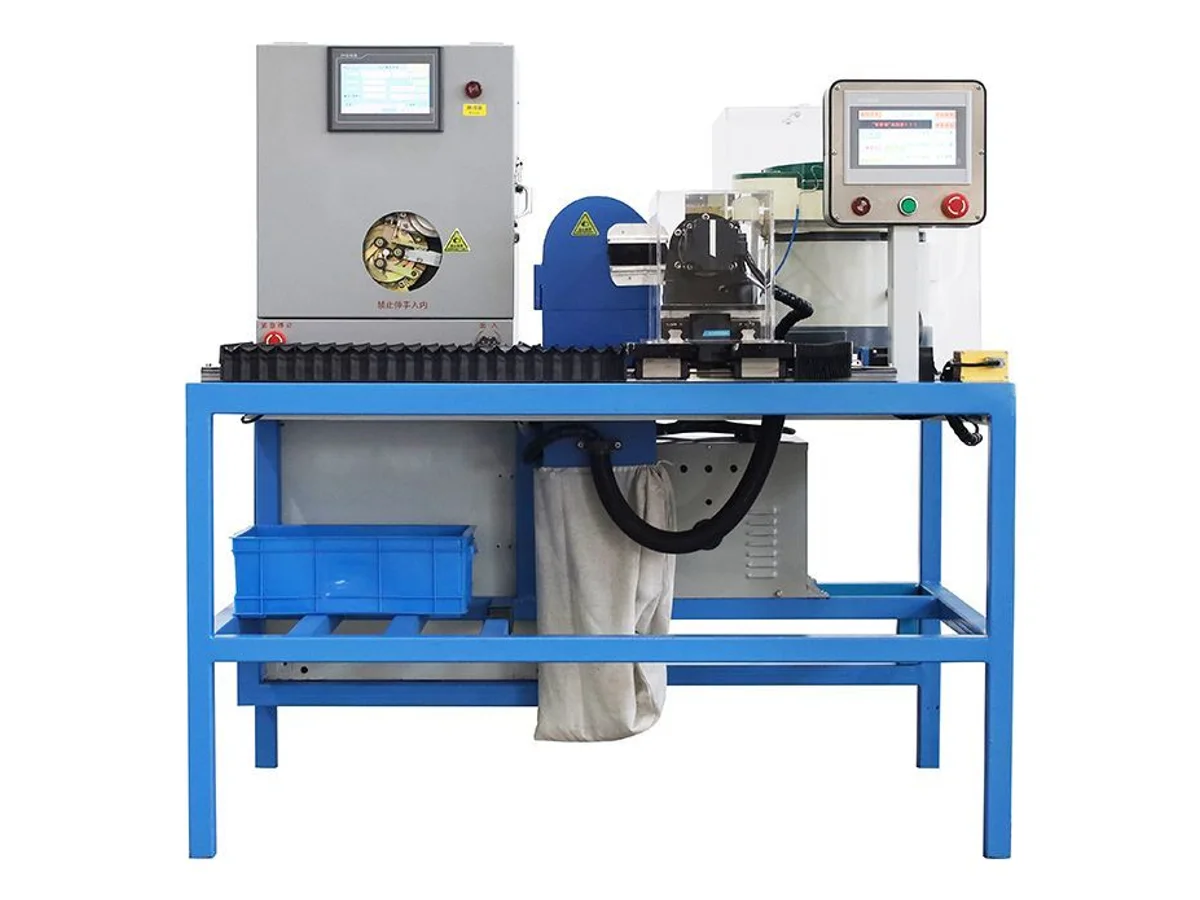
| WM-466 | Thread cleaning + PTFE wrap | 1/8–2.5 in | 3–16 mm | 3–5 pcs/min | Cleaning and wrapping in one pass |
| WM-477 | Battery cell side taping | Cell sides | High-temperature tape | 1,500–1,800 pcs/h | Cell insulation at line speed |
| WM-476 | Flat-cell tape sticking | Tape length ≤150 mm | — | 1,500–1,800 pcs/h | Both faces plus top of flat cells |
| WM-468 | Toroidal coil taping | Tape OD ≤120 mm, ID 76 mm | 10–15 mm (custom) | 1.5 s per wrap | Wound toroids |
| WM-470 | Transformer coil taping | Bobbin coils, axes 25–85 mm | ID 34 / 77 mm | 46 pcs/min, ±0.2 mm | Two-axis bobbin taping at volume |
| WM-463 | Copper-foil shielding wrap | Round cable ≤Ø10 mm | Foil ≤12 mm, two-layer | — | Shielding, not insulation |
Spiral covers the full length of the bundle — insulation, abrasion protection, a finished look. Spot taping places short wraps at fixed points — holding branches together, marking positions, fixing sleeves. Many looms use both: spiral on trunks, spots at breakouts. The machines are different builds, so decide per job: continuous spiral runs on the WM-465/467/4136 family, spots on the WM-4105/4205/464 family.
Published ranges in this category run from Ø2 mm (WM-465) up to Ø40 mm (WM-4136) for bench machines, and Ø8–35 mm for the handheld wrappers, with a 5–55 mm customized handheld available. Above those figures, tell us the actual bundle and our engineering team confirms a suitable configuration.
Yes — three machines do nothing else. The WM-461 wraps NPT and ZG fittings with 5–14 mm tape, the WM-469 covers 1/8–2 inch fittings in 3–5 seconds each, and the WM-466 cleans the thread and wraps it in one pass at 3–5 pieces per minute across 1/8–2.5 inch.
Between them: PVC, cloth (fabric), acetate cloth, flannel, polyester, high-temperature battery tape, PTFE thread-seal tape and two-layer copper foil. Each machine page lists what it accepts — tape choice is a machine-level fact, not a category-level one, so check the specific model or ask us with your tape sample.
Check loading clearance and wrap-point spacing, not only wire diameter. WM-464 is for formed coils and long bundles; WM-4105 is a bench spot-taping option. A short loop or connector can obstruct the head even when the wire fits. Use the small-coil fixture guide below and send the complete workpiece with its tape for a trial.
Bundle or workpiece diameter, the tape you use (type and width — or a photo of the roll), whether you need full-length spiral or discrete spots, and target output. Then courier a meter of your bundle and a roll of your tape: we run them on the machine, on camera, before you order.
Engineering guidance for choosing this process and correcting the defects that affect finished-wire quality.
Selection guide
Plan wire harness production from the drawing: cutting, stripping, seals, crimping, housing insertion, taping and final electrical checks.
Read engineering guide →Selection guide
A small-coil taping application analysis: distinguish wire diameter from bundle size, check head clearance and define a two-band trial.
Read engineering guide →Selection guide
Compare automatic lines and semi-automatic wire-processing cells using batch size, changeover, process integration, inspection and labor content.
Read engineering guide →Selection guide
Choose harness taping equipment by harness geometry, tape material, overlap, branch handling, wrap length, tension control and production mix.
Read engineering guide →Troubleshooting guide
Troubleshoot tape gaps, excessive overlap, wrinkles, lifted edges, bundle deformation, tension variation and unstable start or finish positions.
Read engineering guide →