Selection guide
Wire Harness Manufacturing: From Drawing to Final Test
Plan wire harness production from the drawing: cutting, stripping, seals, crimping, housing insertion, taping and final electrical checks.
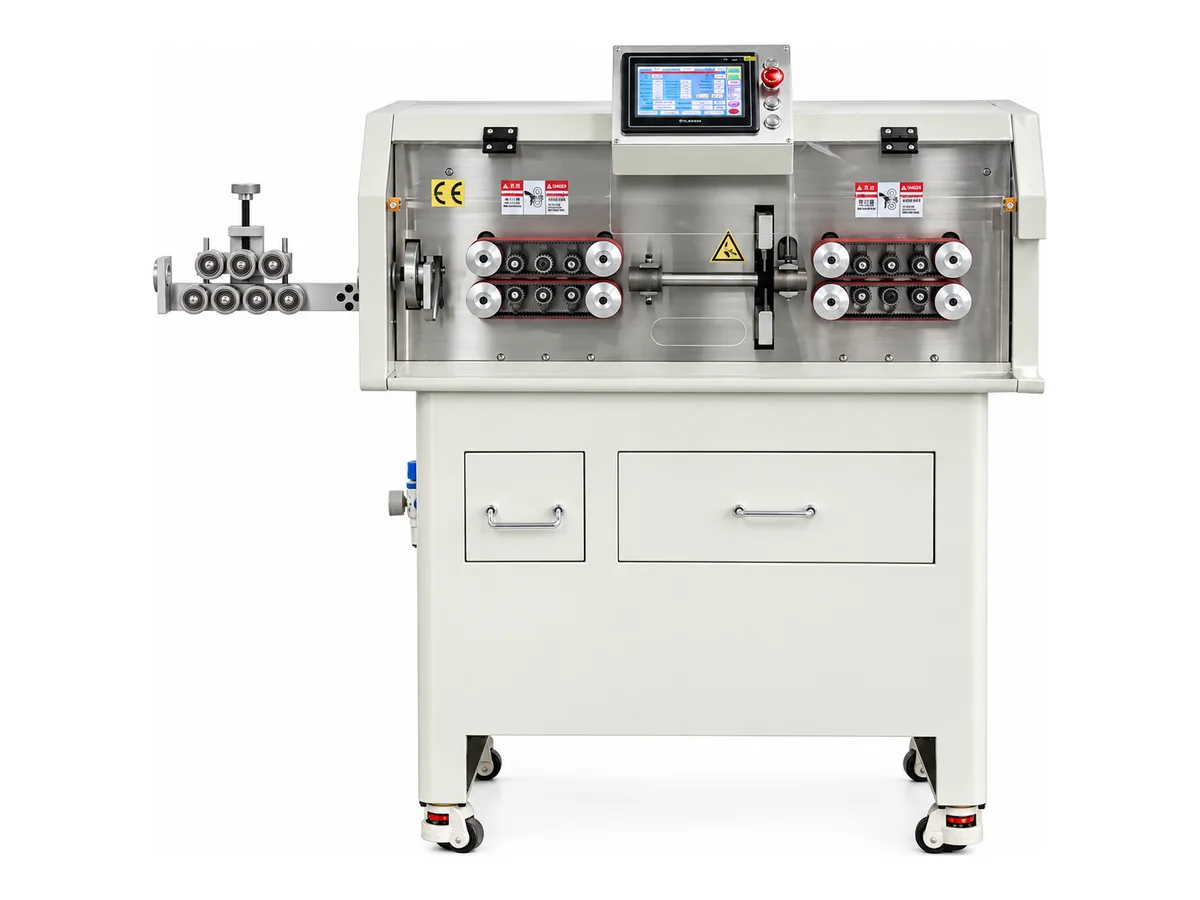
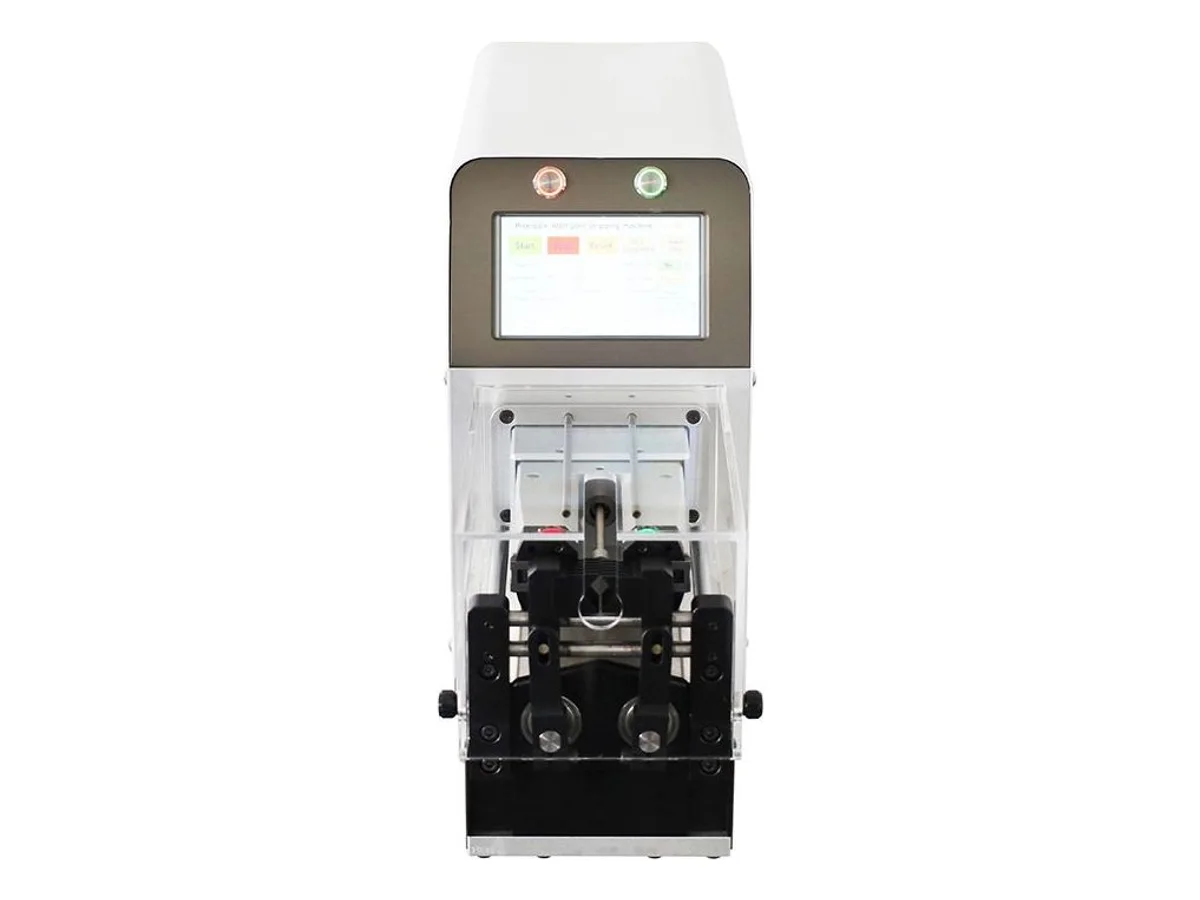
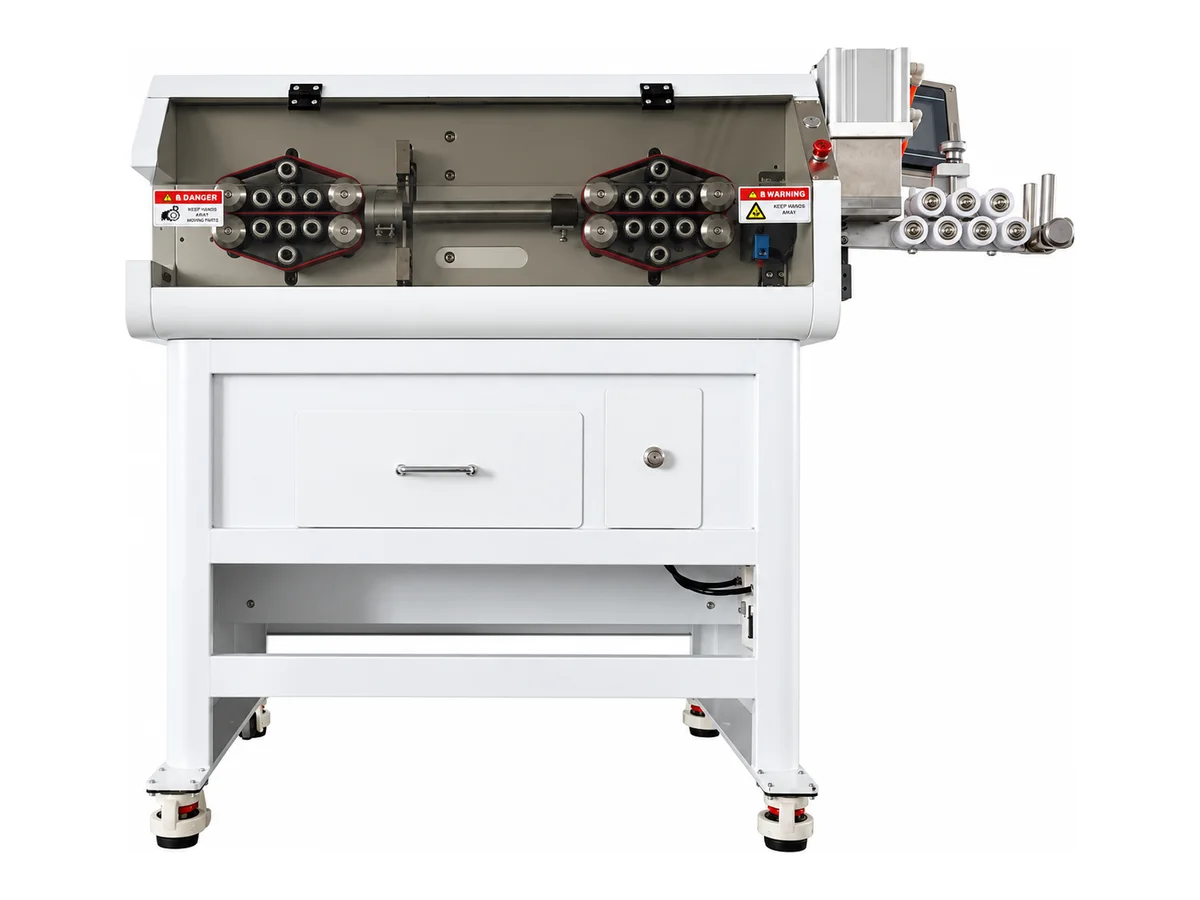
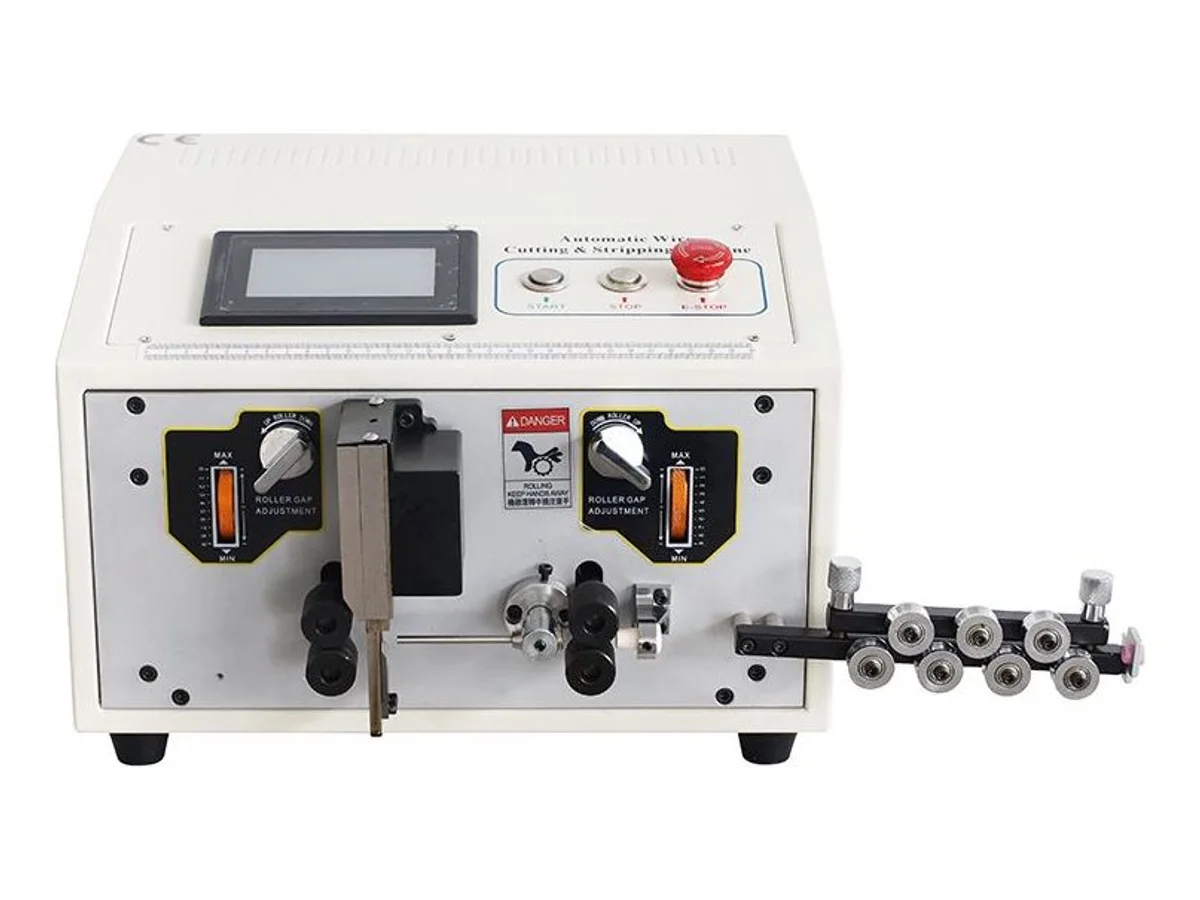
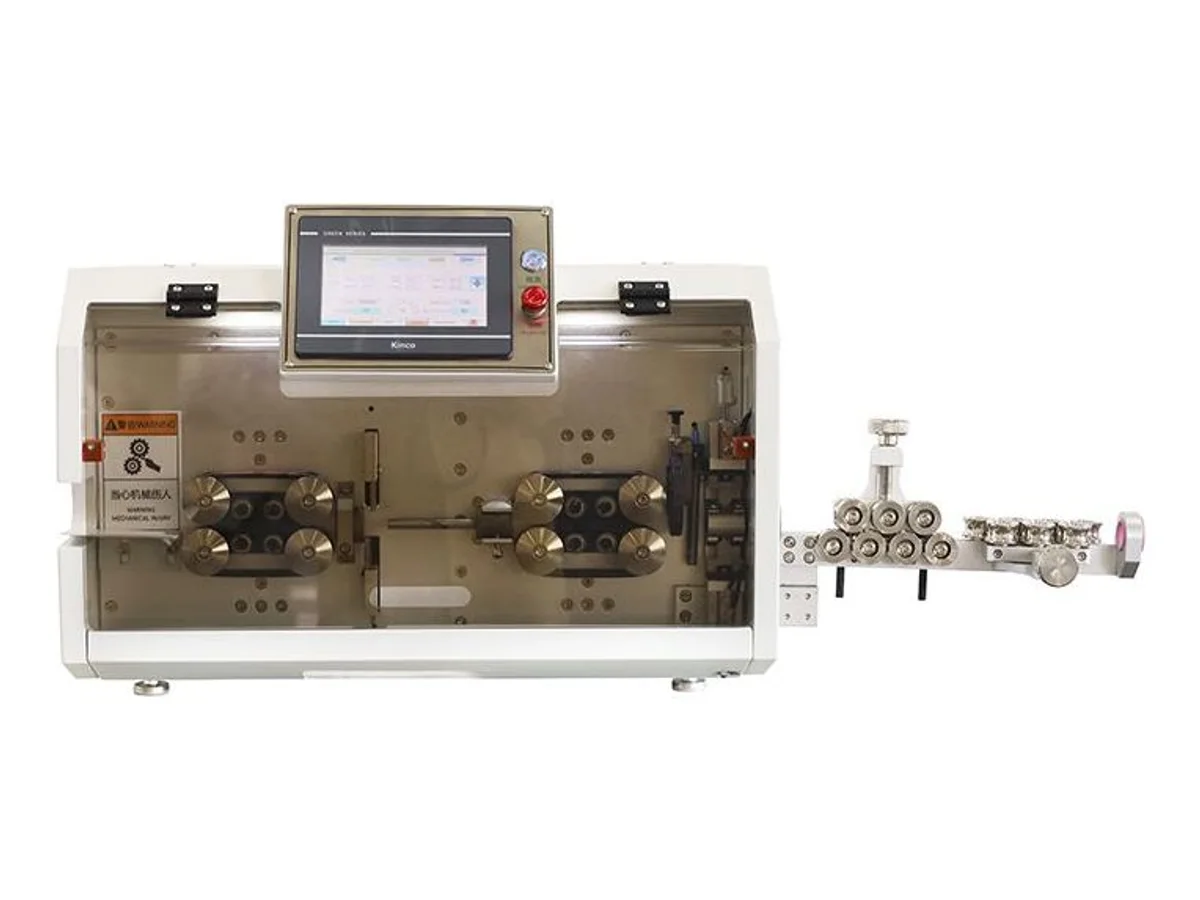
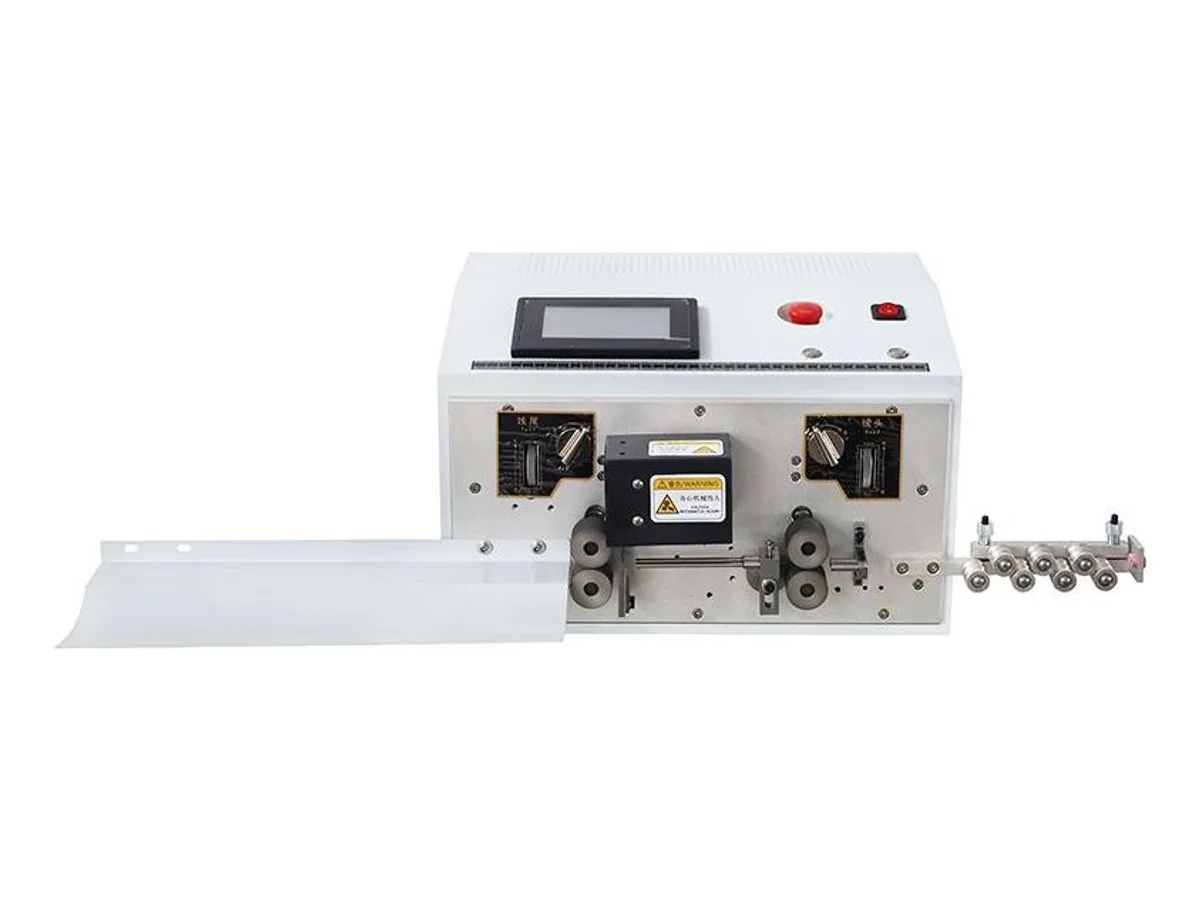
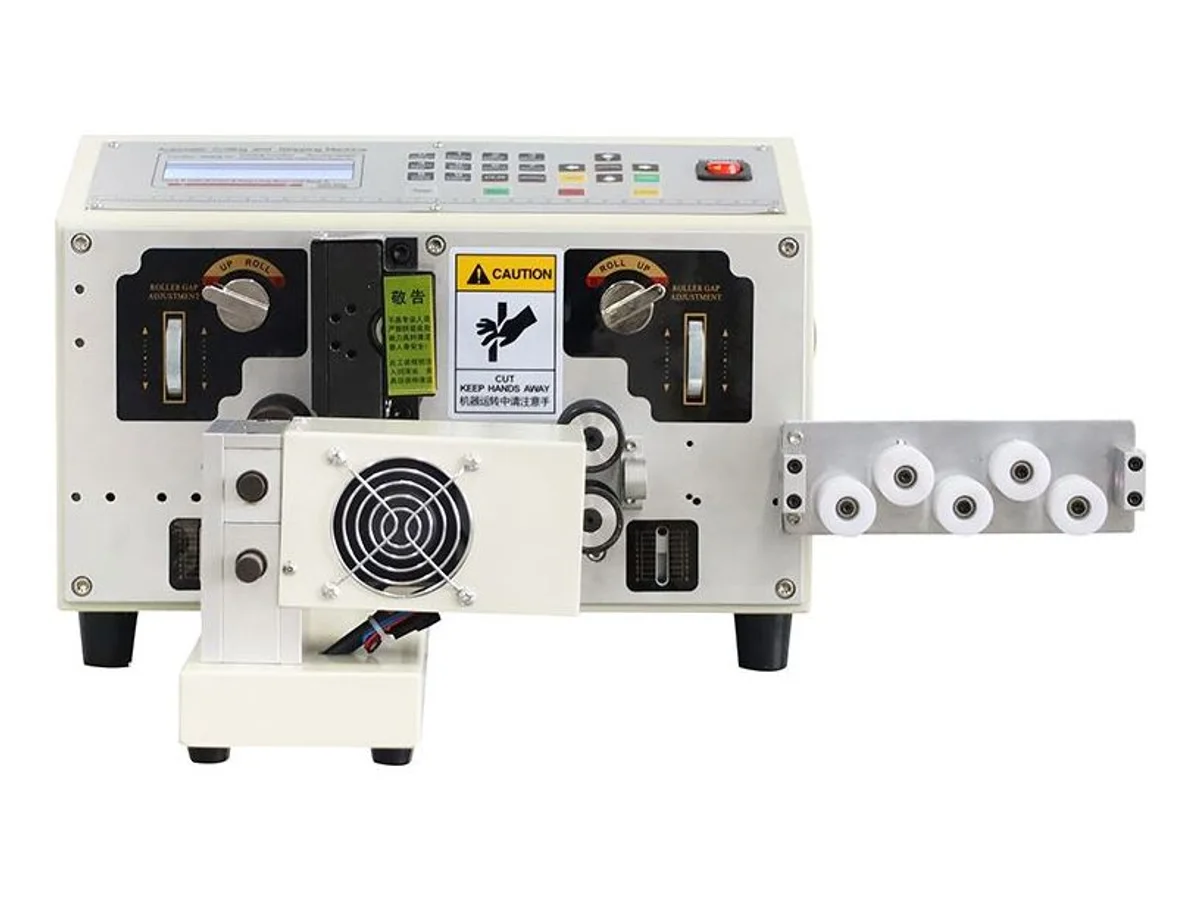
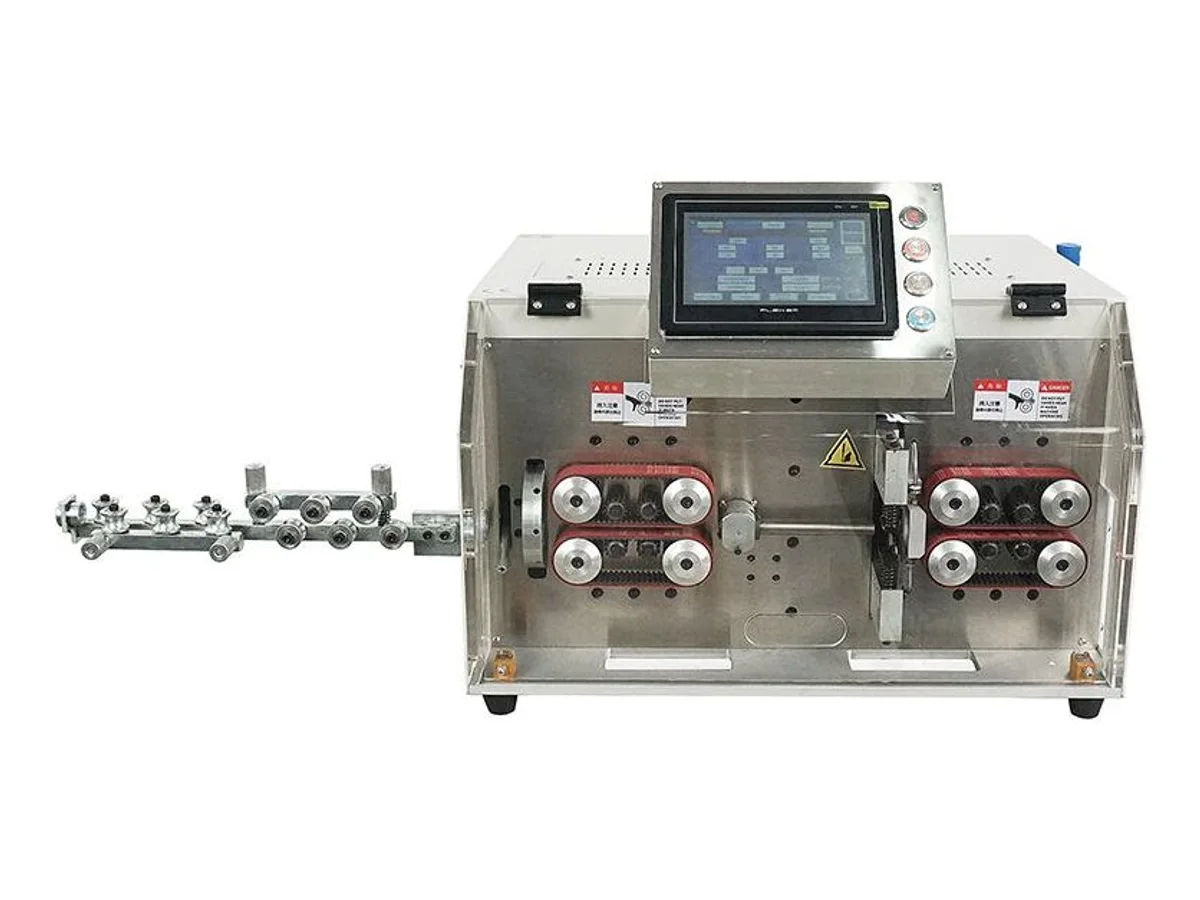
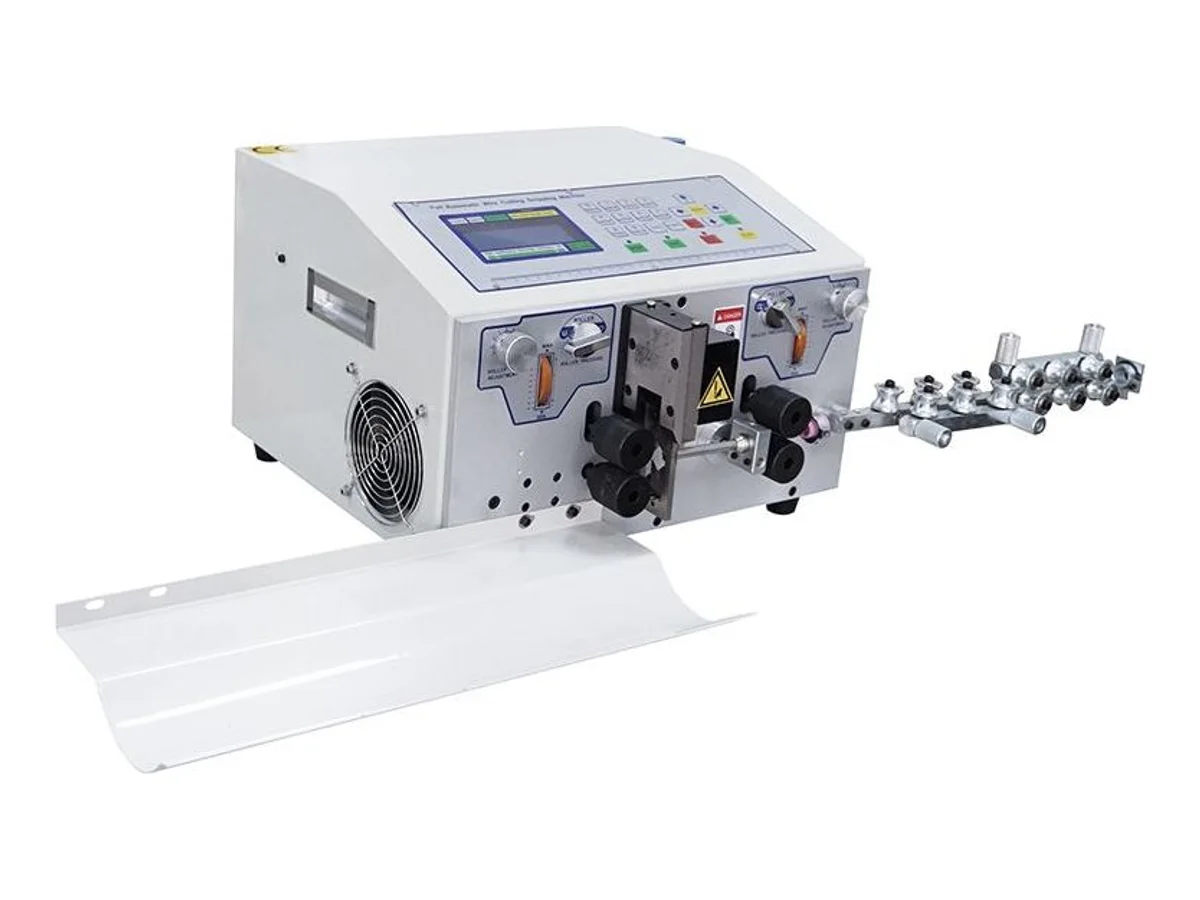
Read engineering guide →Wire cutting and stripping machines across the full size ladder: precision strippers from 0.03 mm², benchtop cut-and-strip workhorses at 3,000–8,000 pcs/h, large-cable machines to 300 mm², four-layer programmable stripping for shielded and EV cable, multi-core sheathed cable lines that open the jacket and every core, and double- and four-wire machines that multiply throughput per cycle. The grid below lists them all with size and automation filters; the guide underneath shows how to choose a machine for your wire. Send 2–3 meters of your wire and we run it on video before you order.
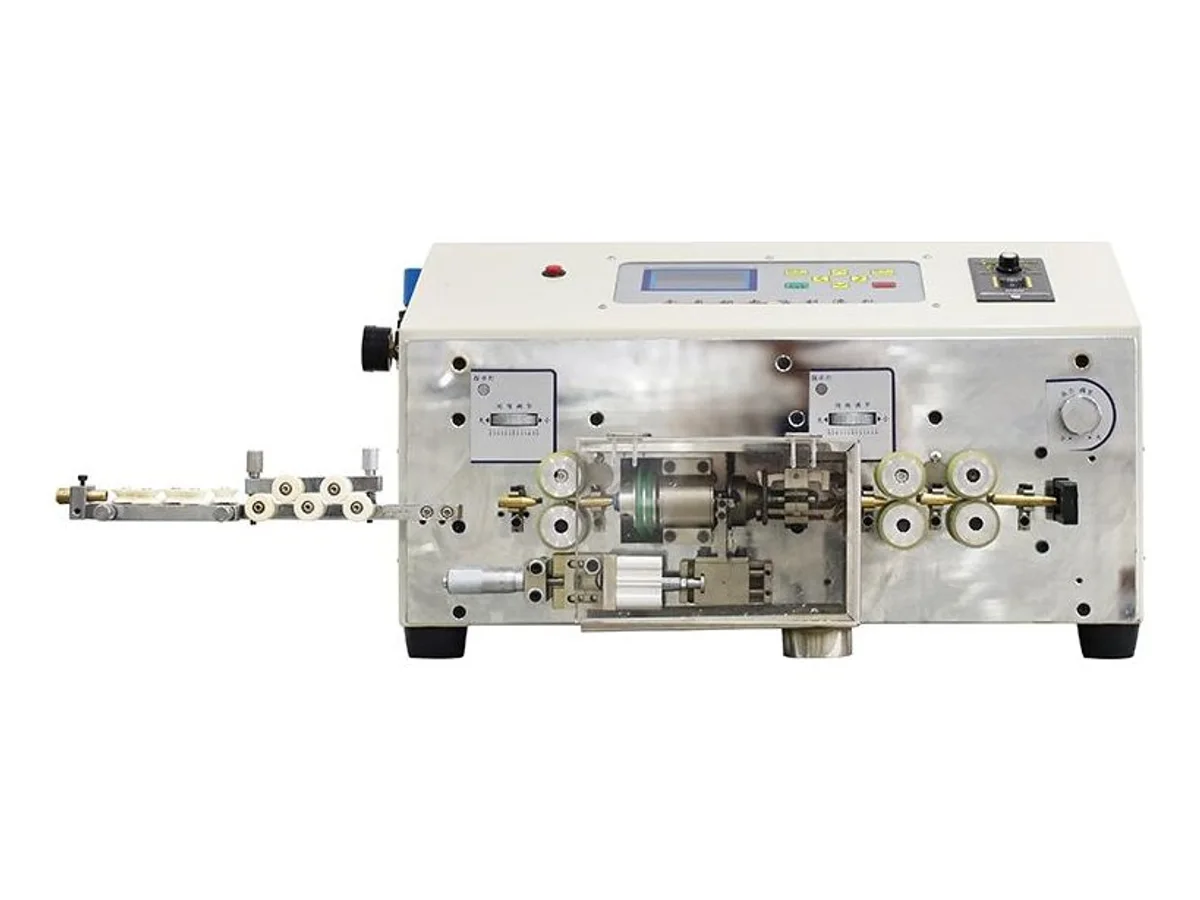
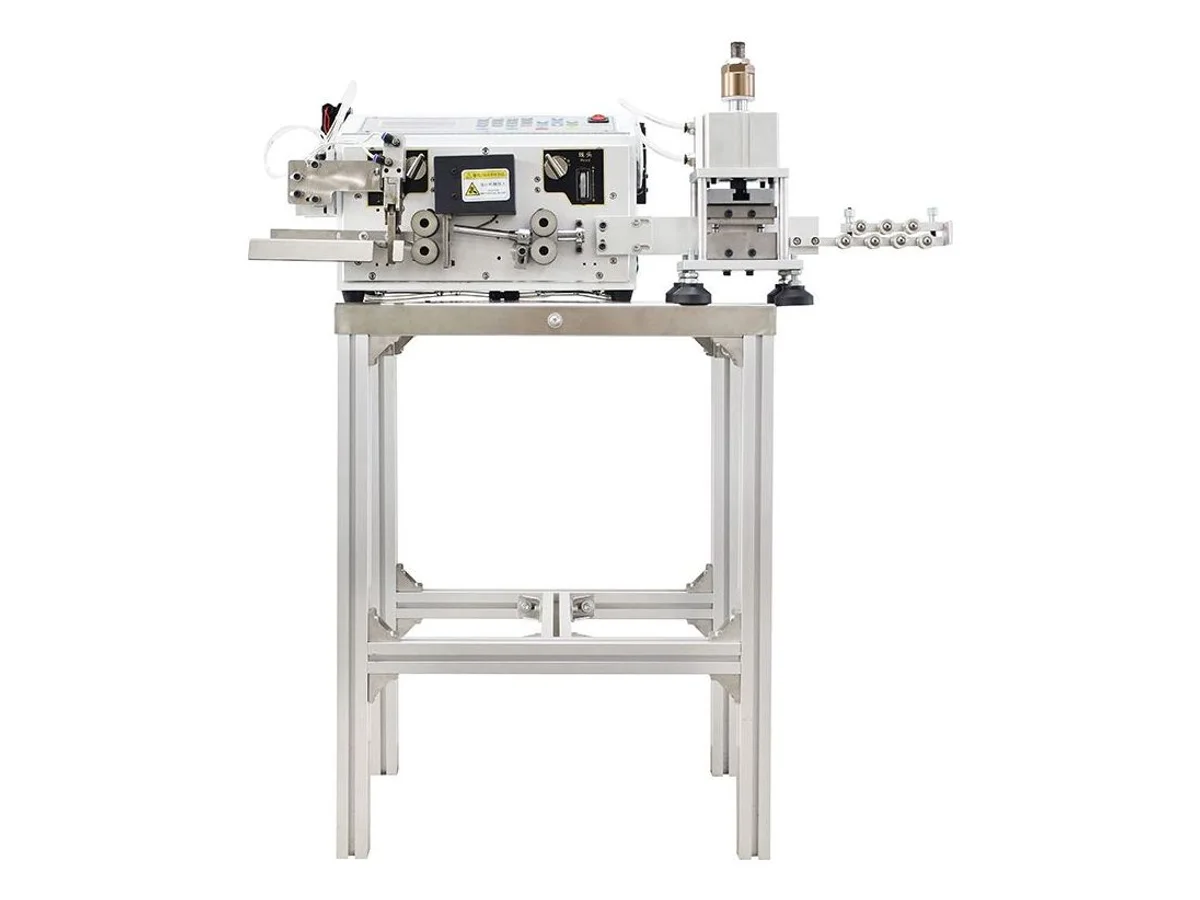
These machines include this operation as part of a wider process. Open the product page to check the complete working range and configuration.
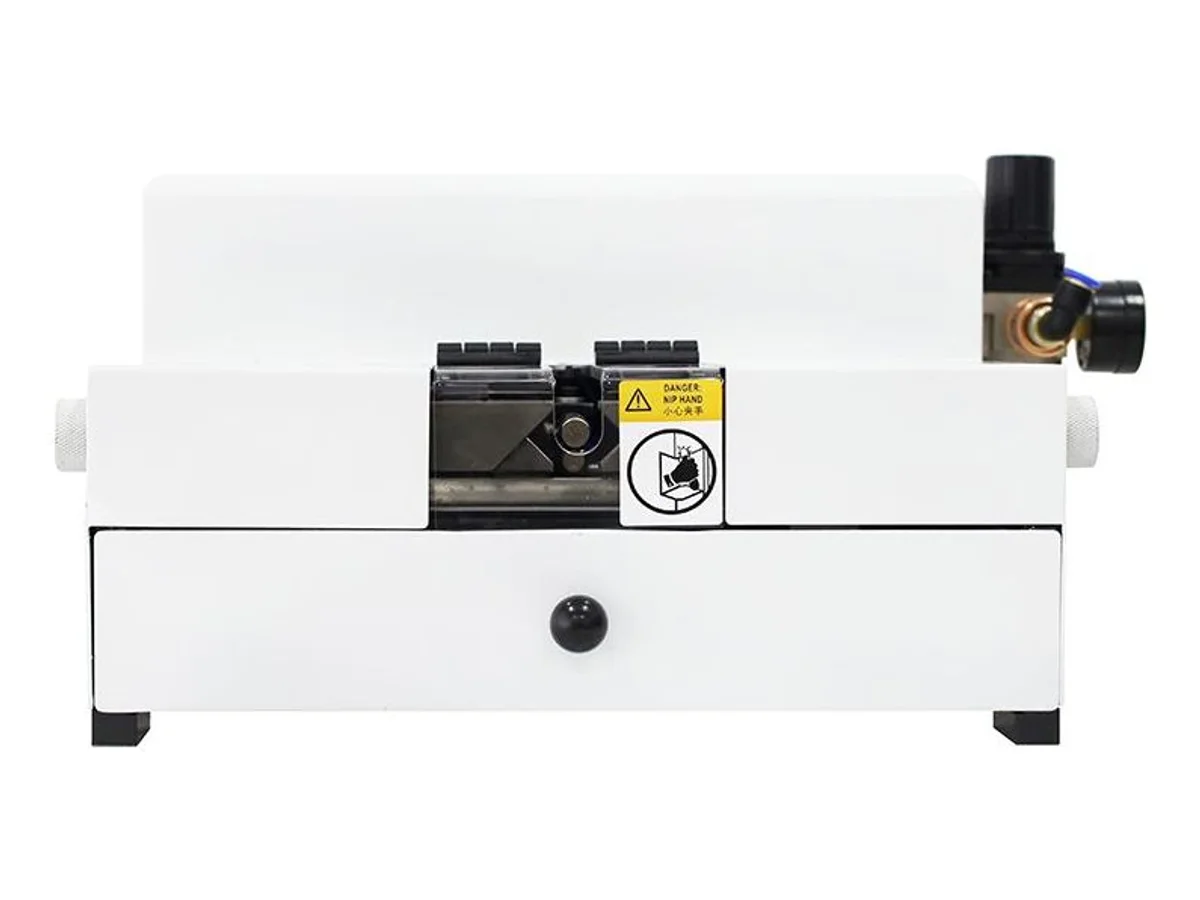
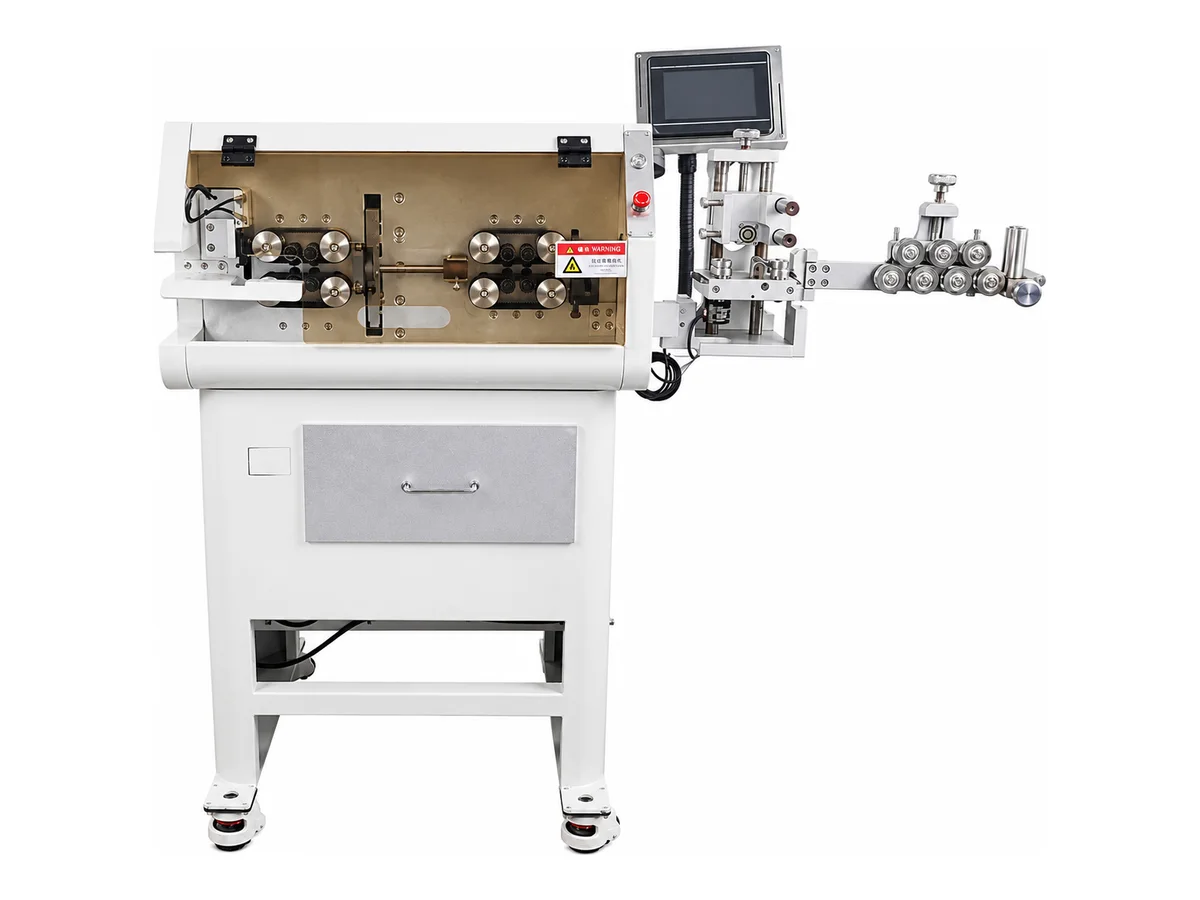
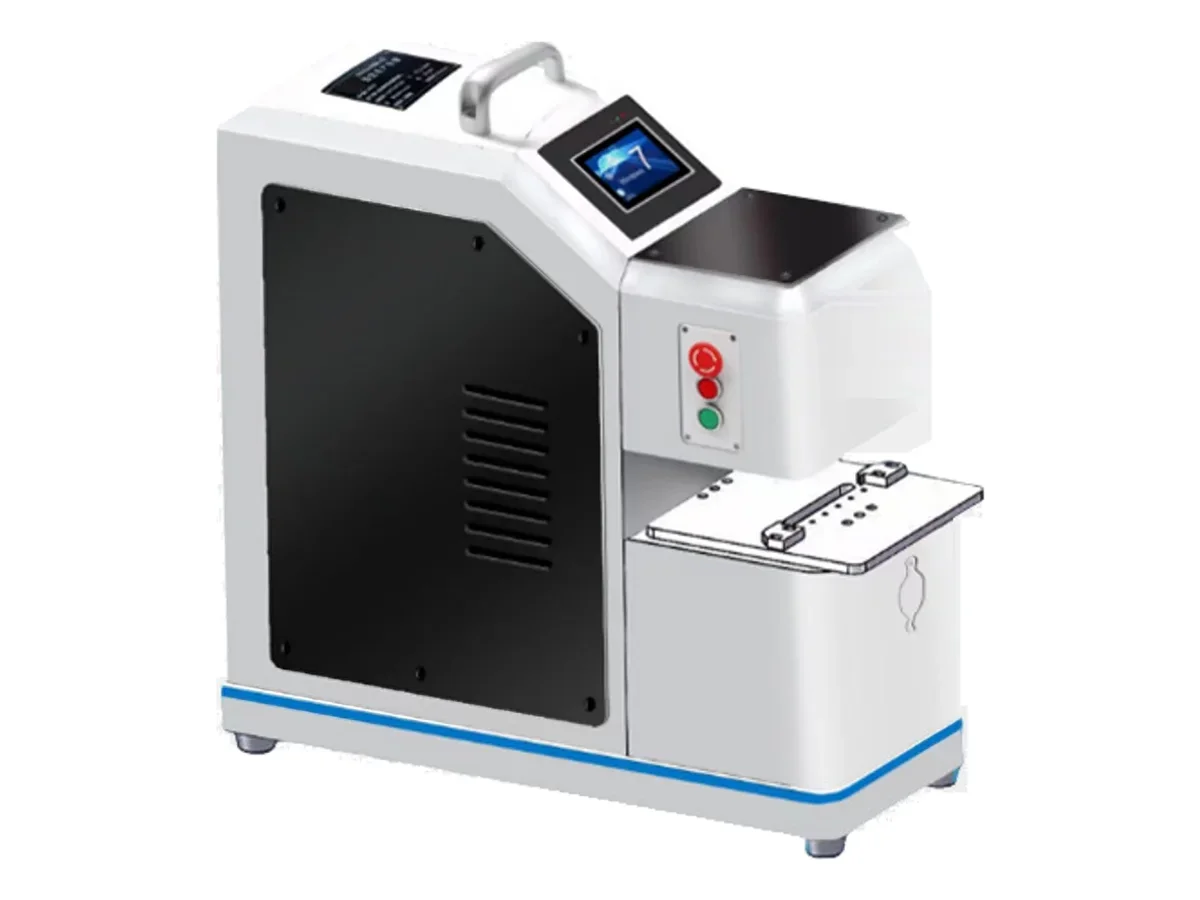
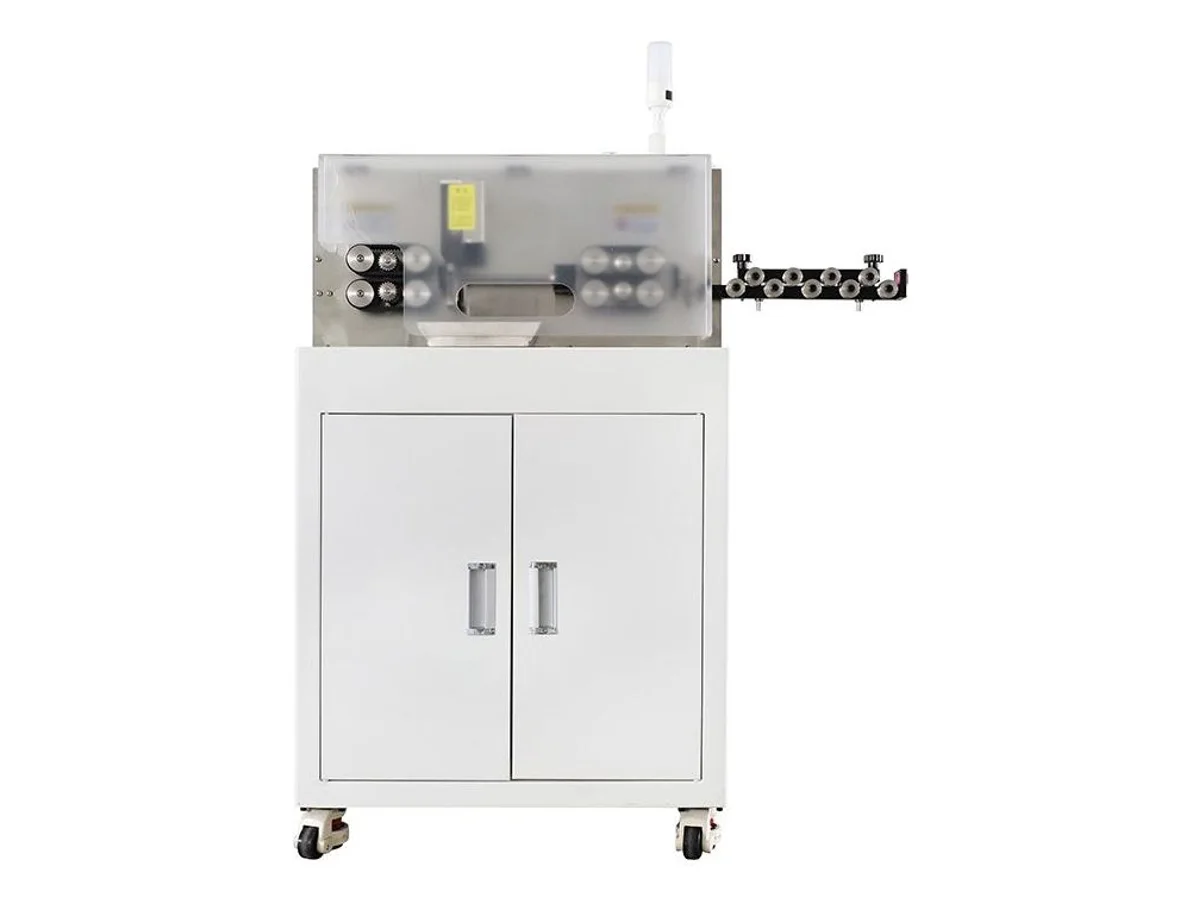
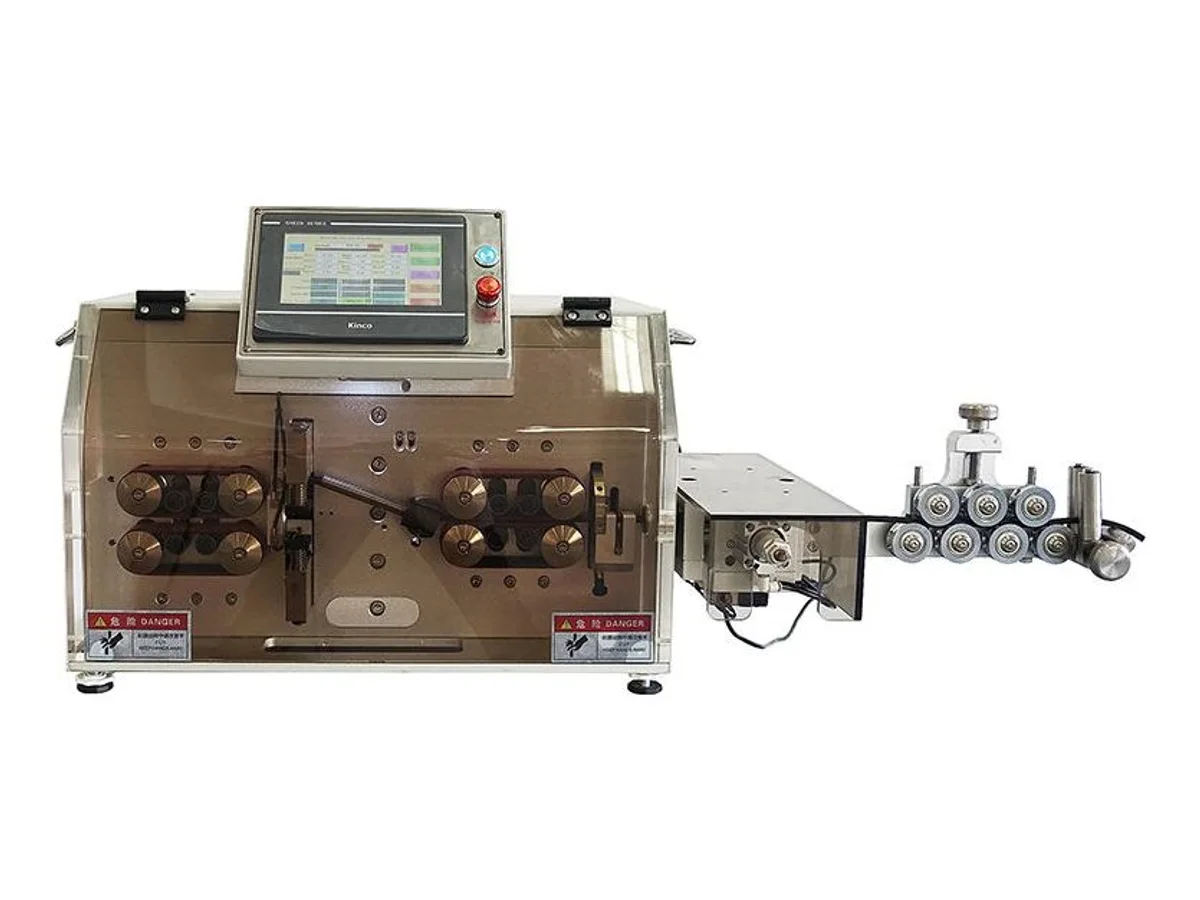
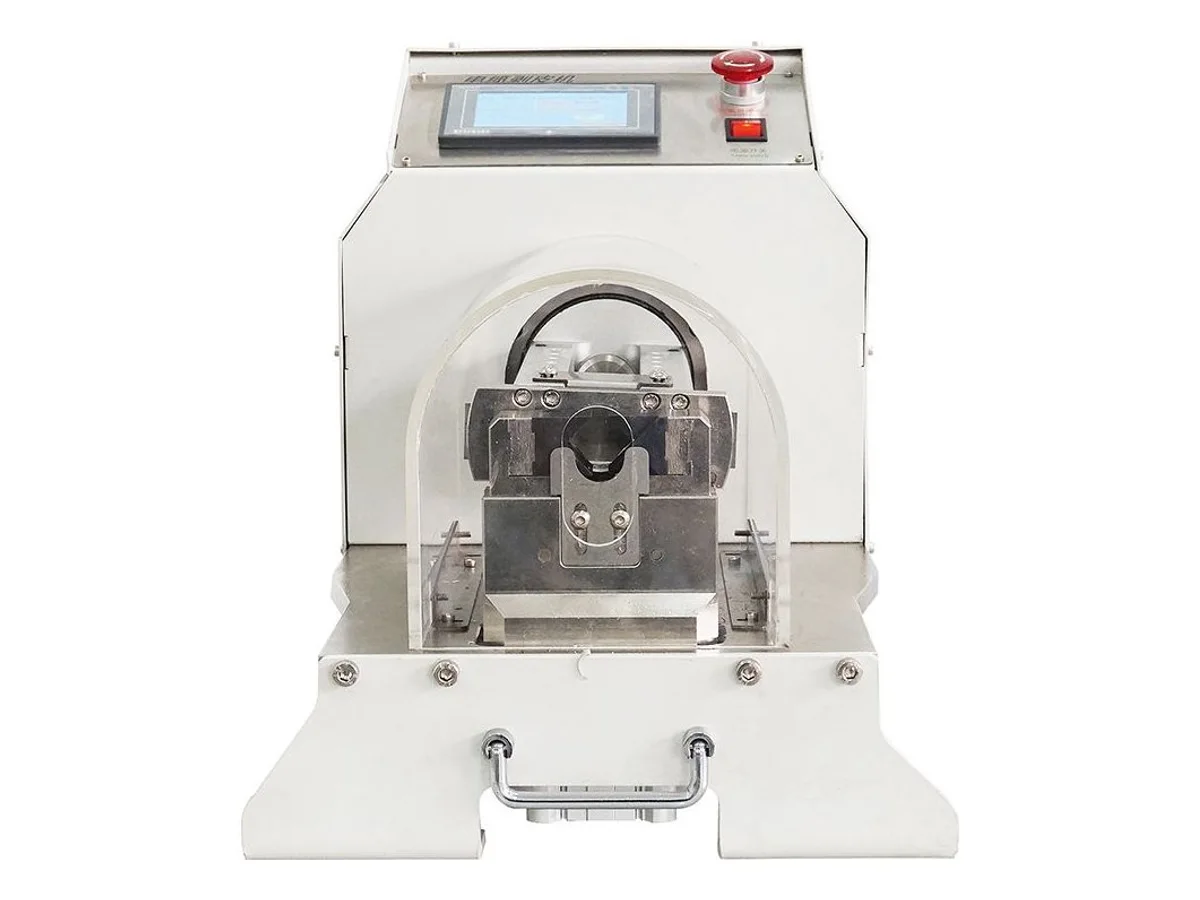
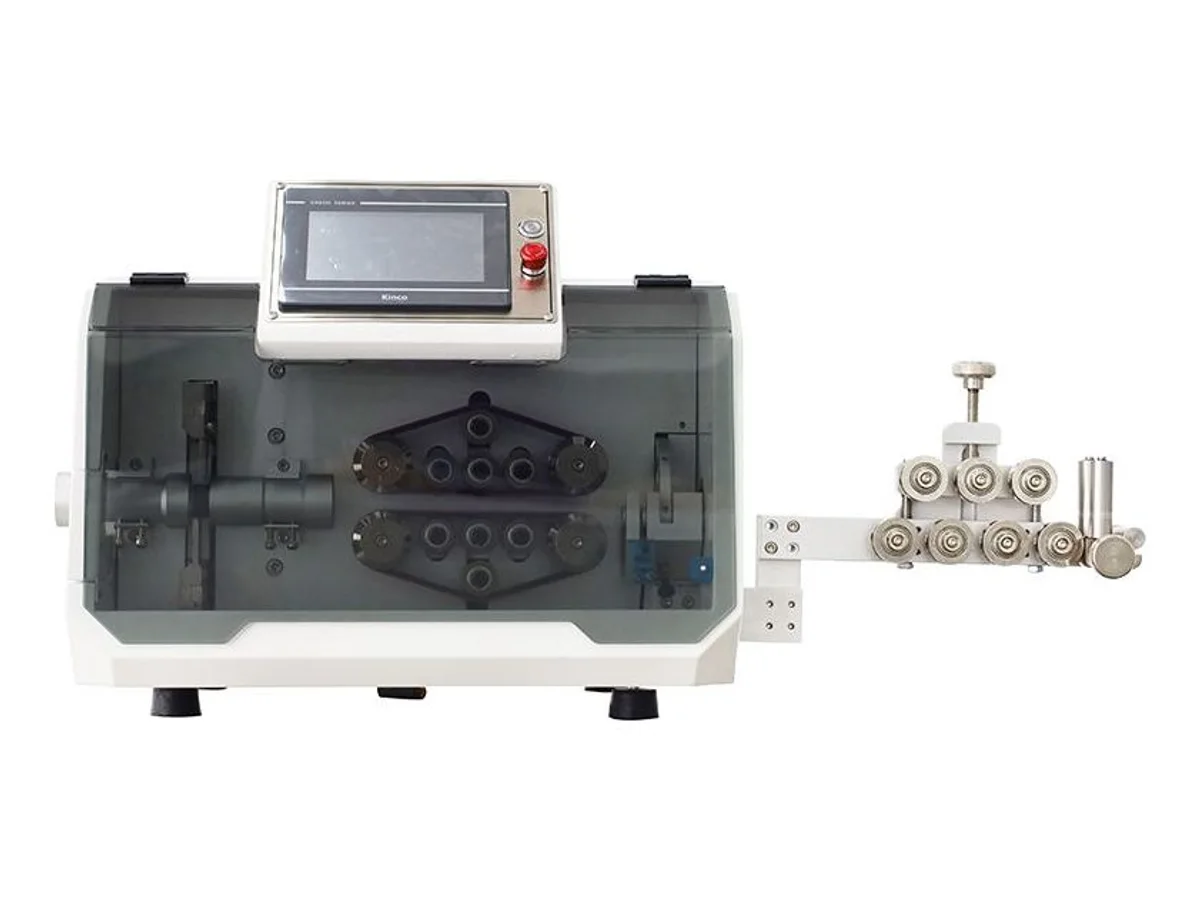
Cable stripping with shield fold-back
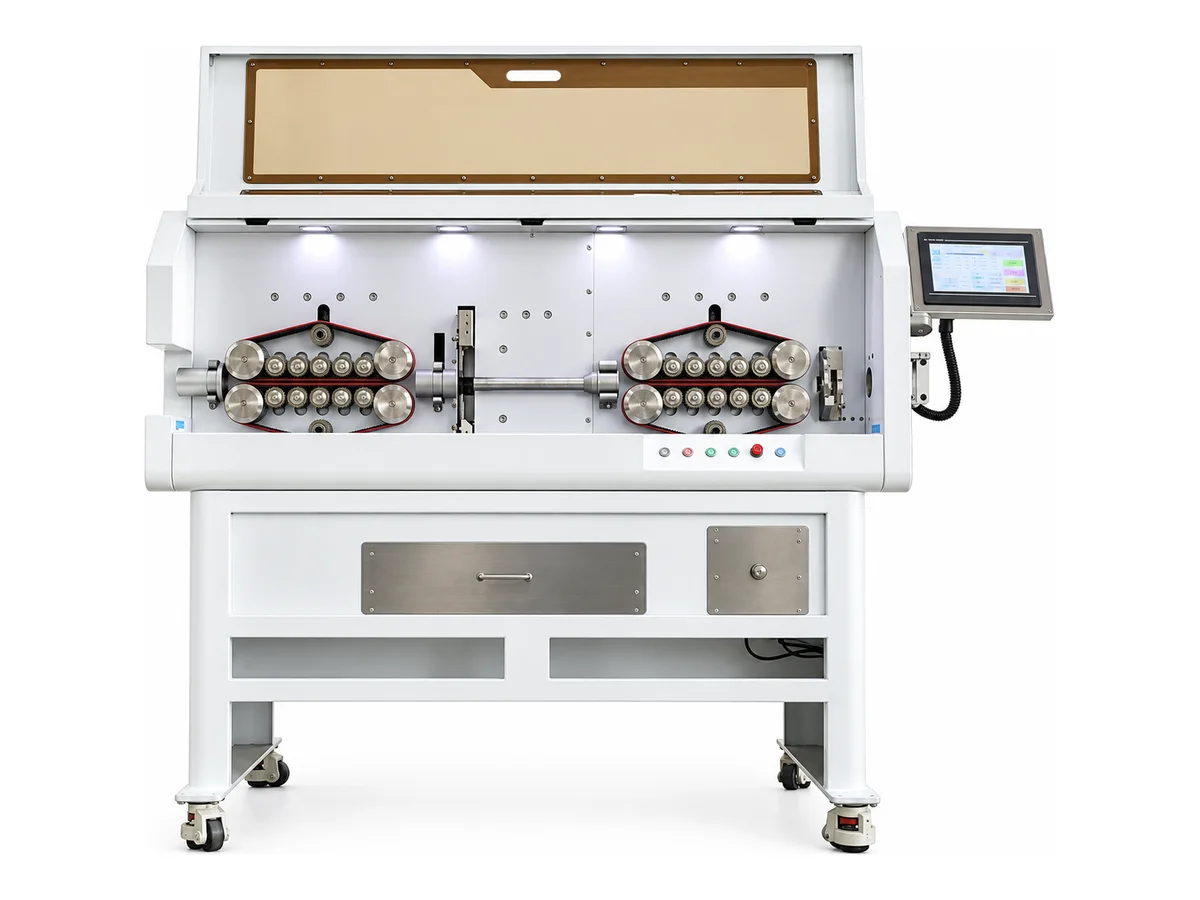
Model WM-199
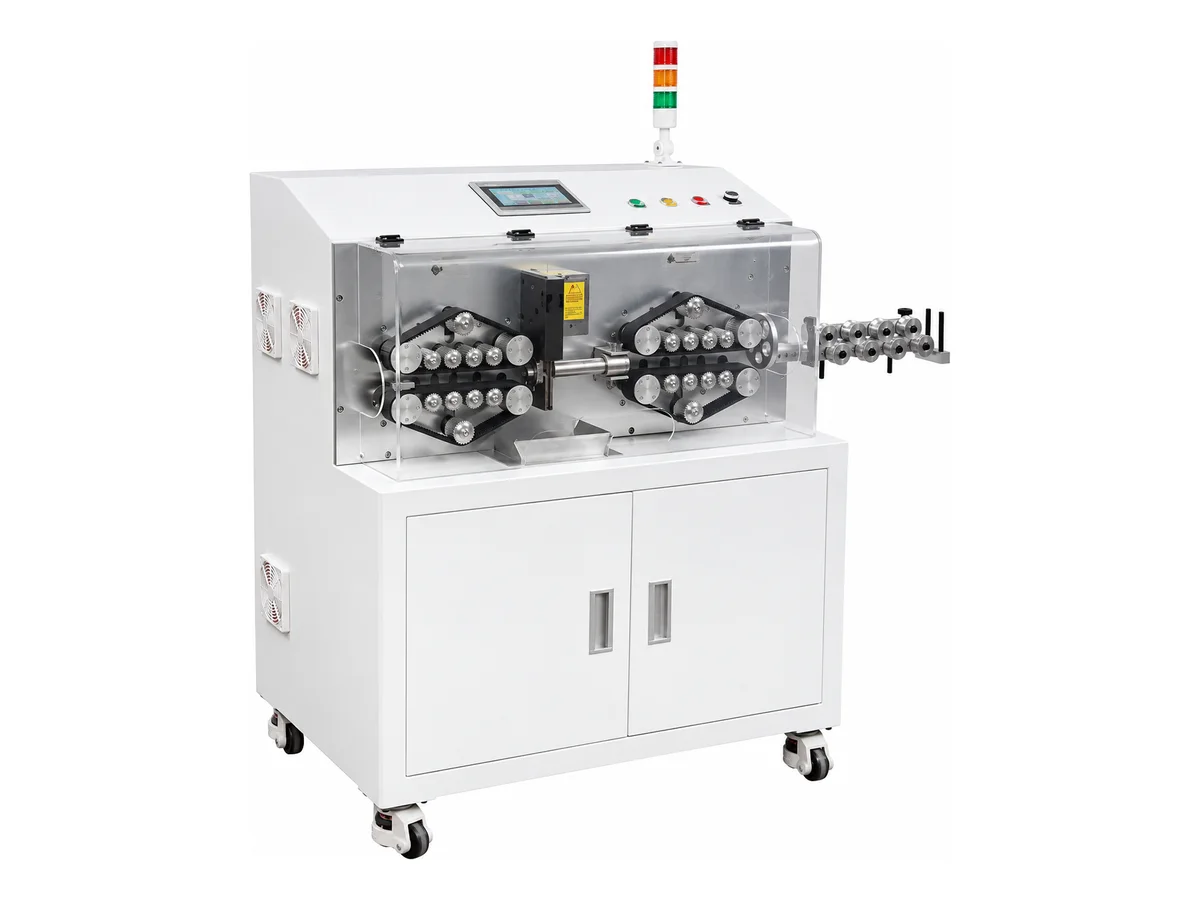
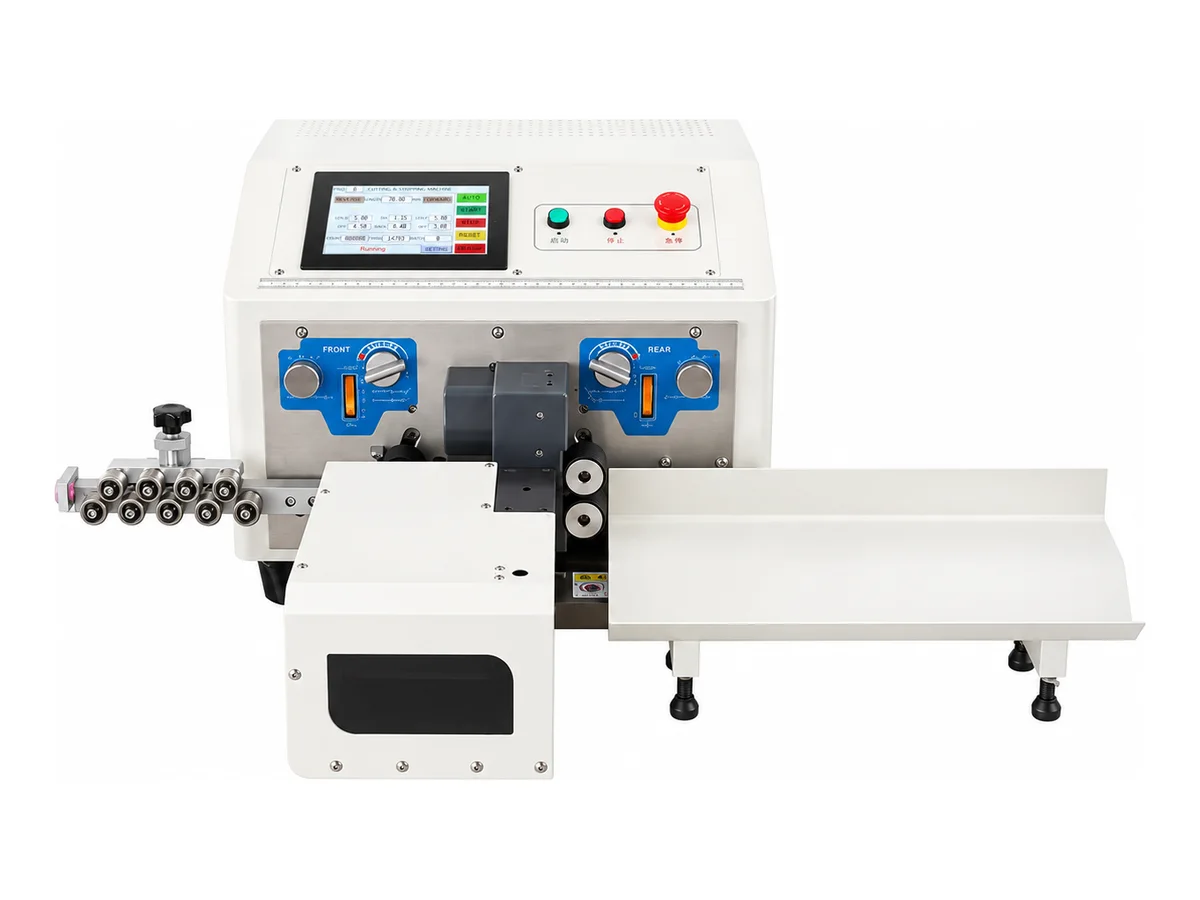
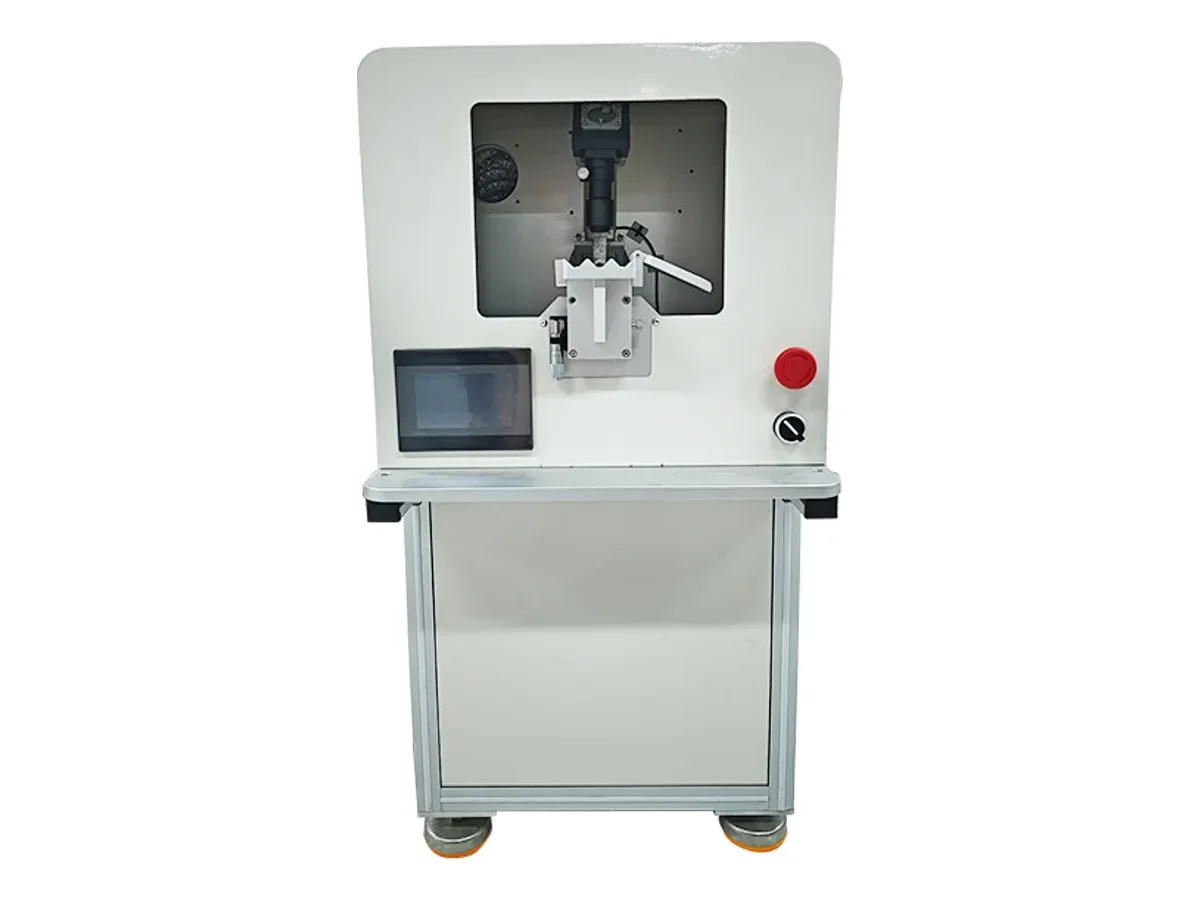
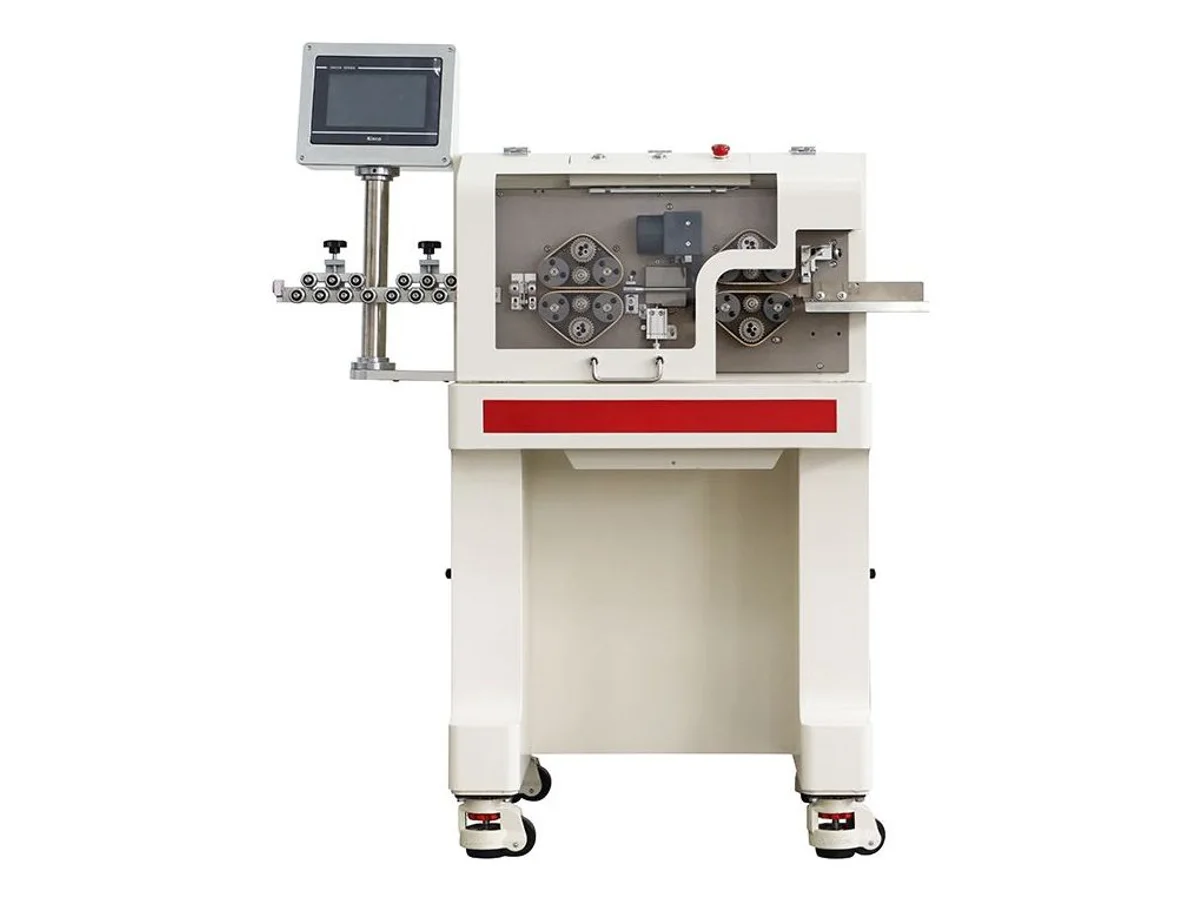
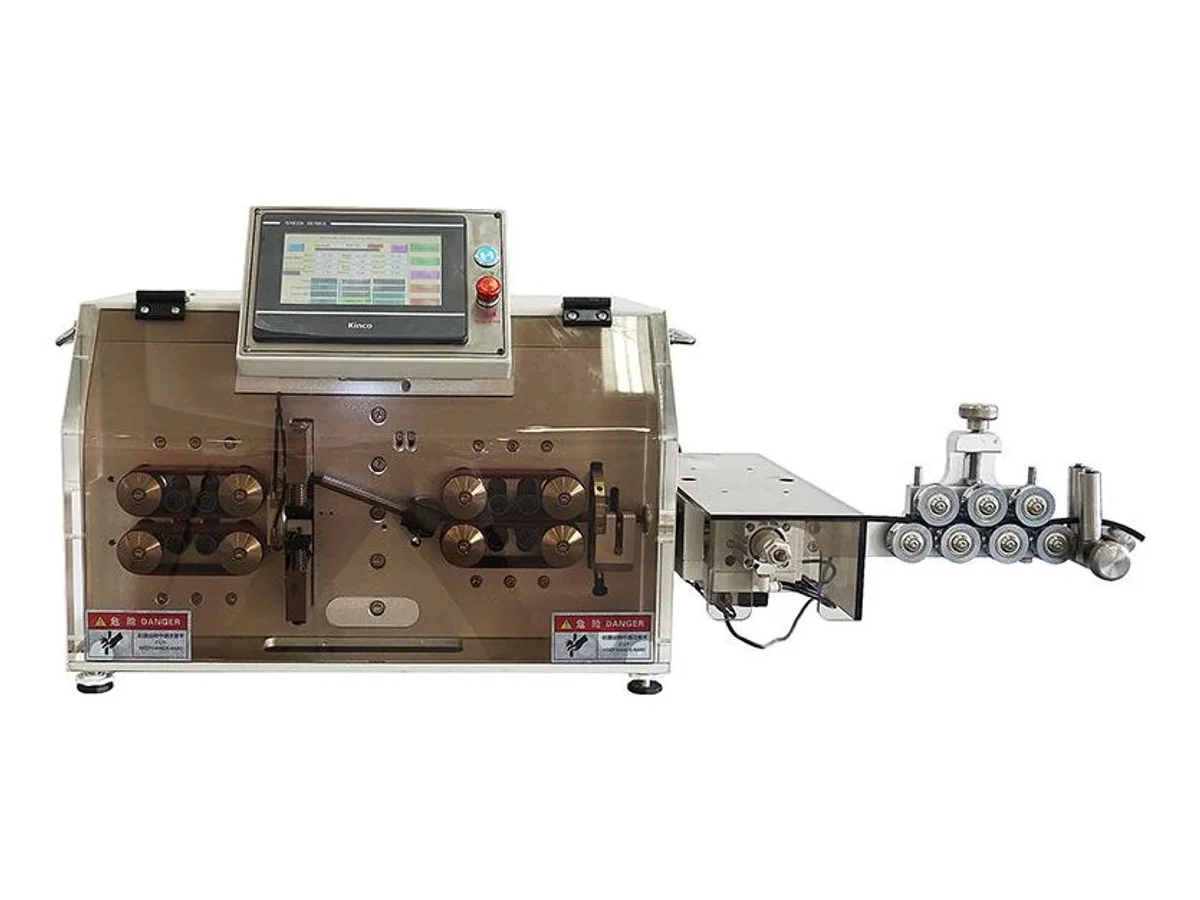
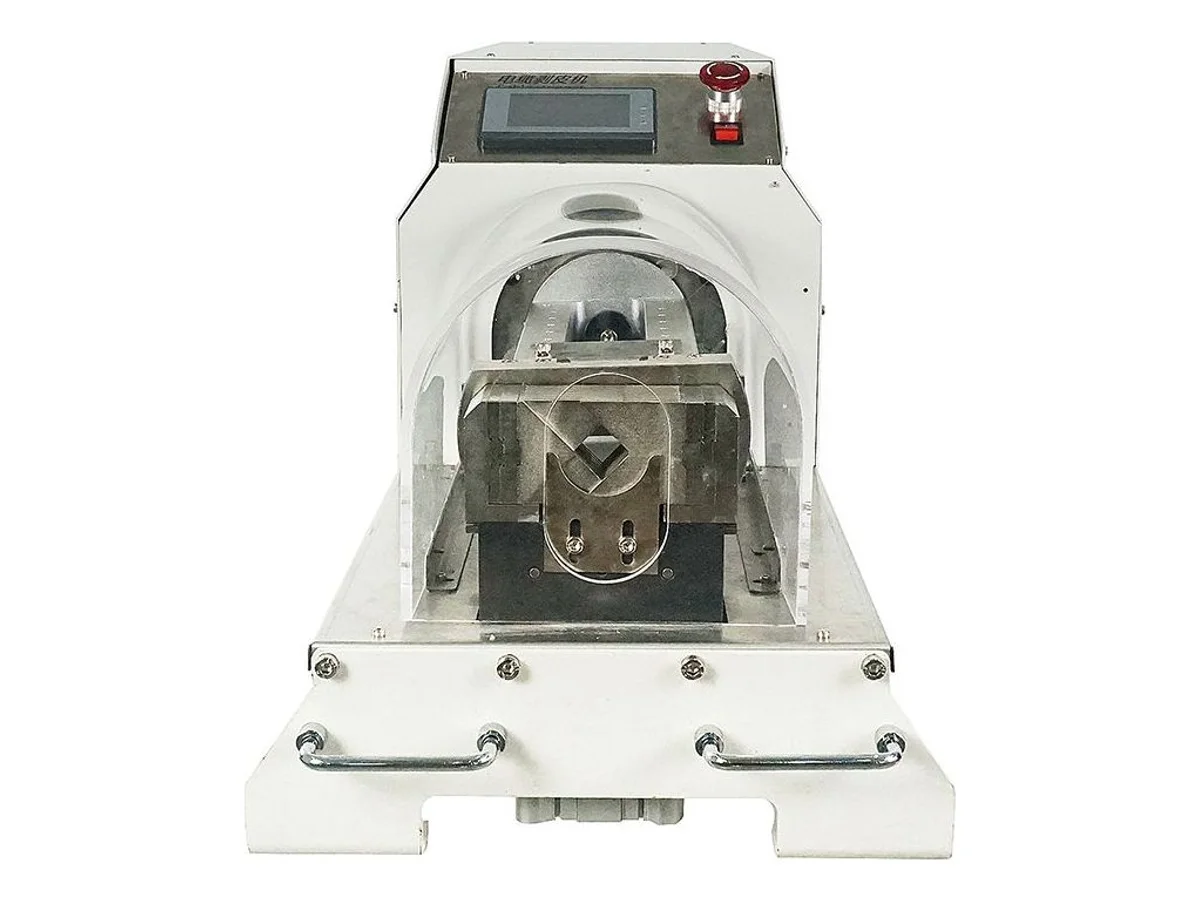
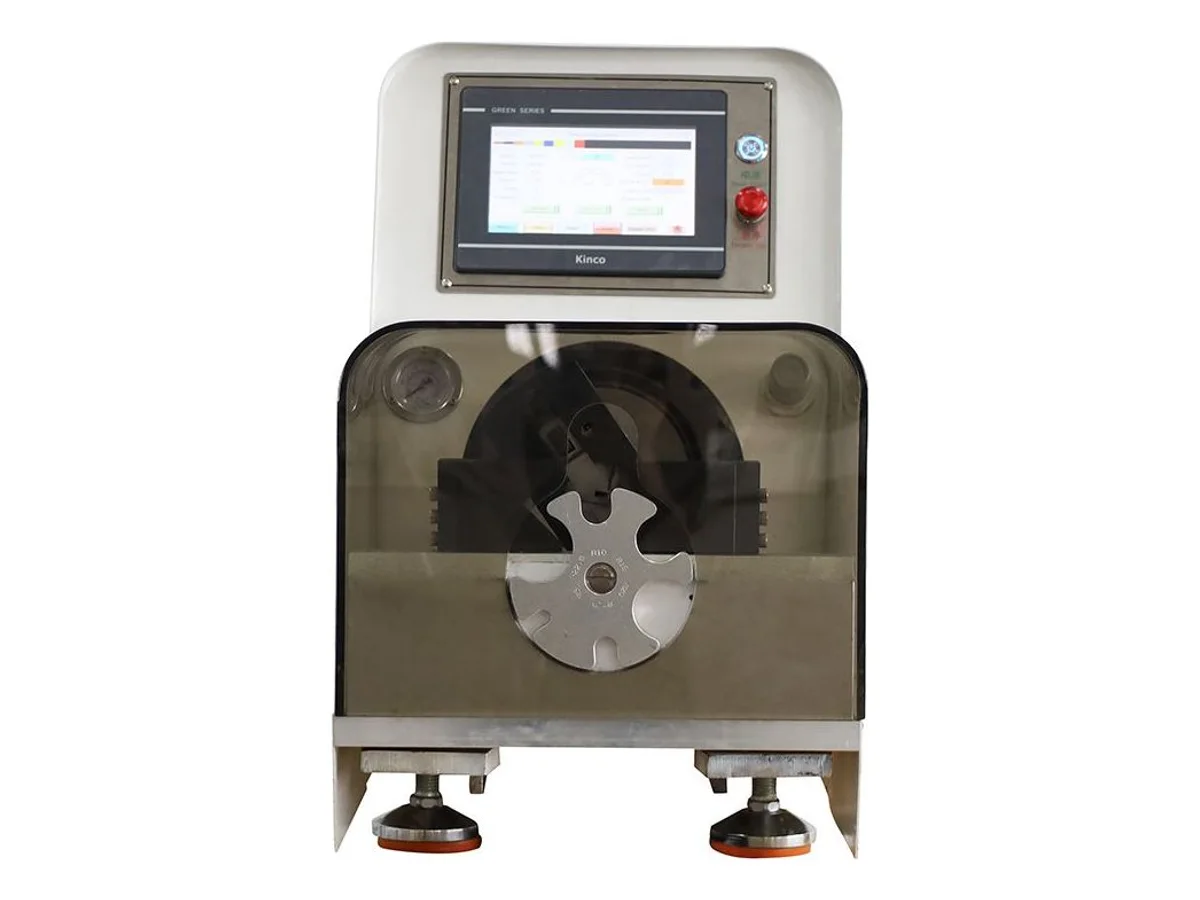
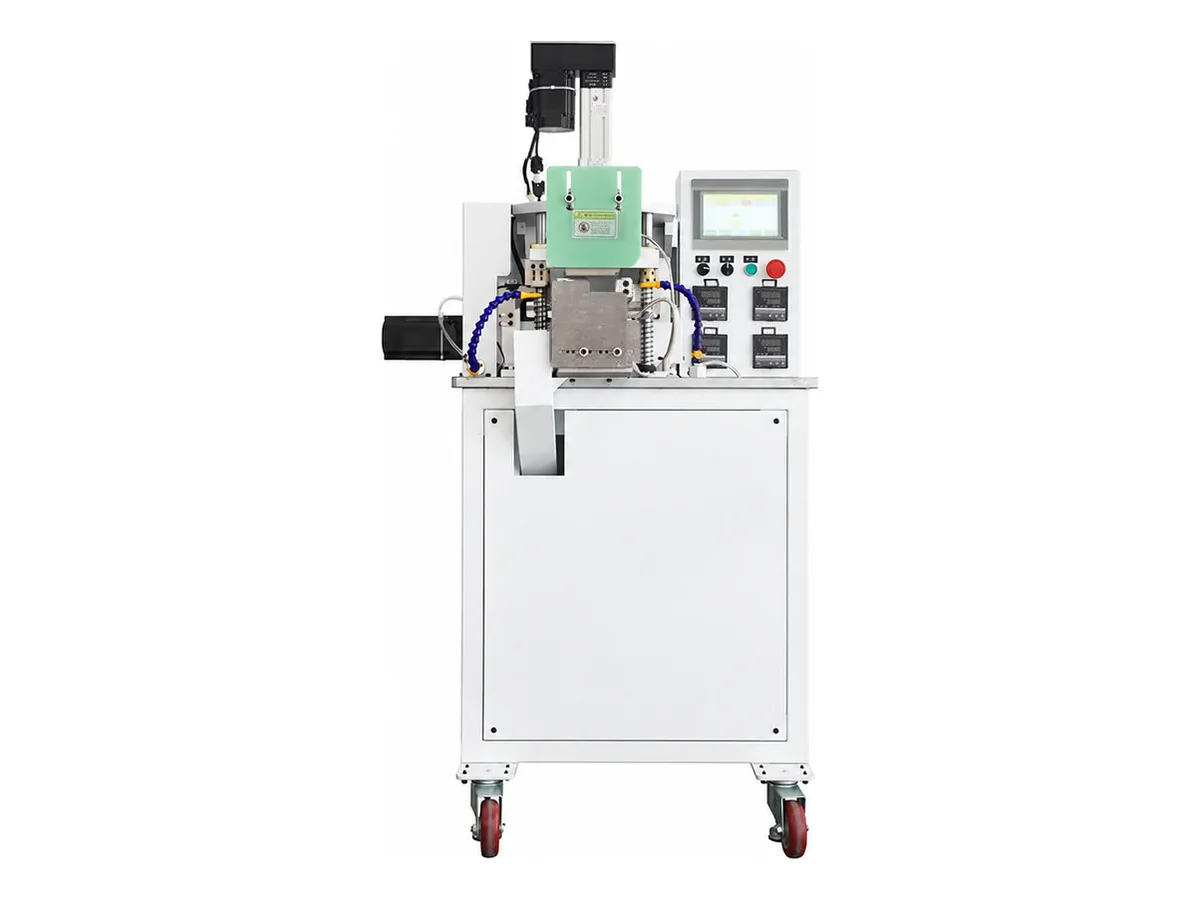
Rotary cutting and multi-layer stripping
Model WM-184X
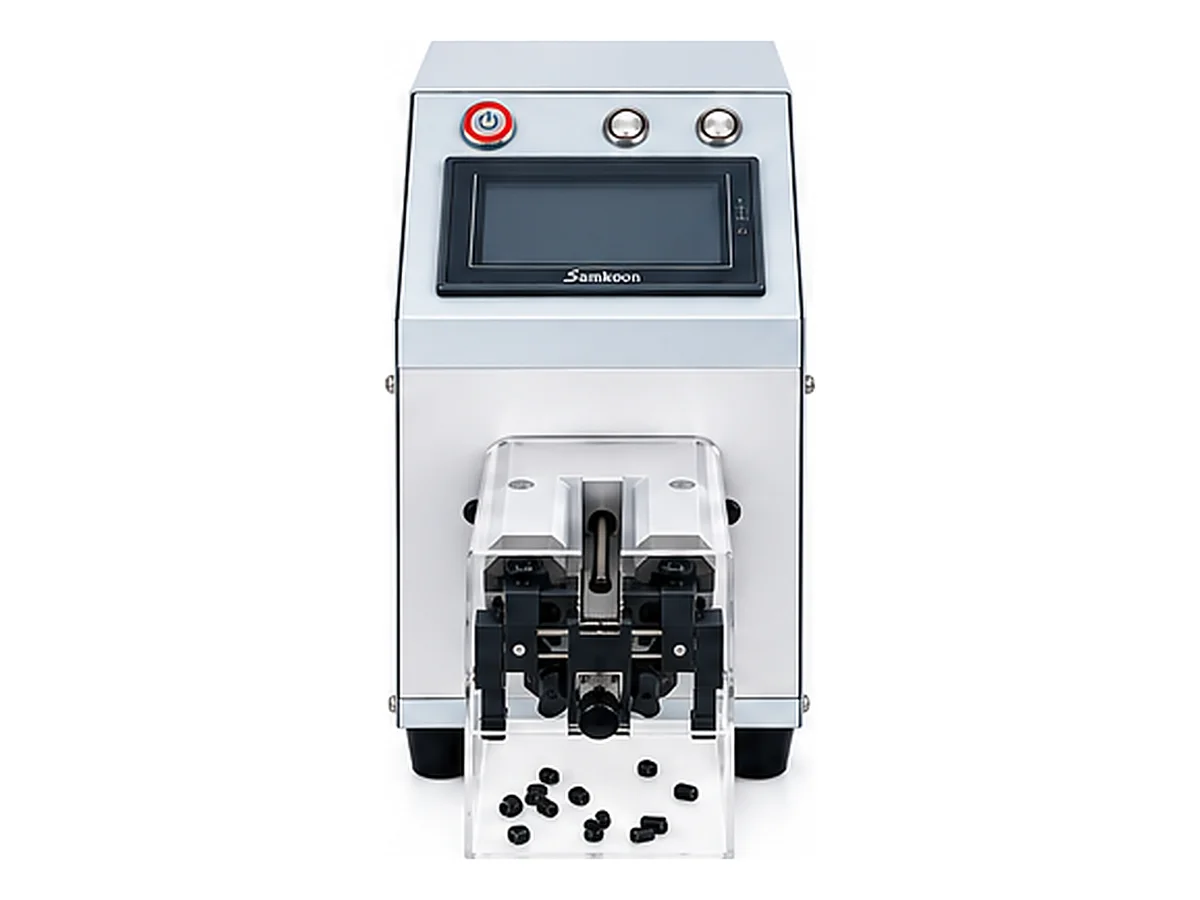
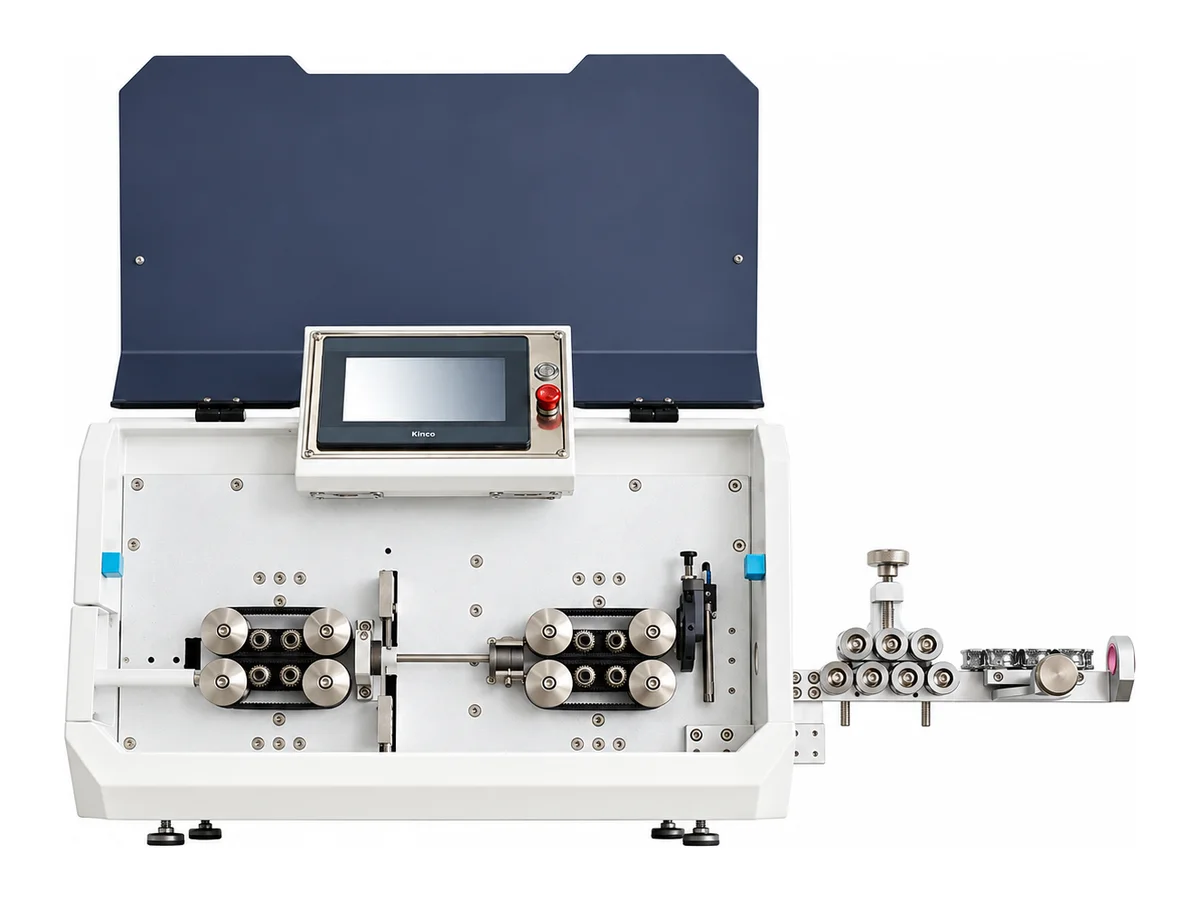
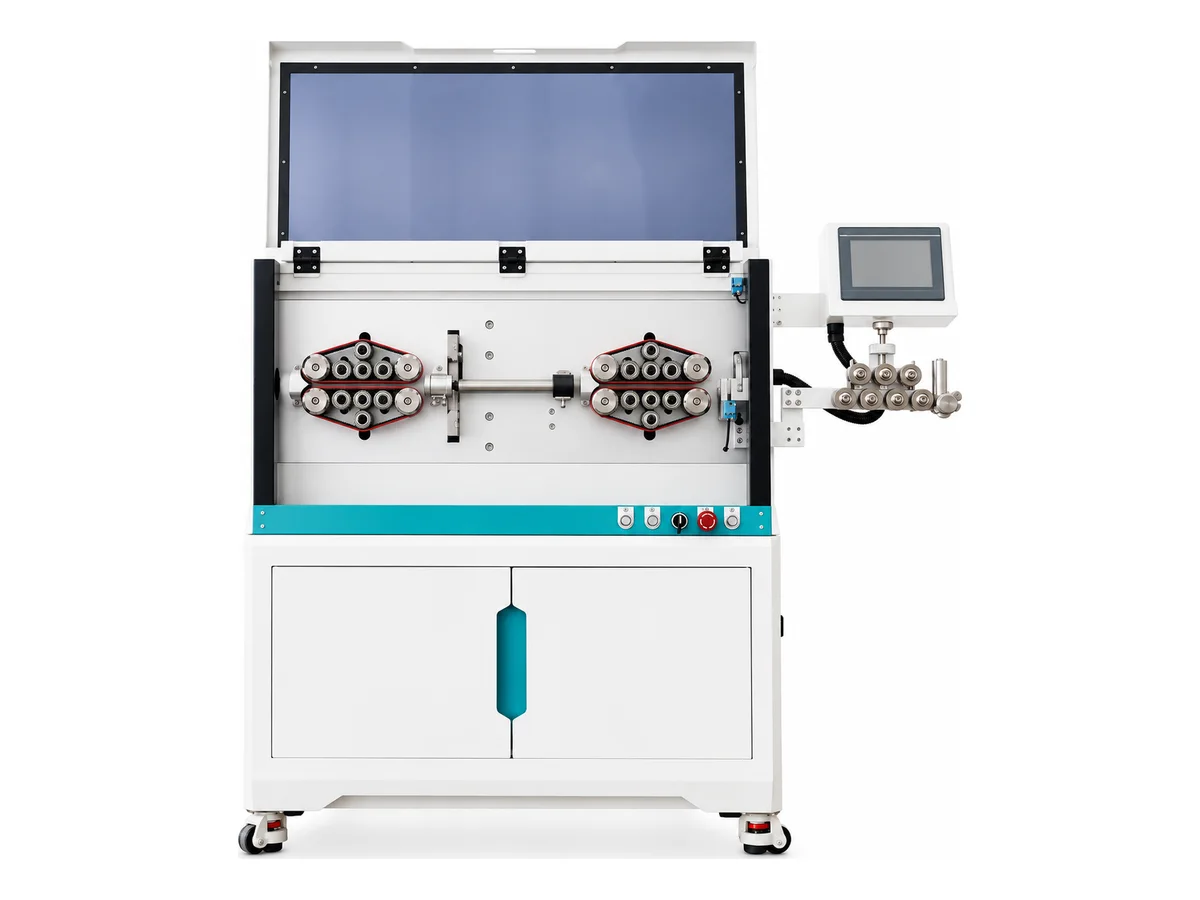
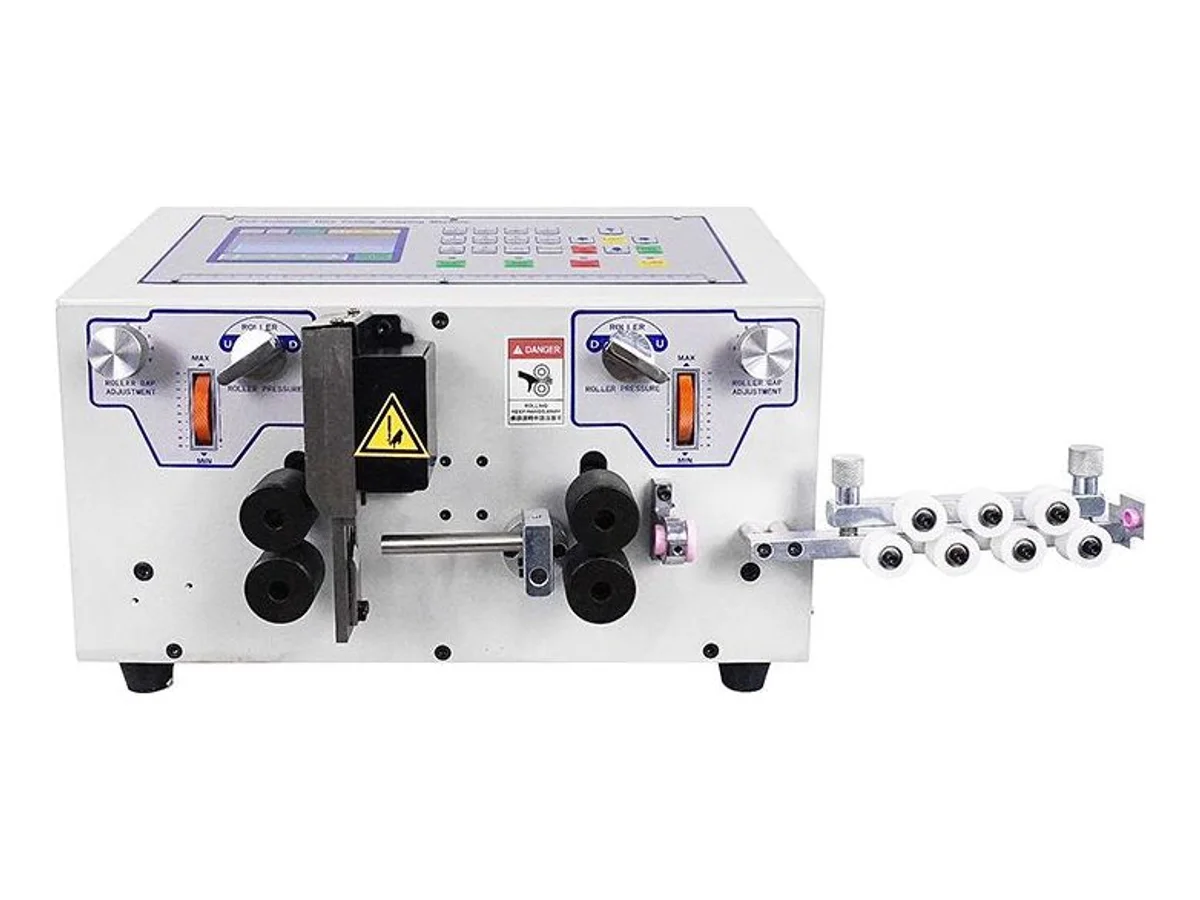
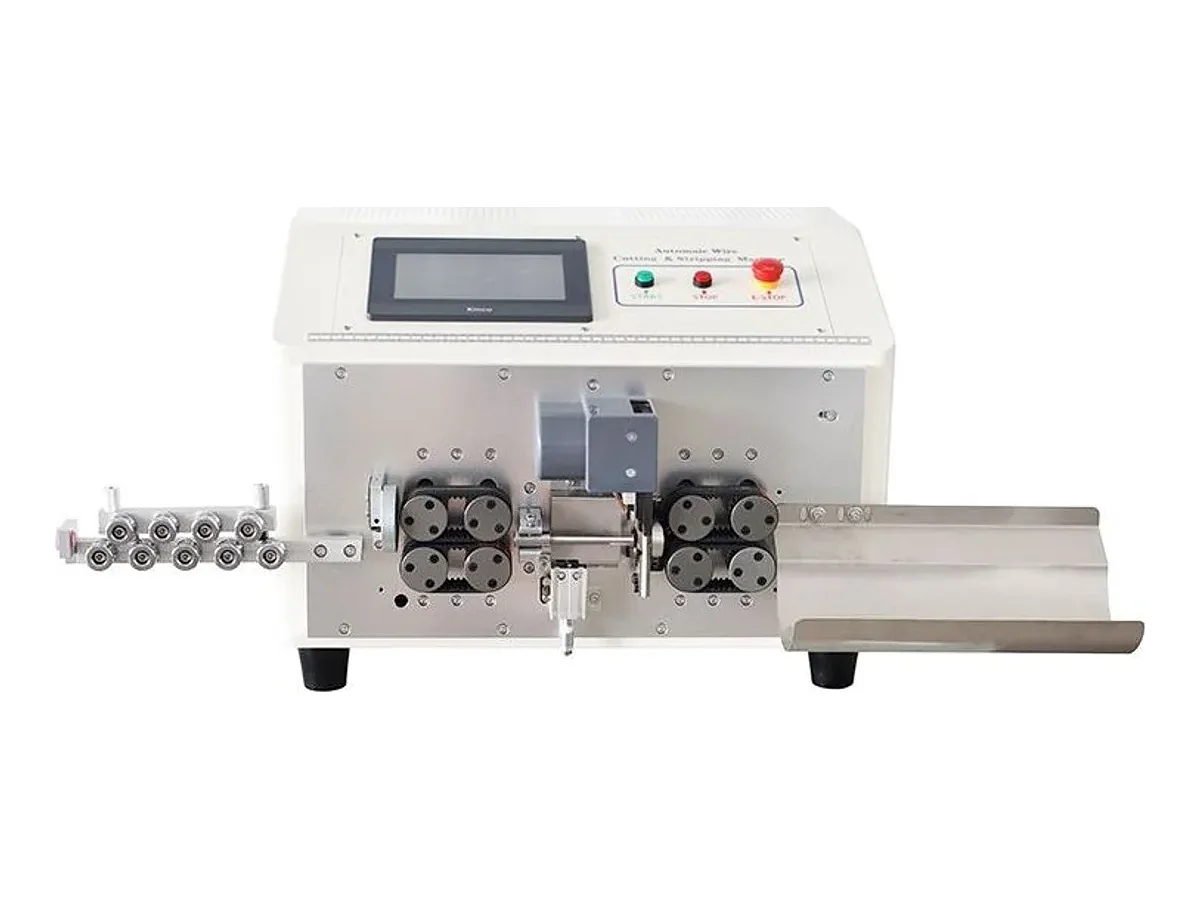
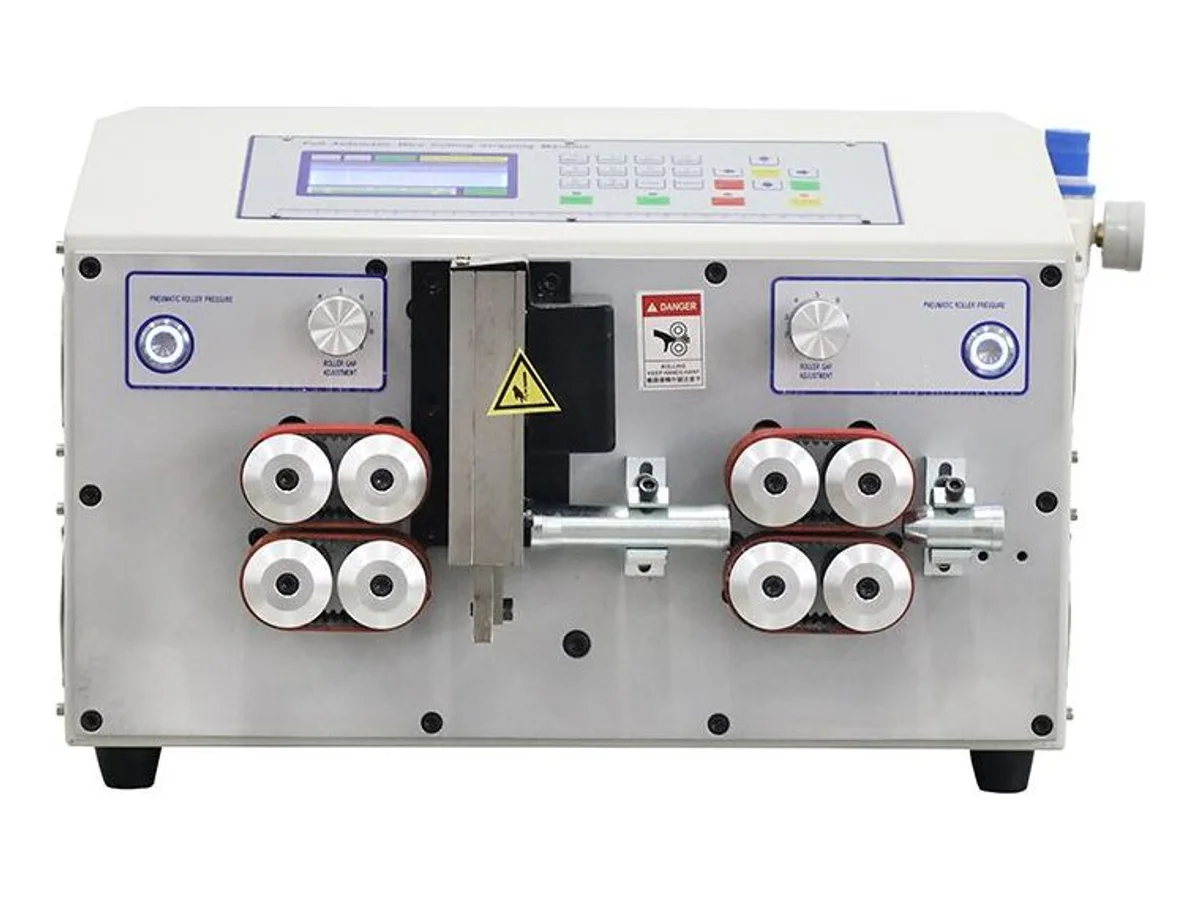
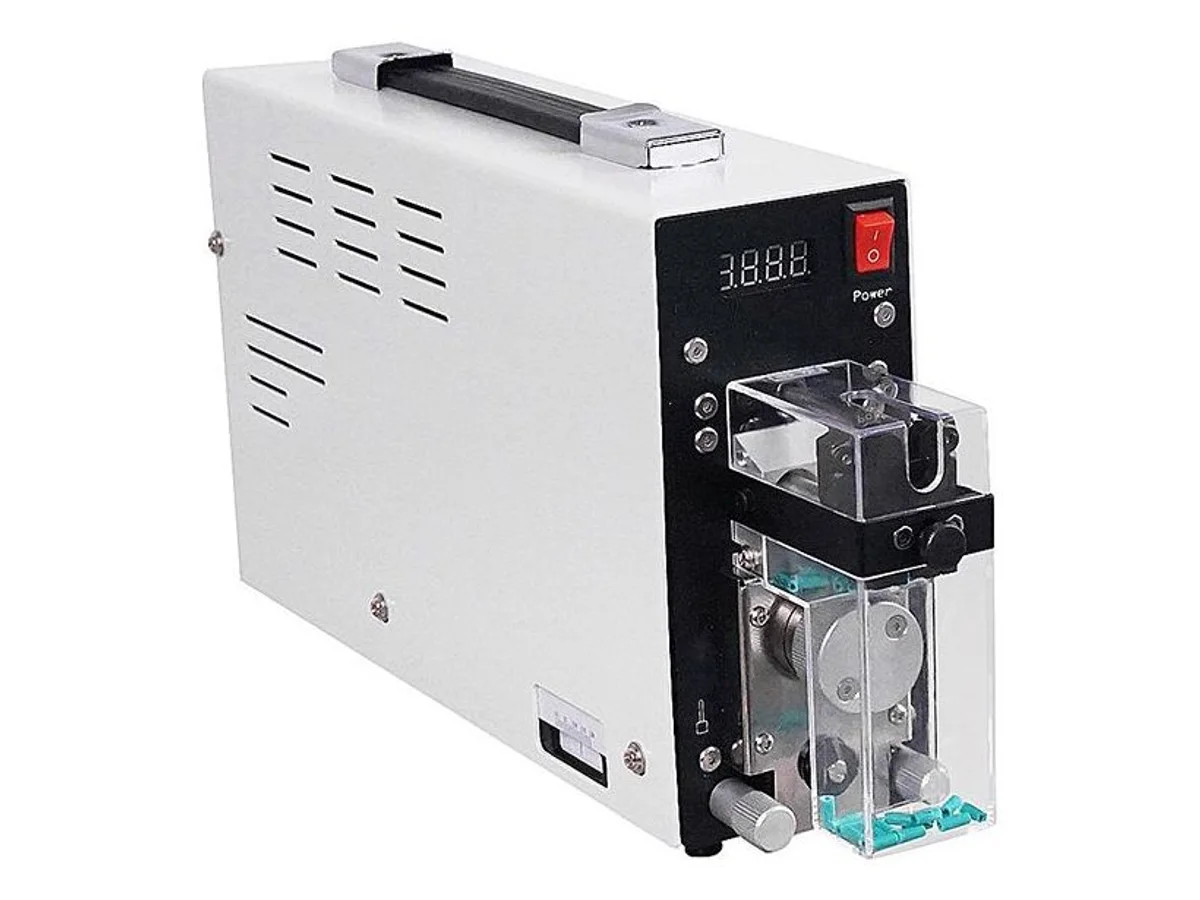
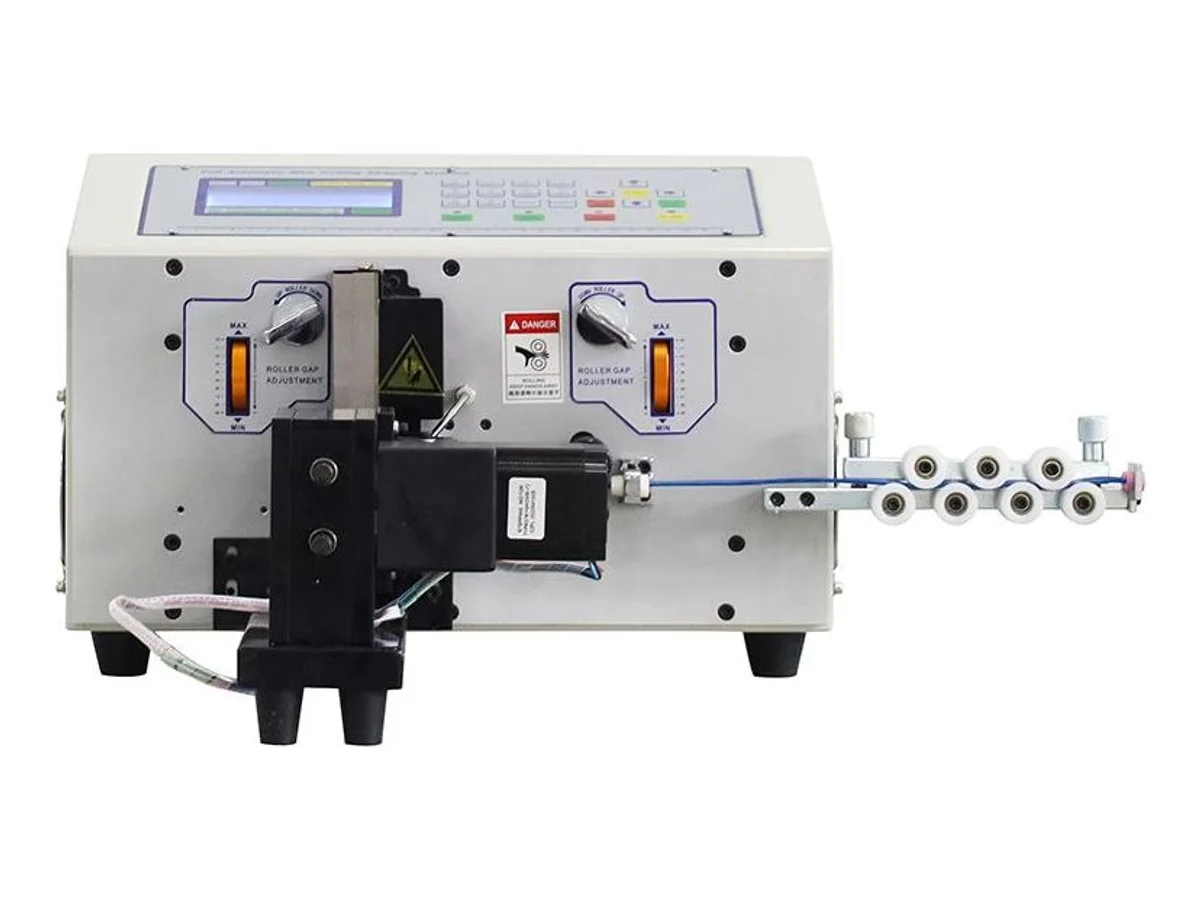
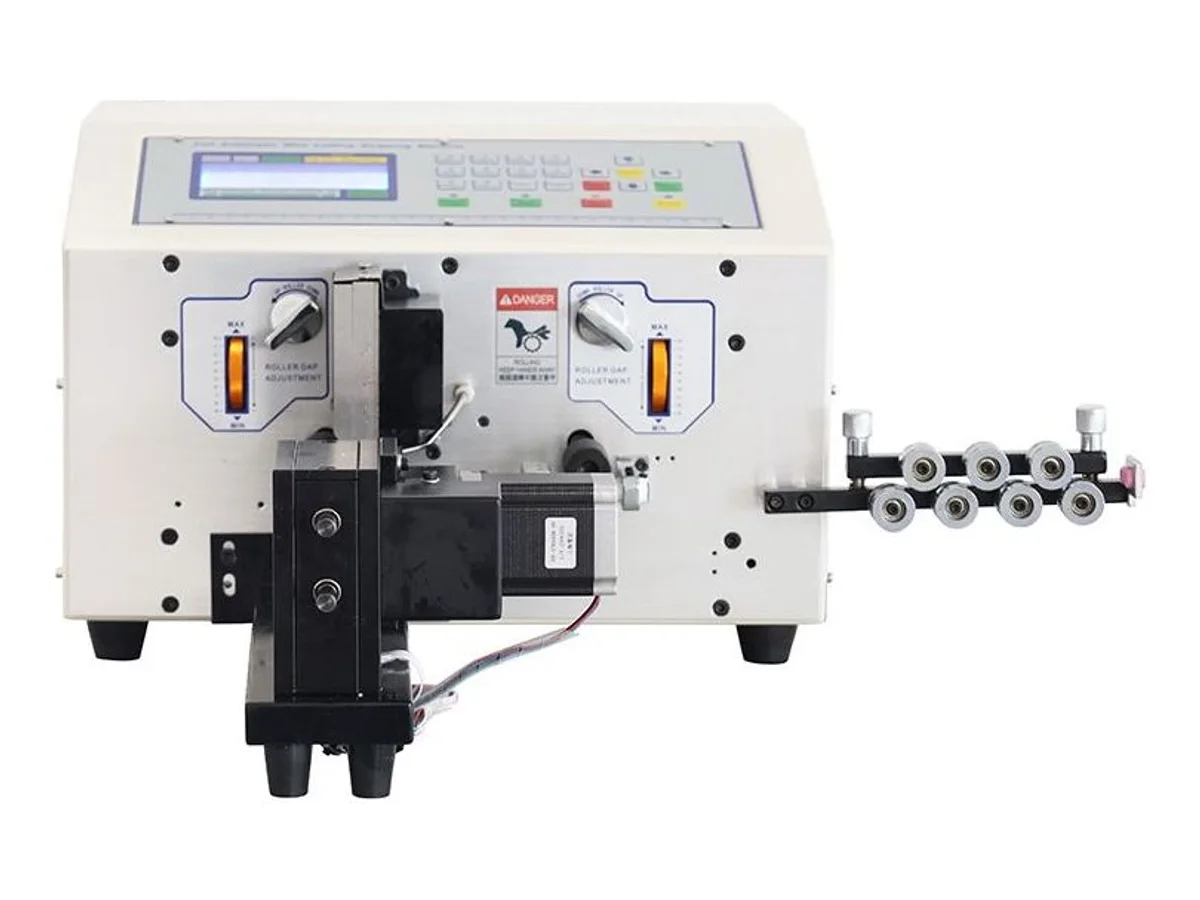
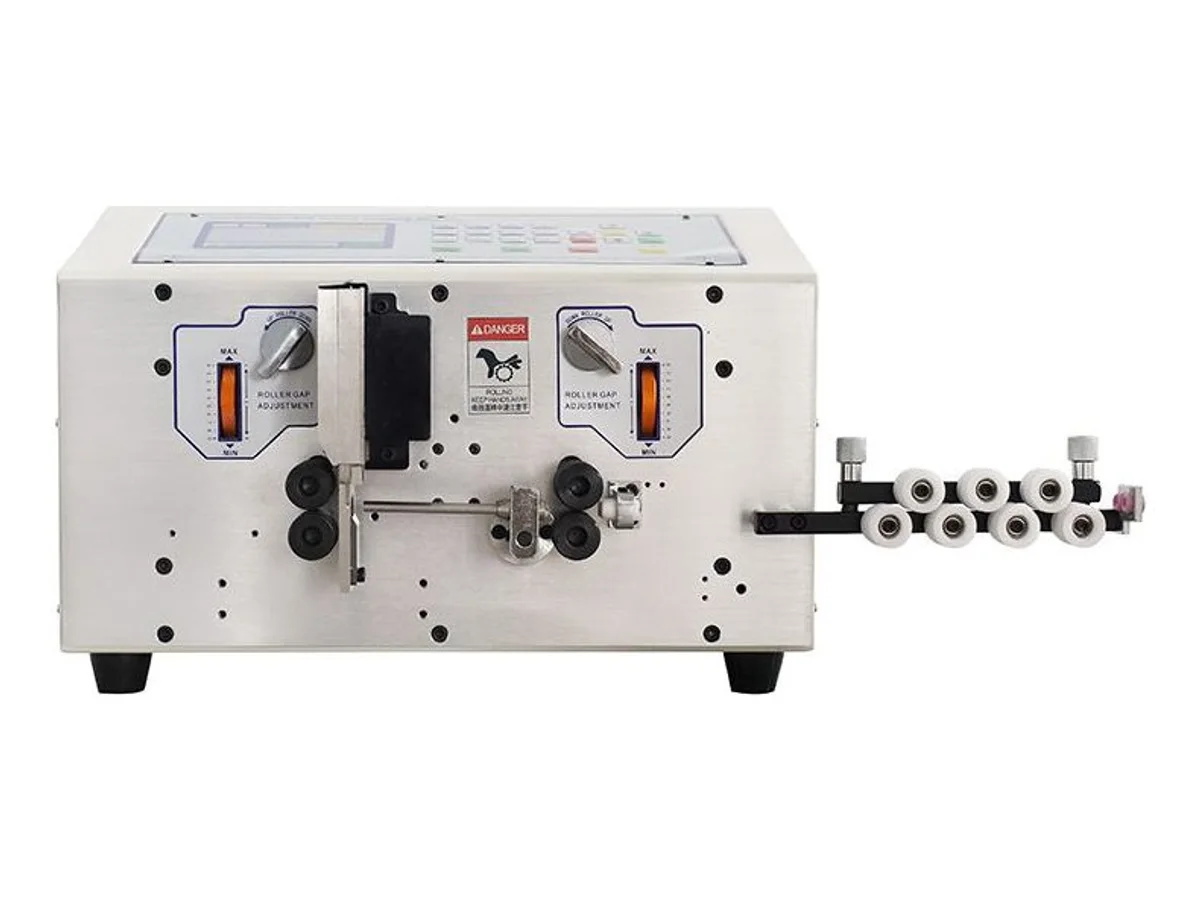
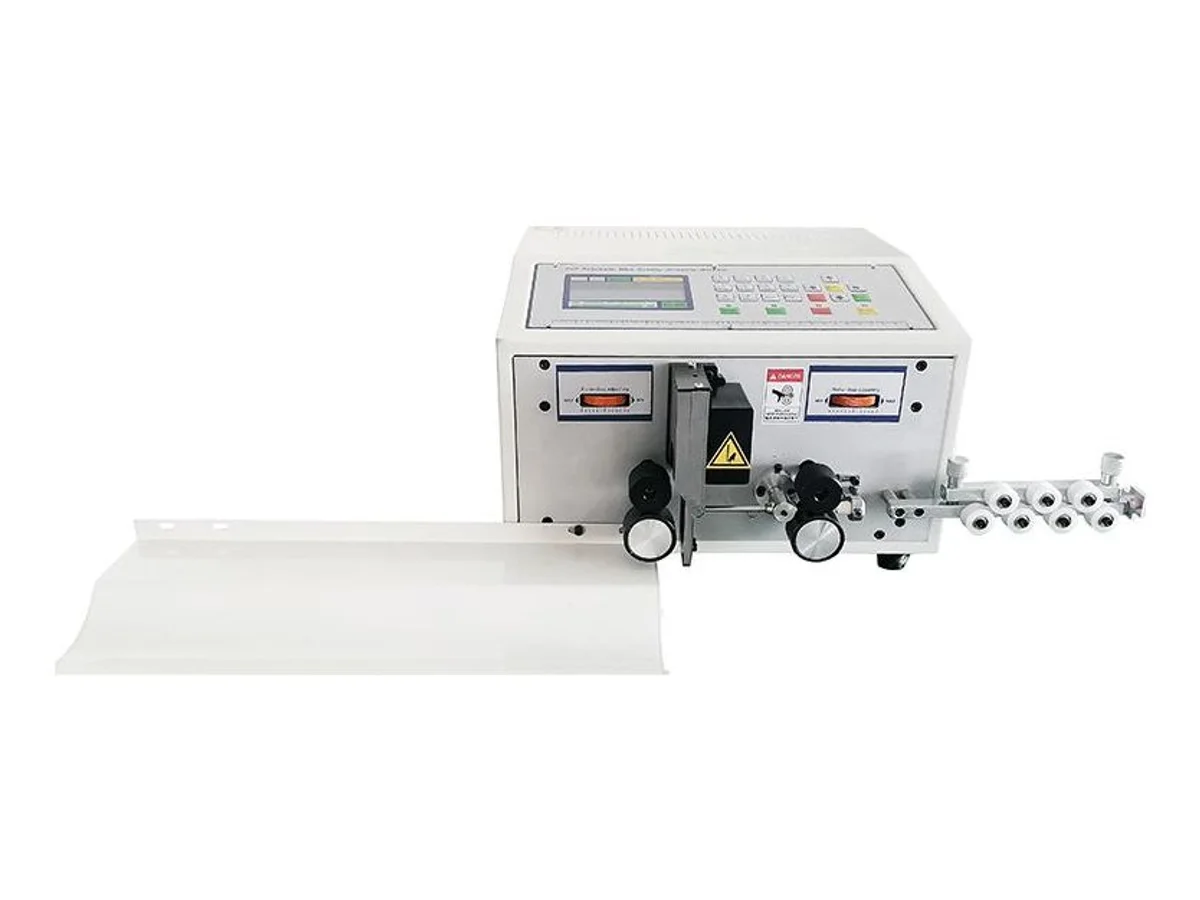
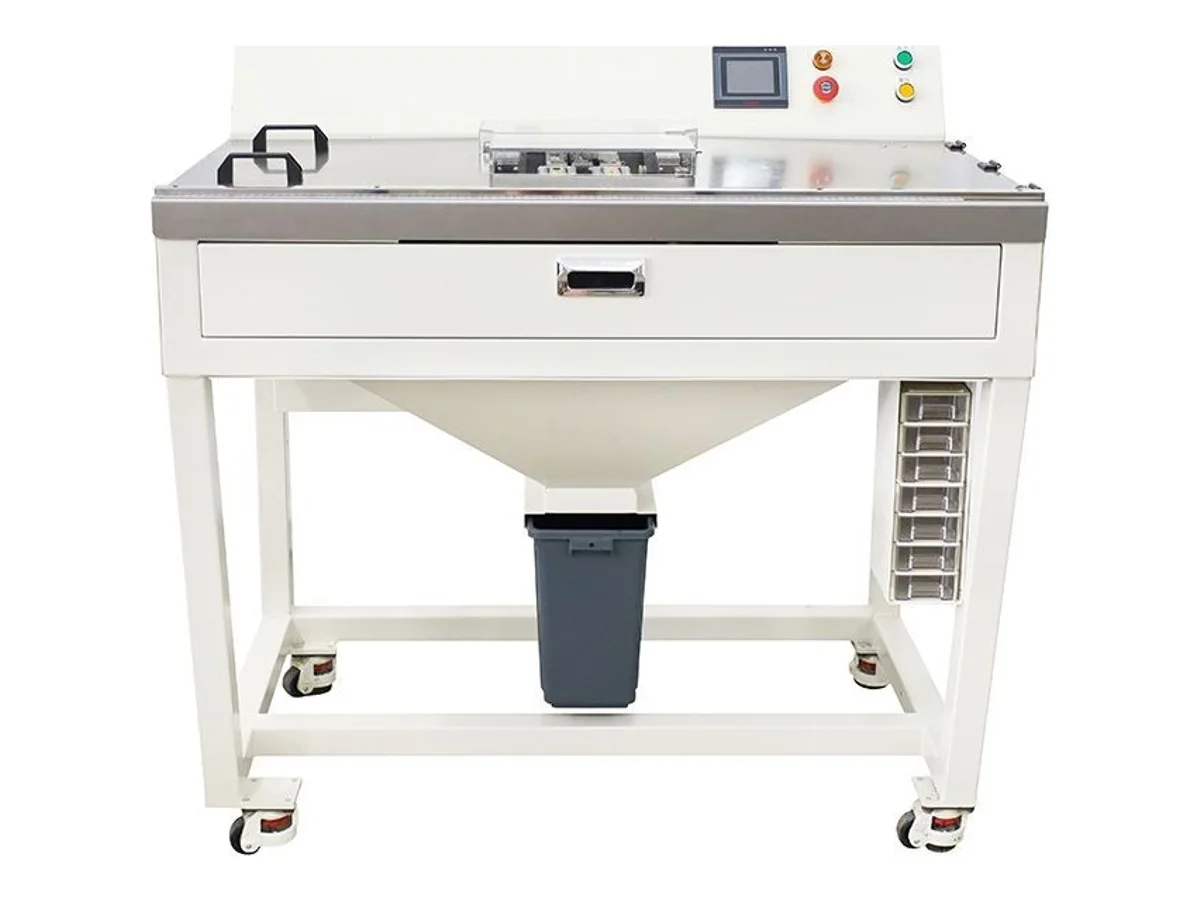
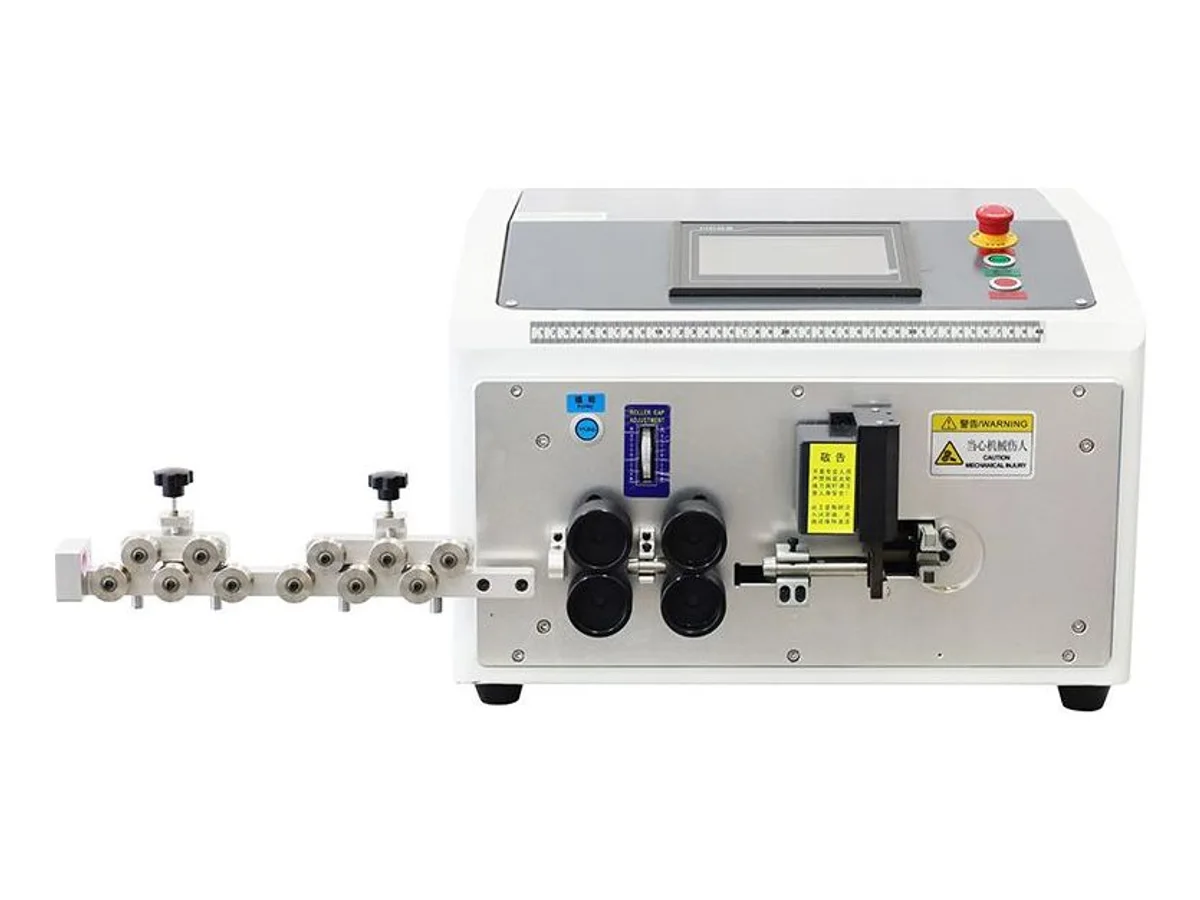
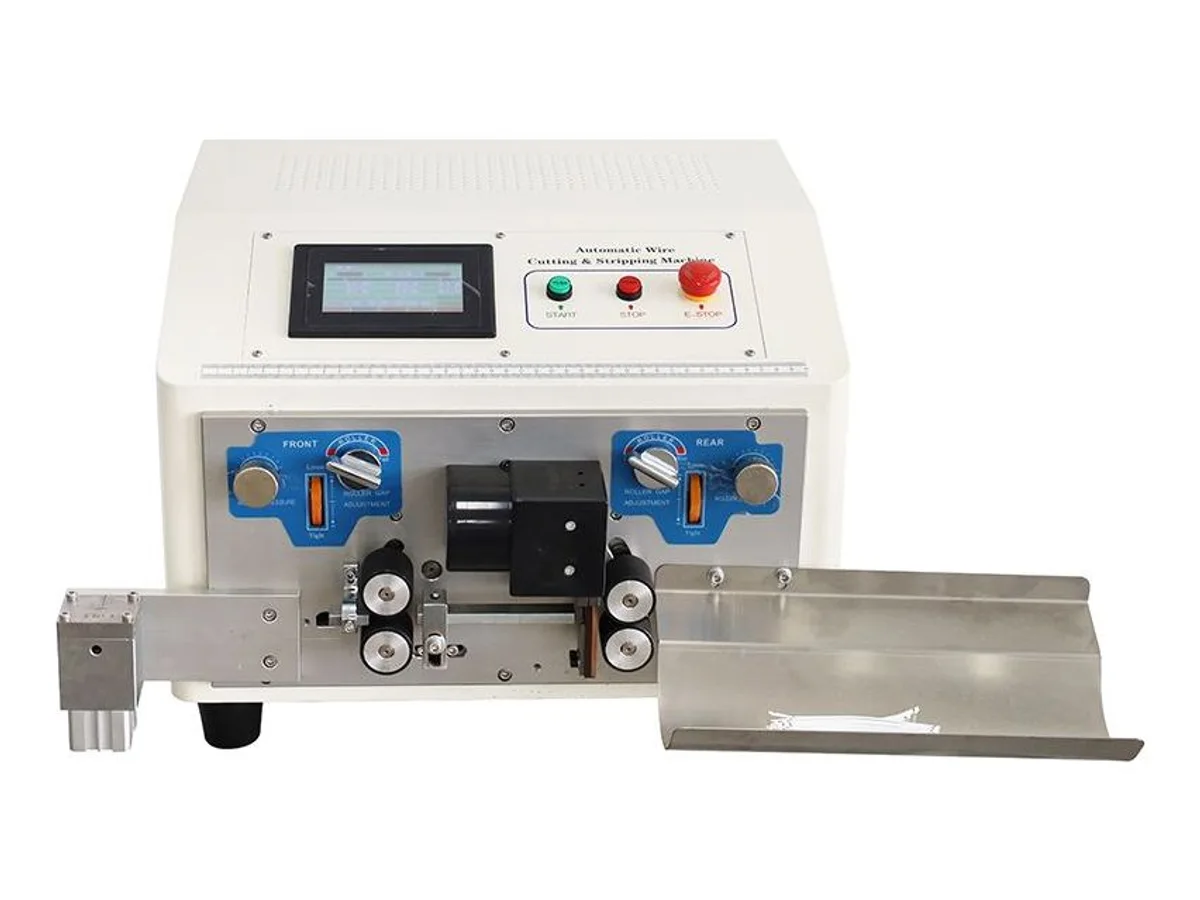
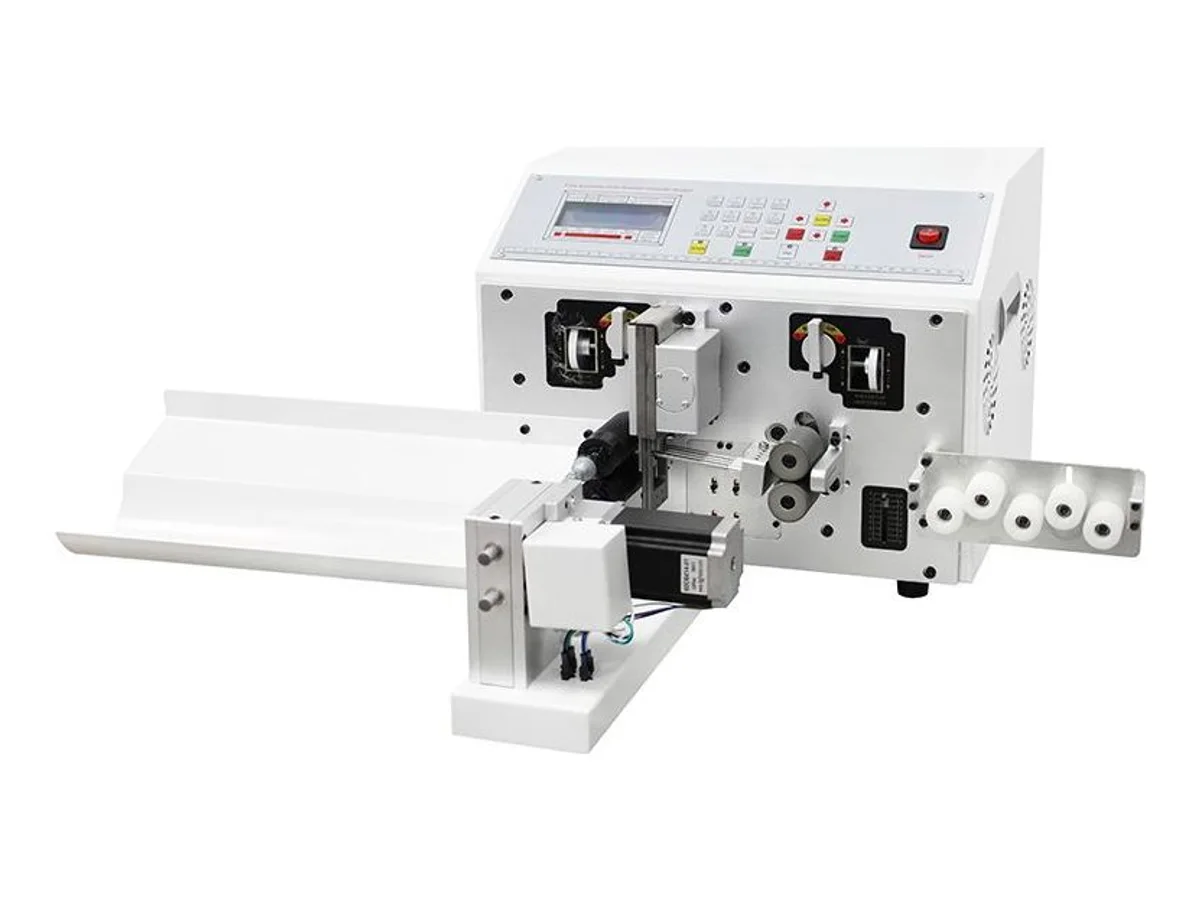
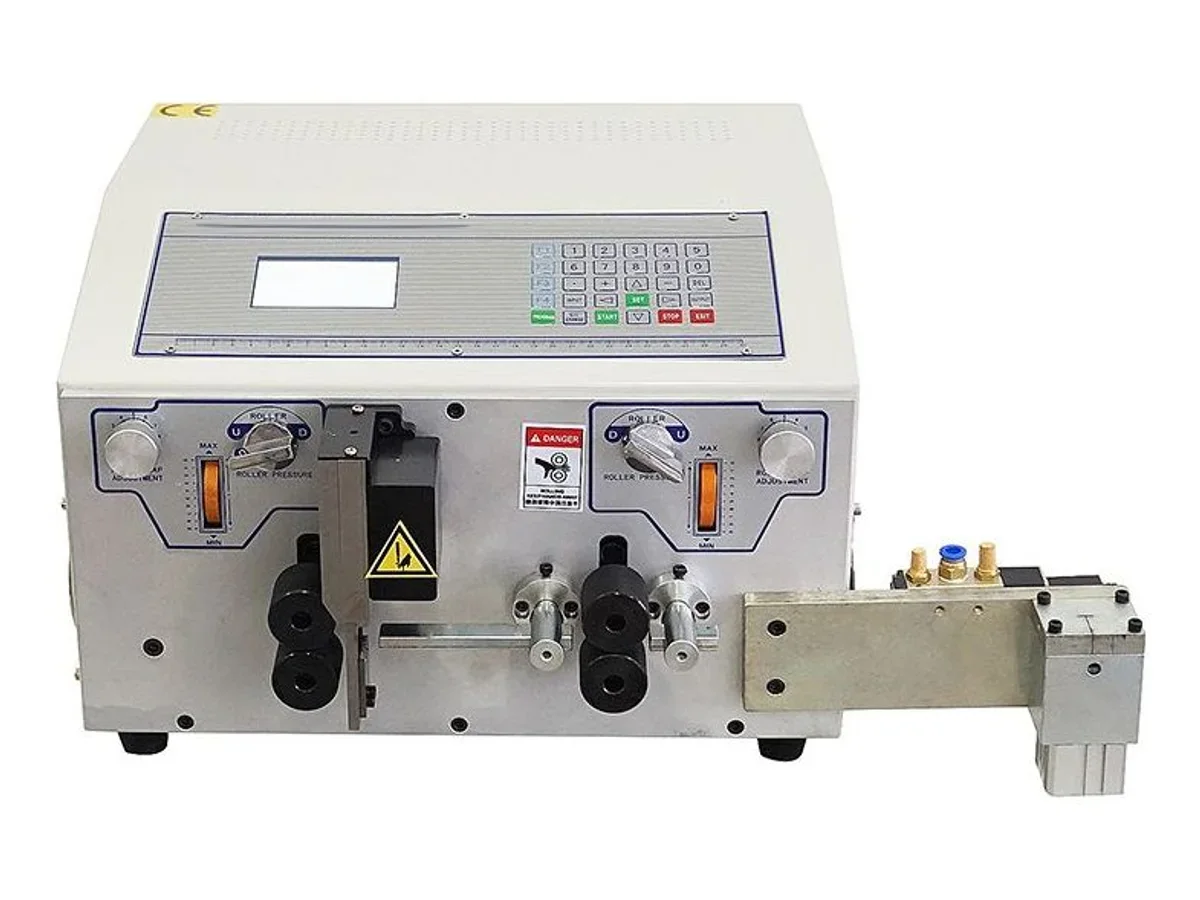
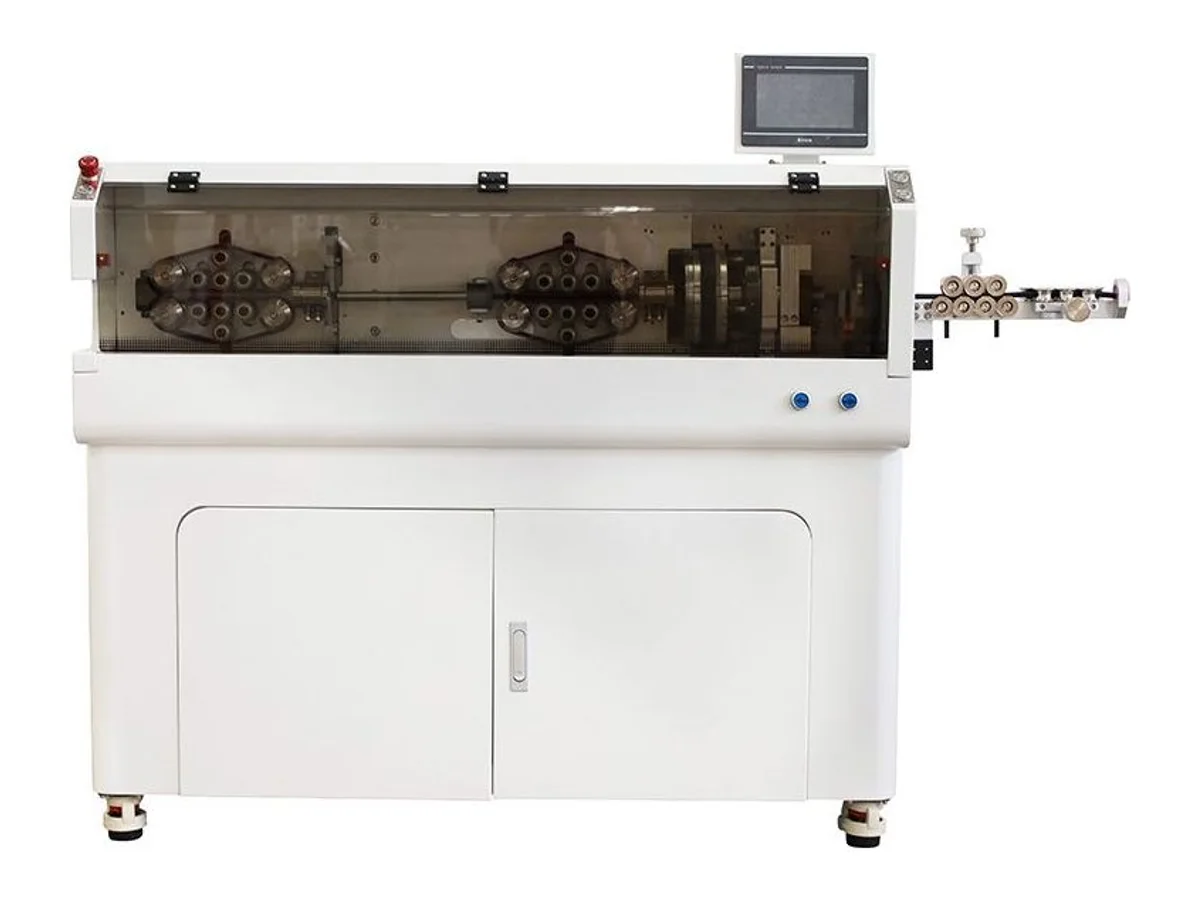
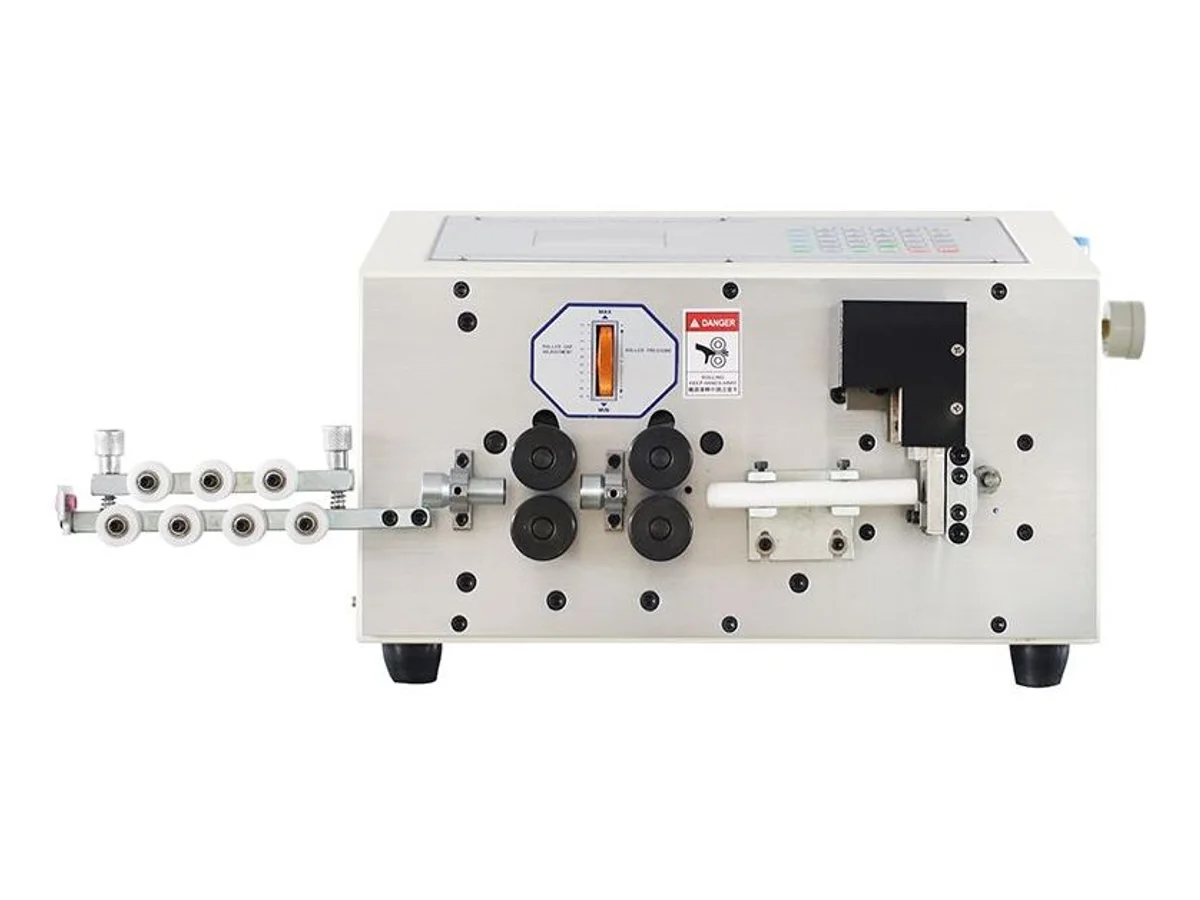
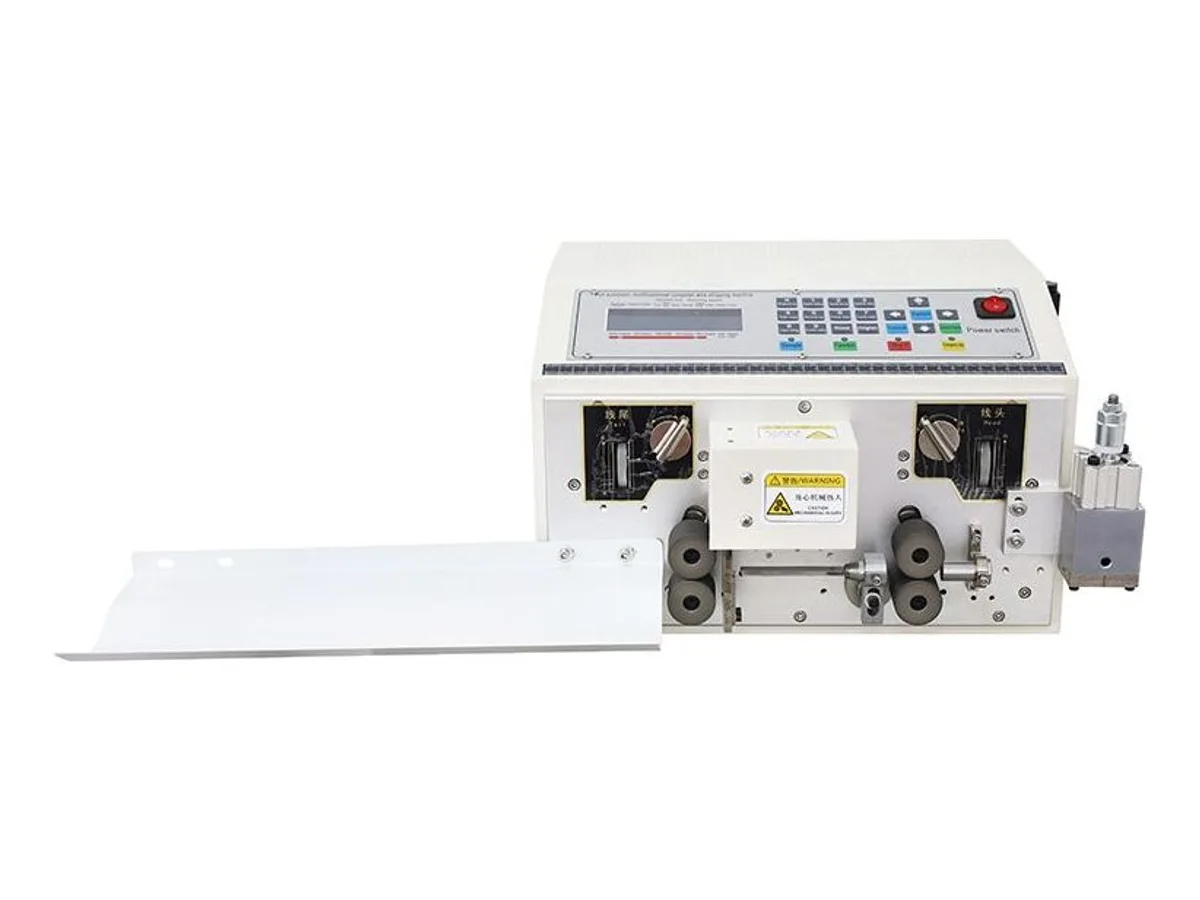
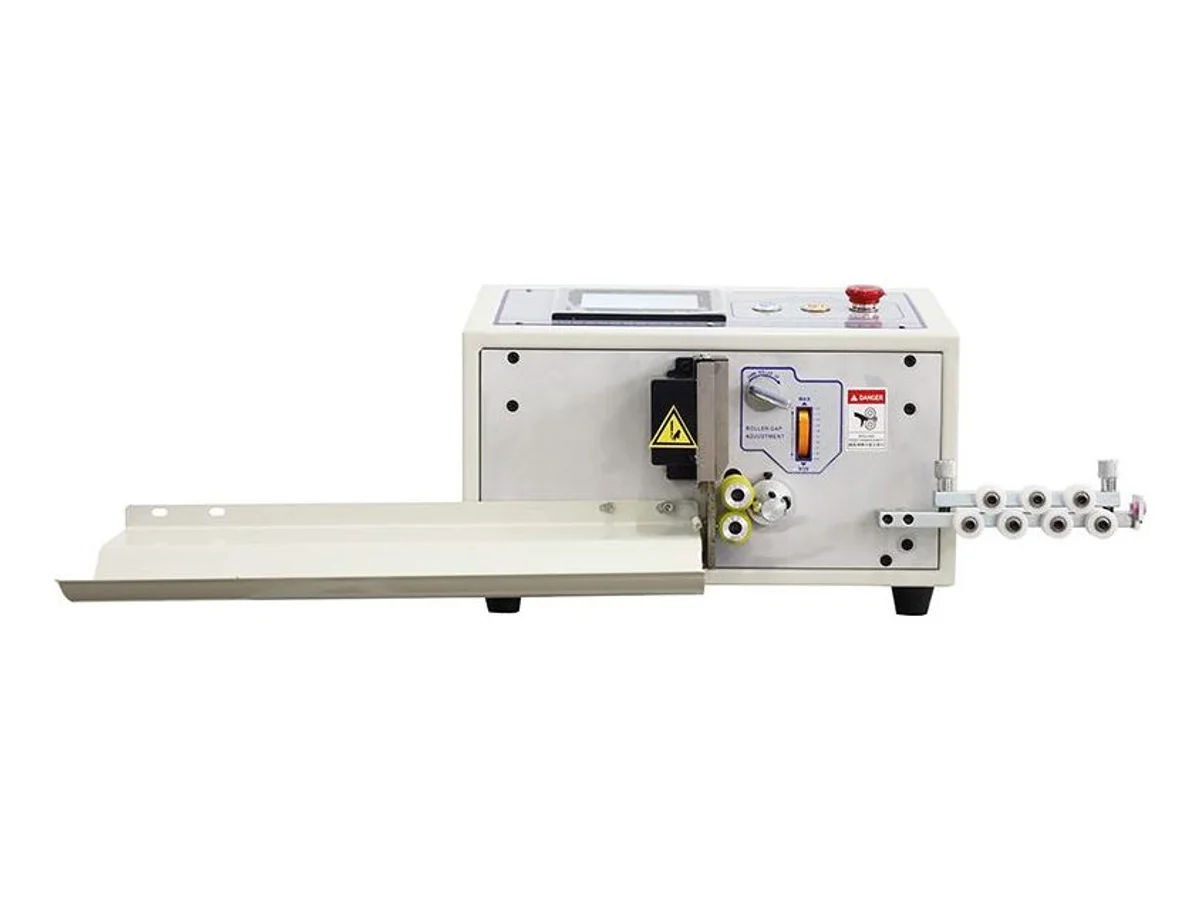
Wire size eliminates most of this category before any other question. Fine wire (from 0.03 mm²): dedicated strippers like the WM-1215C (0.03–2.08 mm², about 0.3 s per strip) and the WM-1219 (0.04–20 mm², inductive). The benchtop heart of most harness shops is the 0.1–10 mm² class: the WM-167 cuts and strips at 3,000–8,000 pcs/h from a bench, and the WM-187 adds strand twisting in the same cycle. Mid-range to 35 mm²: the WM-174Z (1–30 mm², 32-station tray) and the WM-178 (1.5–35 mm² benchtop). Large cable: the WM-197 holds 5,000–6,000 pcs/h on 6–70 mm²; the WM-1450 reaches 150 mm²; the WM-175 tops the ladder at 30–300 mm² — and its honest 100–700 pcs/h shows the physics: jacket volume, not machine quality, sets large-cable speed. Throughput multipliers run wires in parallel instead of faster: the WM-188 feeds two wires for 4,000–10,000 pcs/h, the WM-1231 runs four, the WM-194 drives 0.3–25 mm² wire on eight wheels at 4,000–5,000 pcs/h.
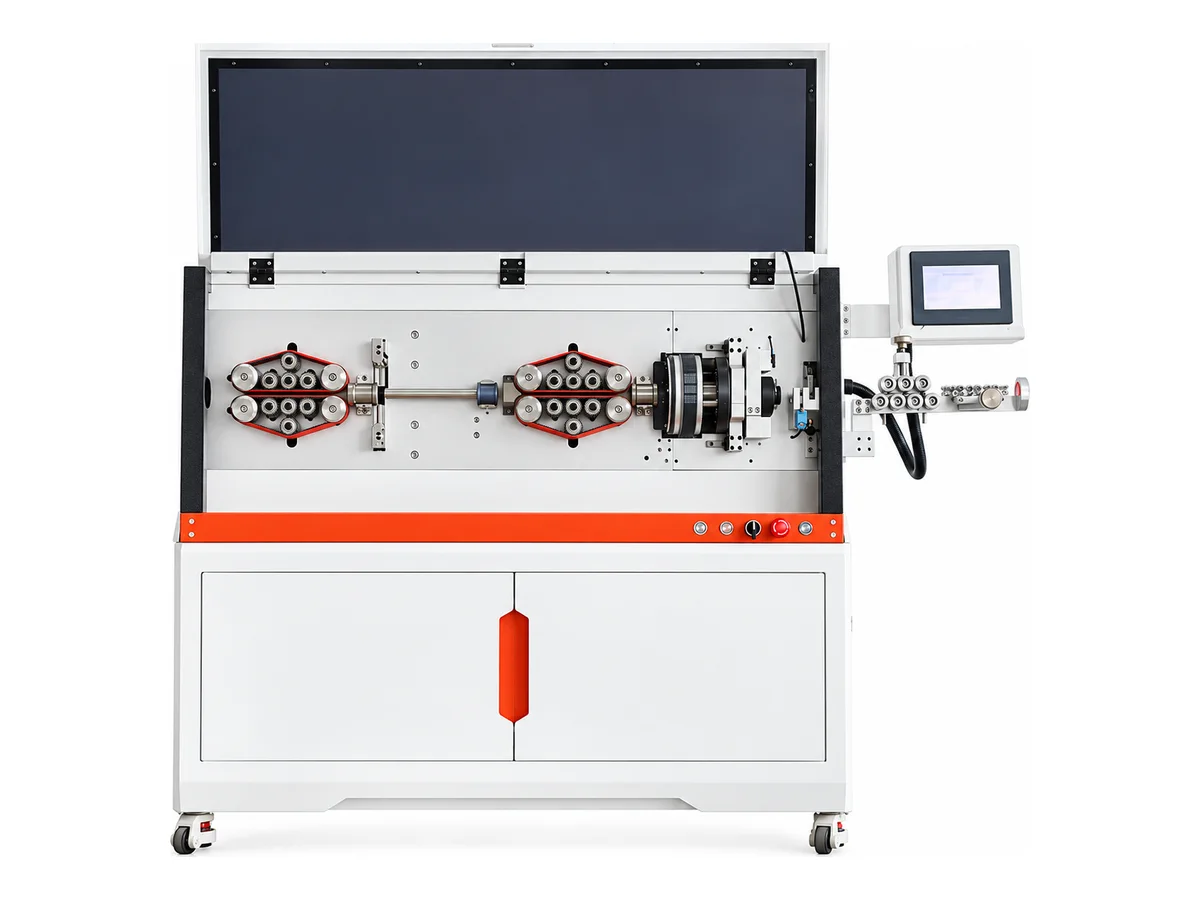
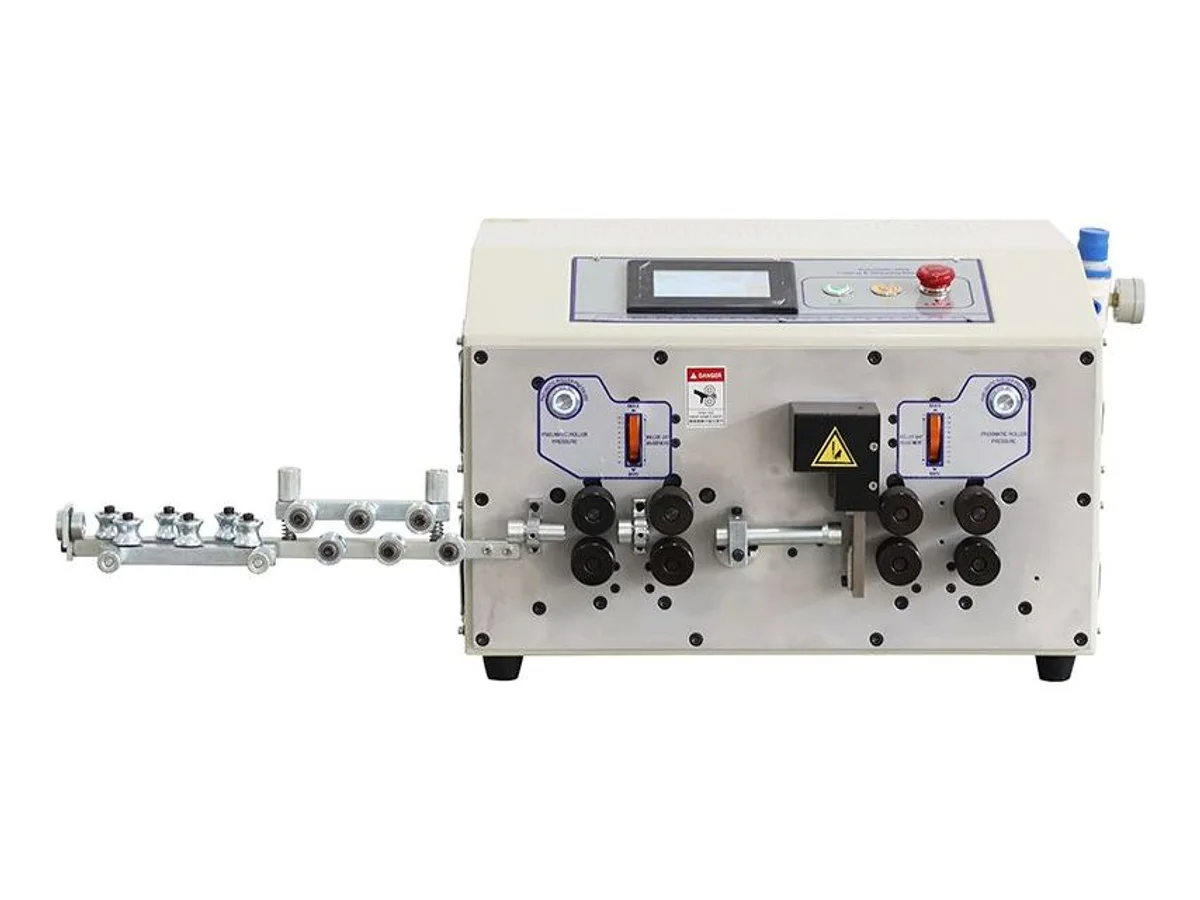
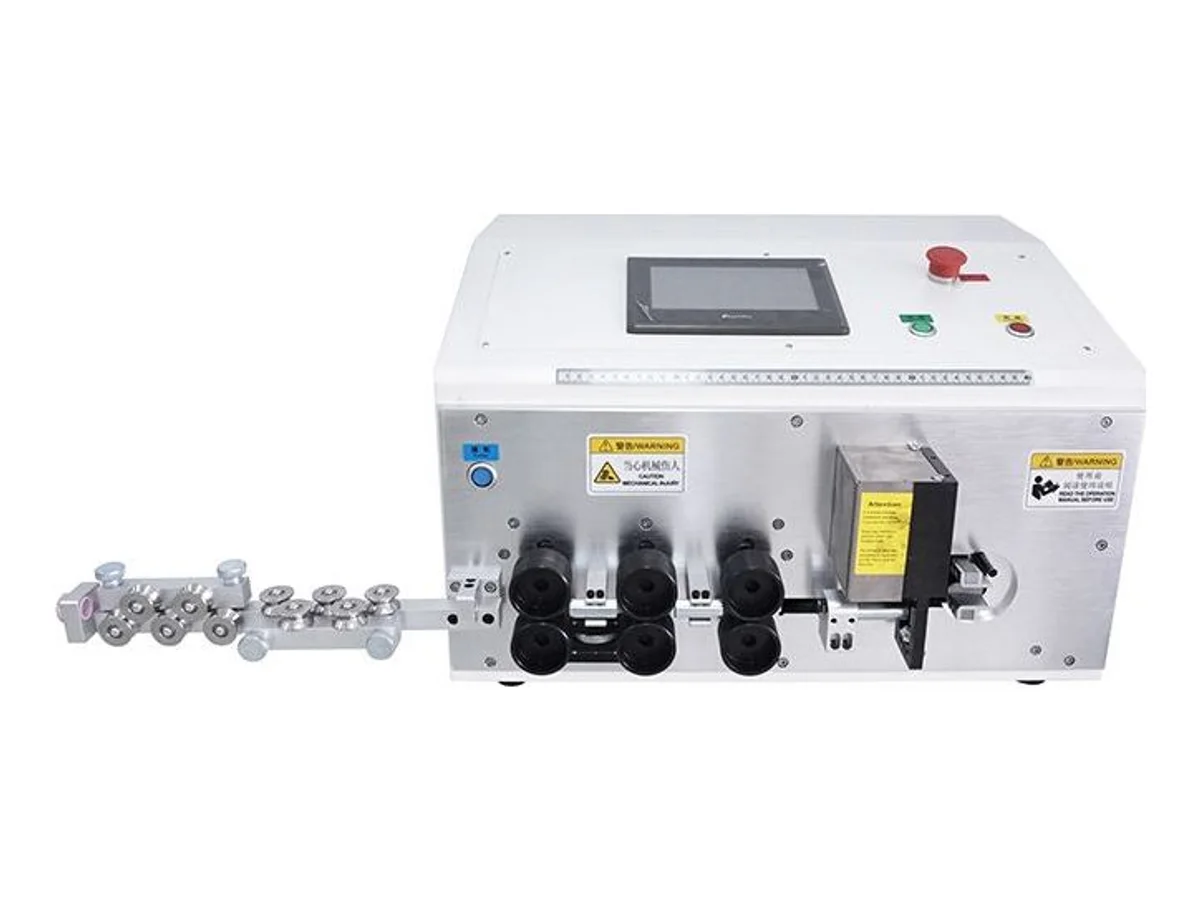
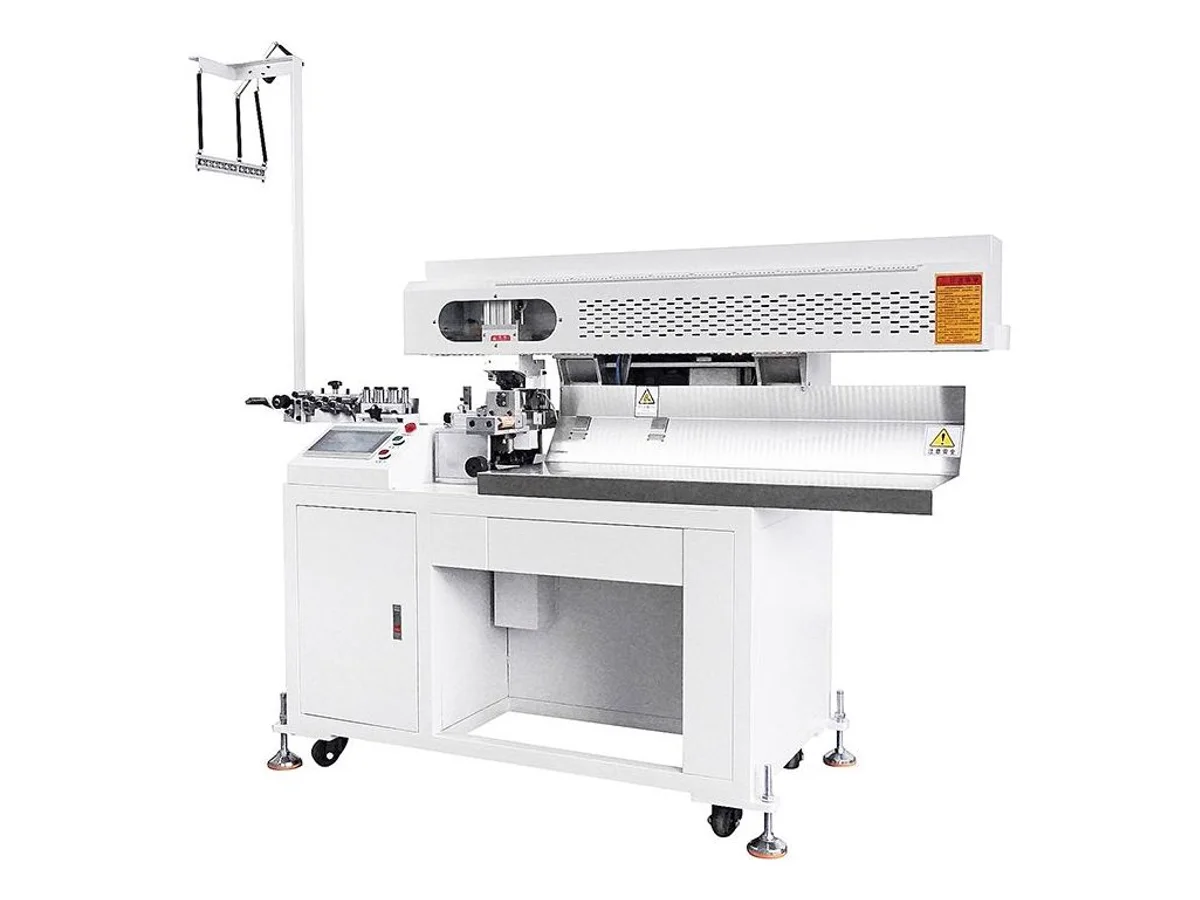
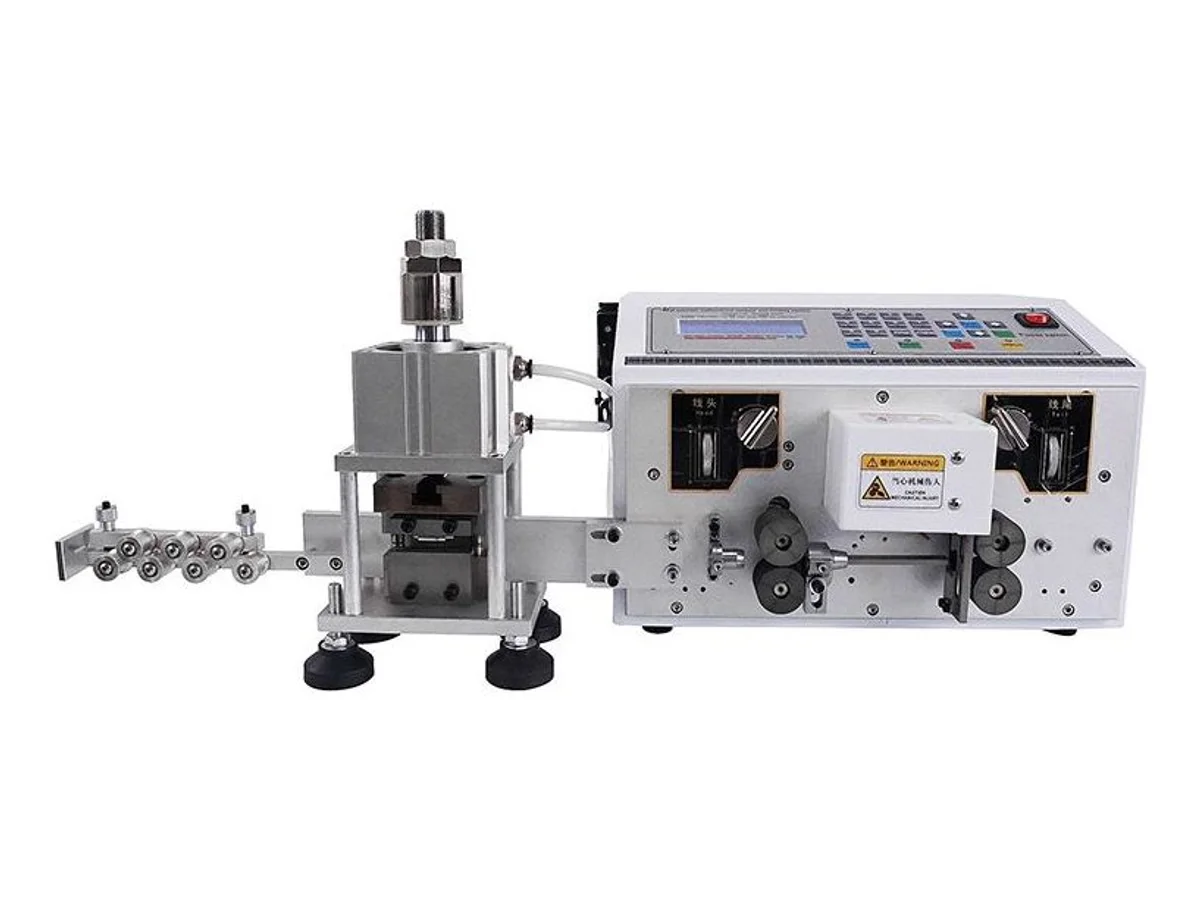
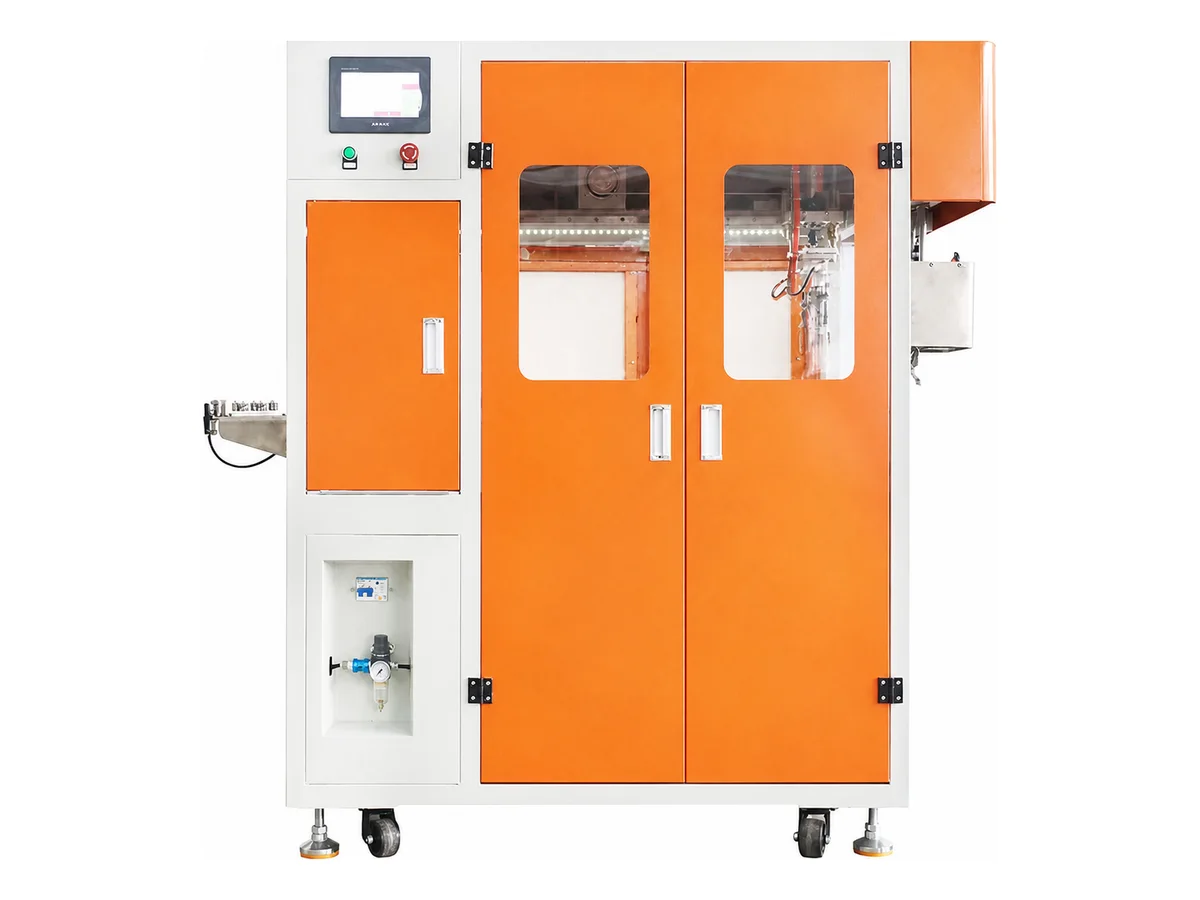
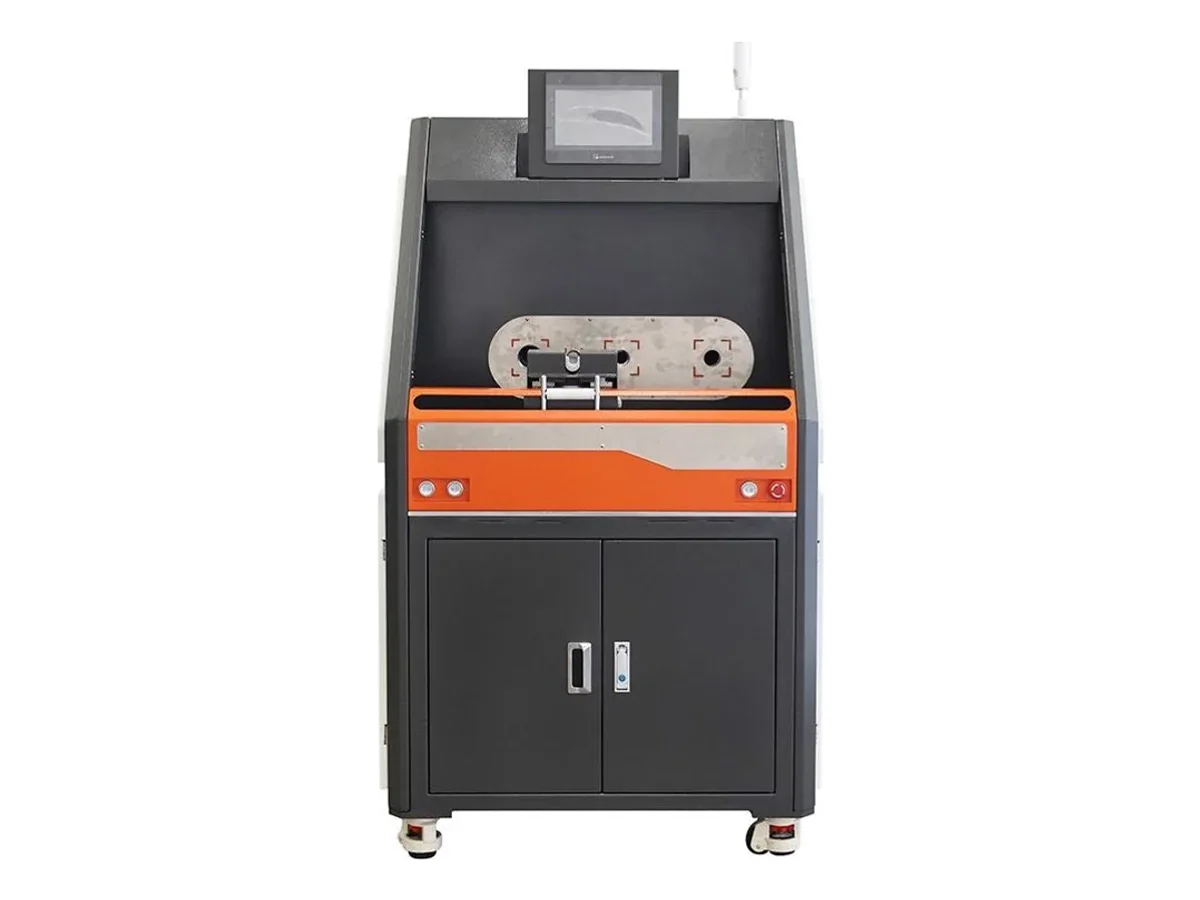
Multi-layer cable needs each layer stripped at its own depth and length: the WM-1545 programs four layers on Ø0.5–7 mm cable, the WM-1225 does the same to Ø10 mm, the WM-172 opens three layers on 6–150 mm², and the WM-199 is the EV specialist — strips high-voltage cable of 2.5–150 mm² and folds the shield back in the same cycle. Sheathed multi-core is its own family: the WM-168HT opens the jacket and strips 2–8 cores on Φ3–10 mm cable at 1,100 pcs/h, and the WM-198 strips each core to a different length for staggered terminations. Flat and ribbon: the WM-1220 handles 2–12P ribbon at 3,000–8,000 pcs/h and the WM-161PX slits and strips flat cable of 10–120 mm². Then the specialists that answer one question each: enameled wire (paint stripped mechanically, Φ0.7–3.0 mm), flexible busbar peeling (1×10 to 8×80 mm), mid-span stripping for daisy chains, shield layer cutting and braid brush and fold-back for shielded ends, and network cable untwisting for Cat-5/6 and HDMI. If your cable is coaxial, that ladder lives in its own category.
| Machine | Segment | Wire range | Output | Pick it for |
|---|---|---|---|---|
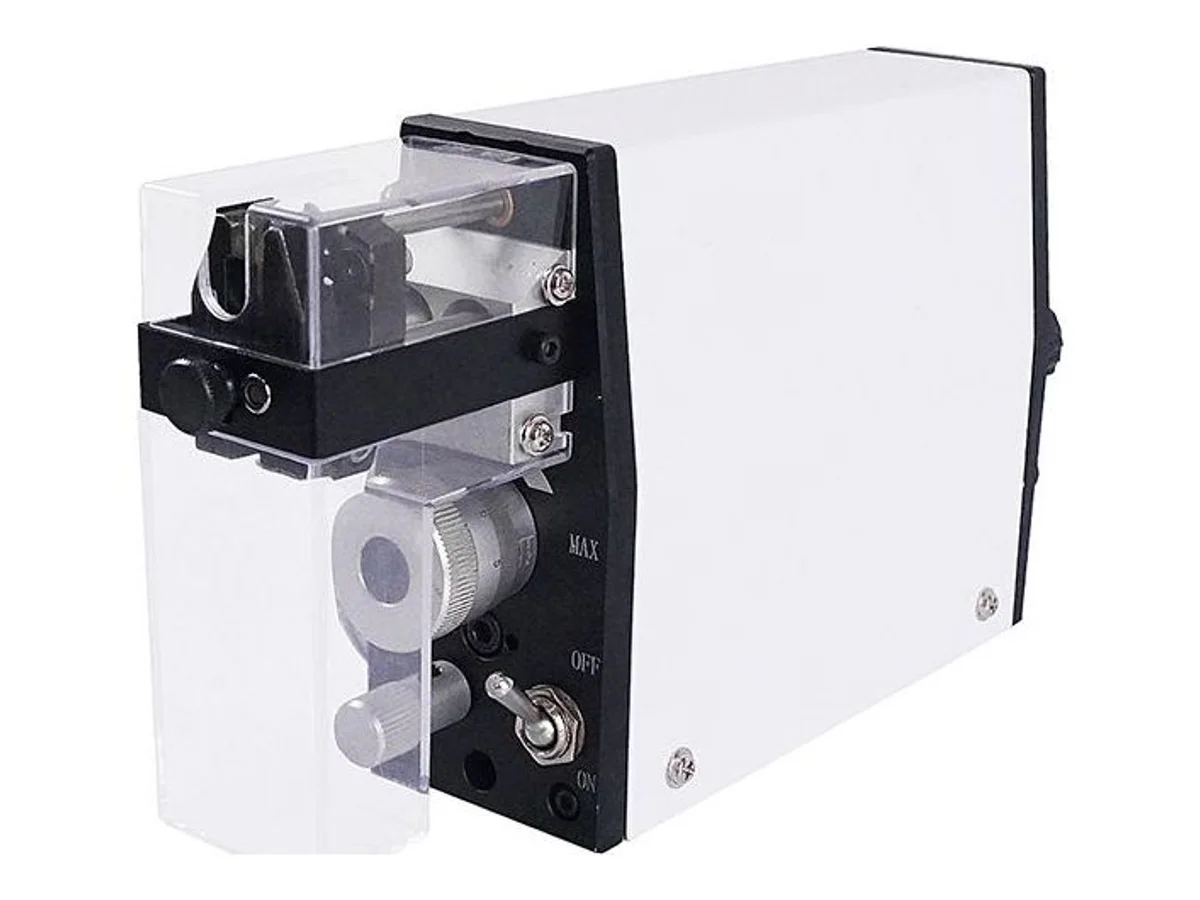
| WM-1215C | Fine-wire stripping | 0.03–2.08 mm² | ≈0.3 s/strip | Pneumatic precision on the smallest wire |
| WM-1219 | Fine-to-mid stripping | 0.04–20 mm² (AWG 30–4) | 1,800–2,000 pcs/h | One stripper across a wide span |
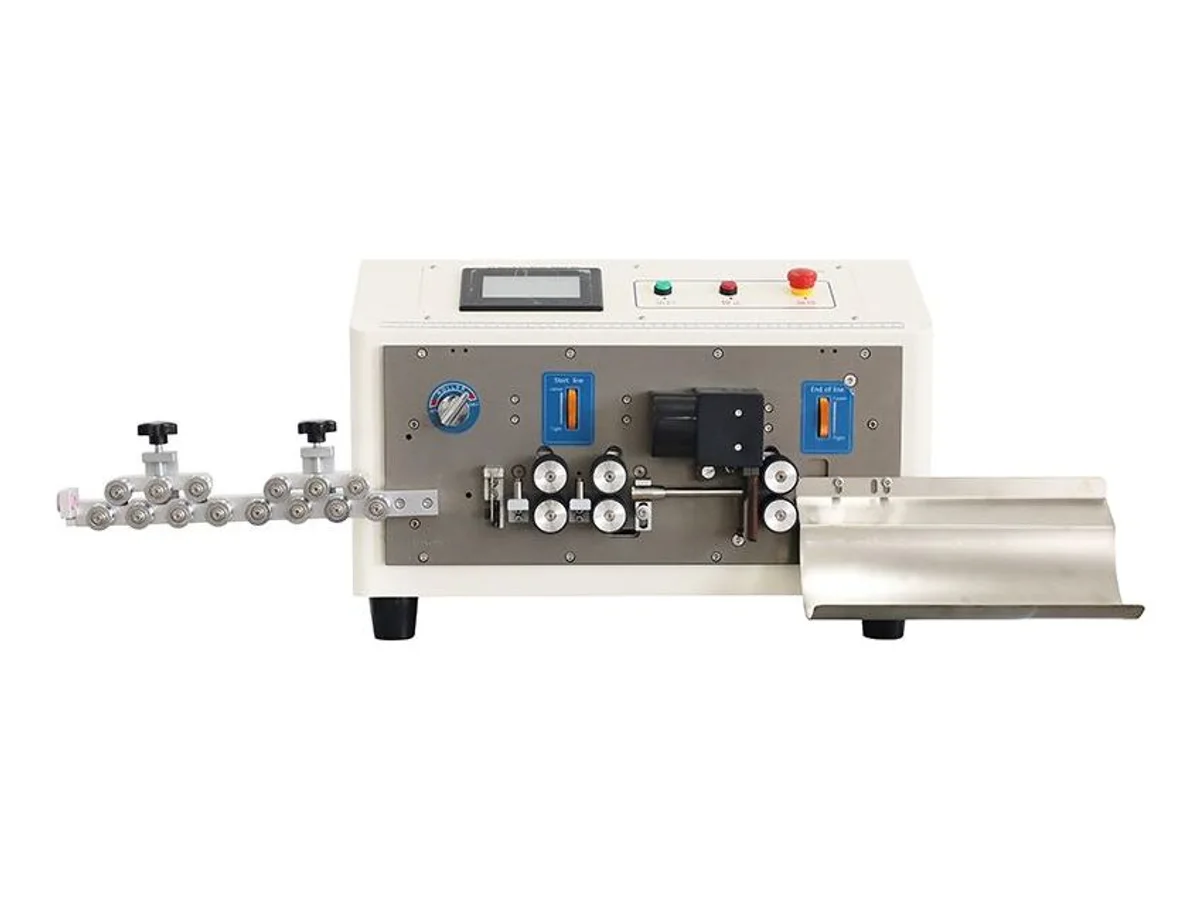
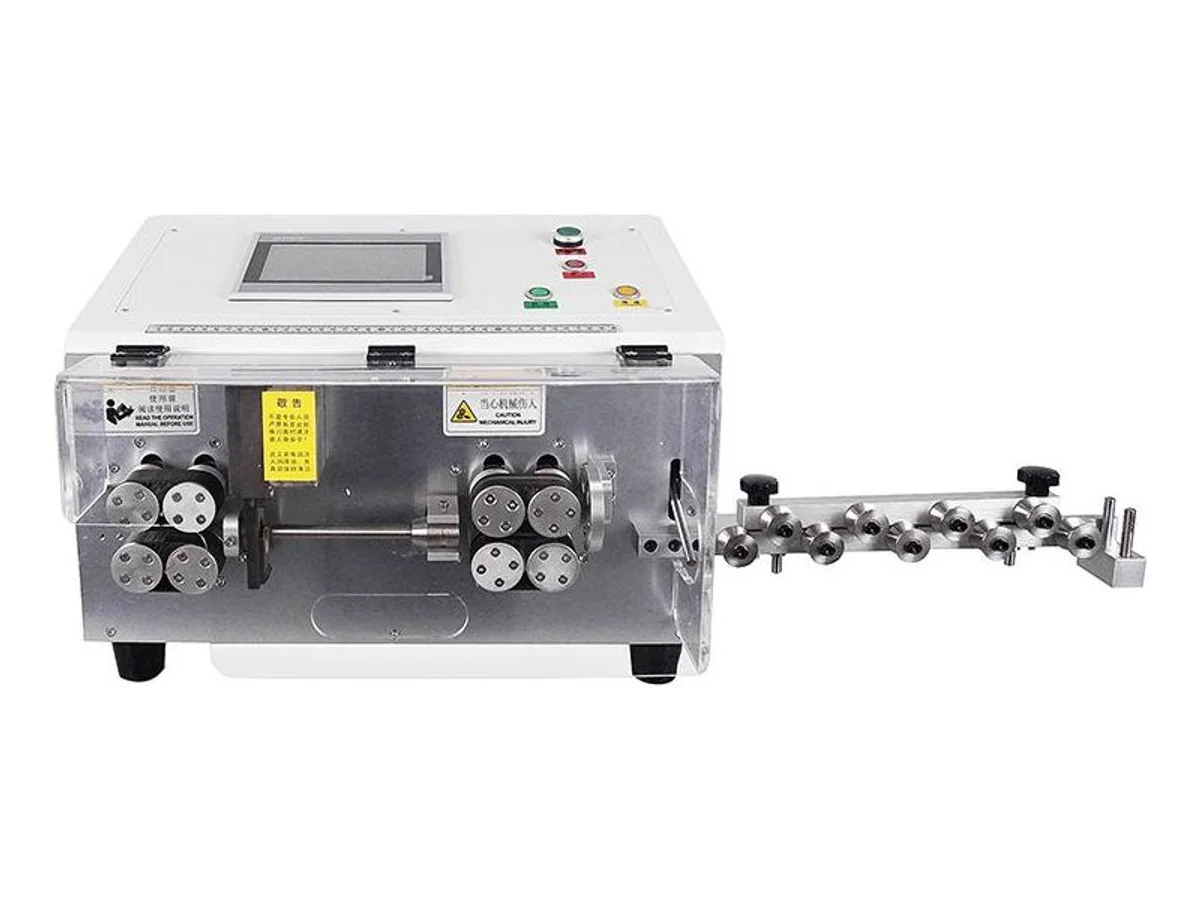
| WM-167 | Benchtop cut & strip | 0.1–10 mm² | 3,000–8,000 pcs/h | The workhorse class most shops start with |
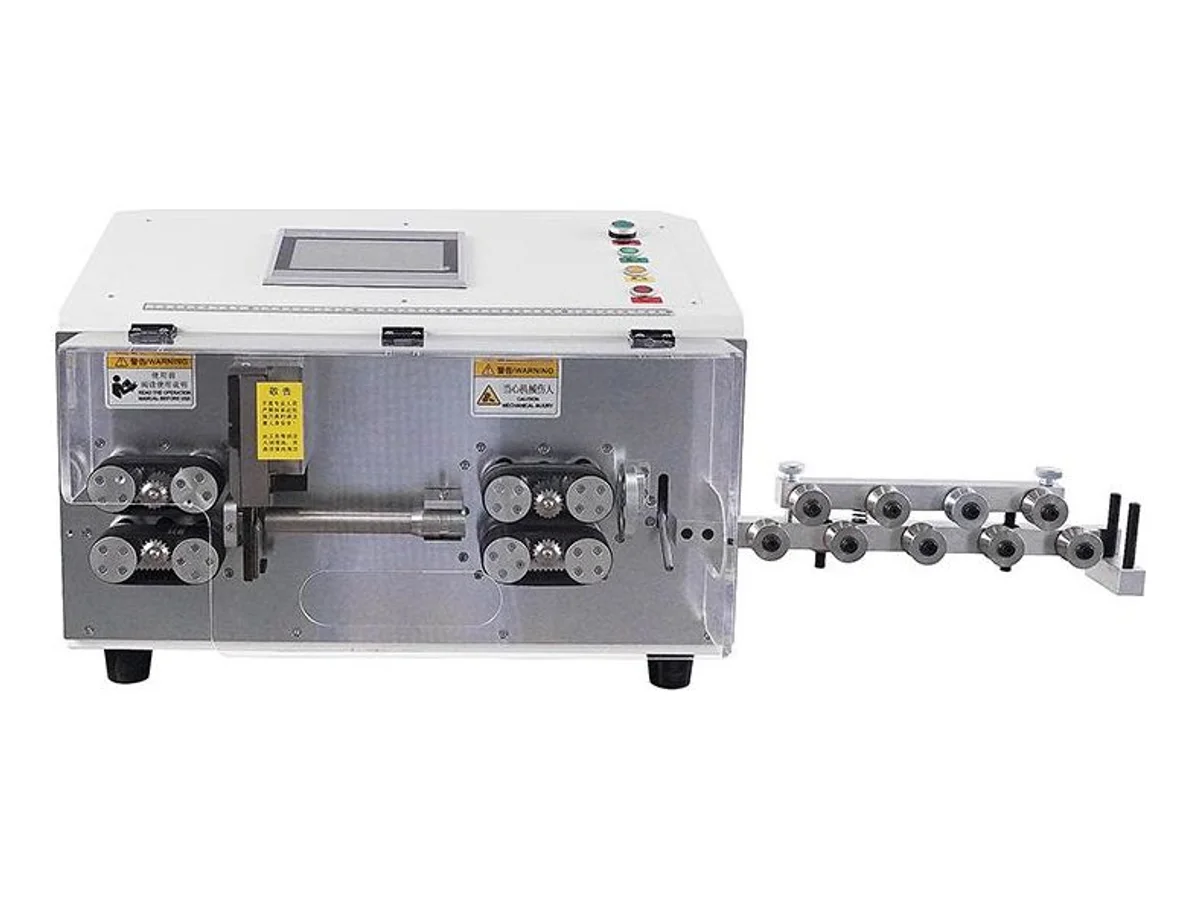
| WM-187 | Cut, strip & twist | 0.1–4.5 mm² | 4,000–10,000 pcs/h | Twisted ends straight off the machine |
| WM-188 | Double-wire cut & strip | 0.1–4.5 mm² × 2 | 4,000–10,000 pcs/h | Two wires per cycle |
| WM-1231 | Four-wire cut & strip | 0.1–2.5 mm² × 4 | 5,000–6,000 pcs | Four wires per cycle |
| WM-194 | 8-wheel drive | 0.3–25 mm² | 4,000–5,000 pcs/h | Grip for slippery jackets, mid sizes |
| WM-174Z | Mid-range + tray | 1–30 mm² | 2,000 pcs/h | 32-station collection tray |
| WM-197 | Large cable, high speed | 6–70 mm² | 5,000–6,000 pcs/h | The fast end of big wire |
| WM-1450 | Thick cable | 10–150 mm² | 1,800 pcs/h | Battery and welding cable class |
| WM-175 | The top of the ladder | 30–300 mm² | 100–700 pcs/h | 300 mm² — nothing here goes bigger |
| WM-1545 | 4-layer precision | Ø0.5–7 mm, 4 layers | 1,150 pcs/h | Each layer at its own depth |
| WM-172 | 3-layer large cable | 6–150 mm² | 1,500–2,000 pcs/h | Jacket, shield and core on big cable |
| WM-168HT | Sheathed multi-core | Φ3–10 mm, 2–8 cores | 1,100 pcs/h | Jacket plus every core in one machine |
| WM-198 | Multi-core, staggered | Cores 0.5–3.0 mm² | 1,000–1,200 pcs/h | Different strip length per core |
| WM-1220 | Flat ribbon cable | 2–12P | 3,000–5,000 pcs/h | Ribbon cut and stripped |
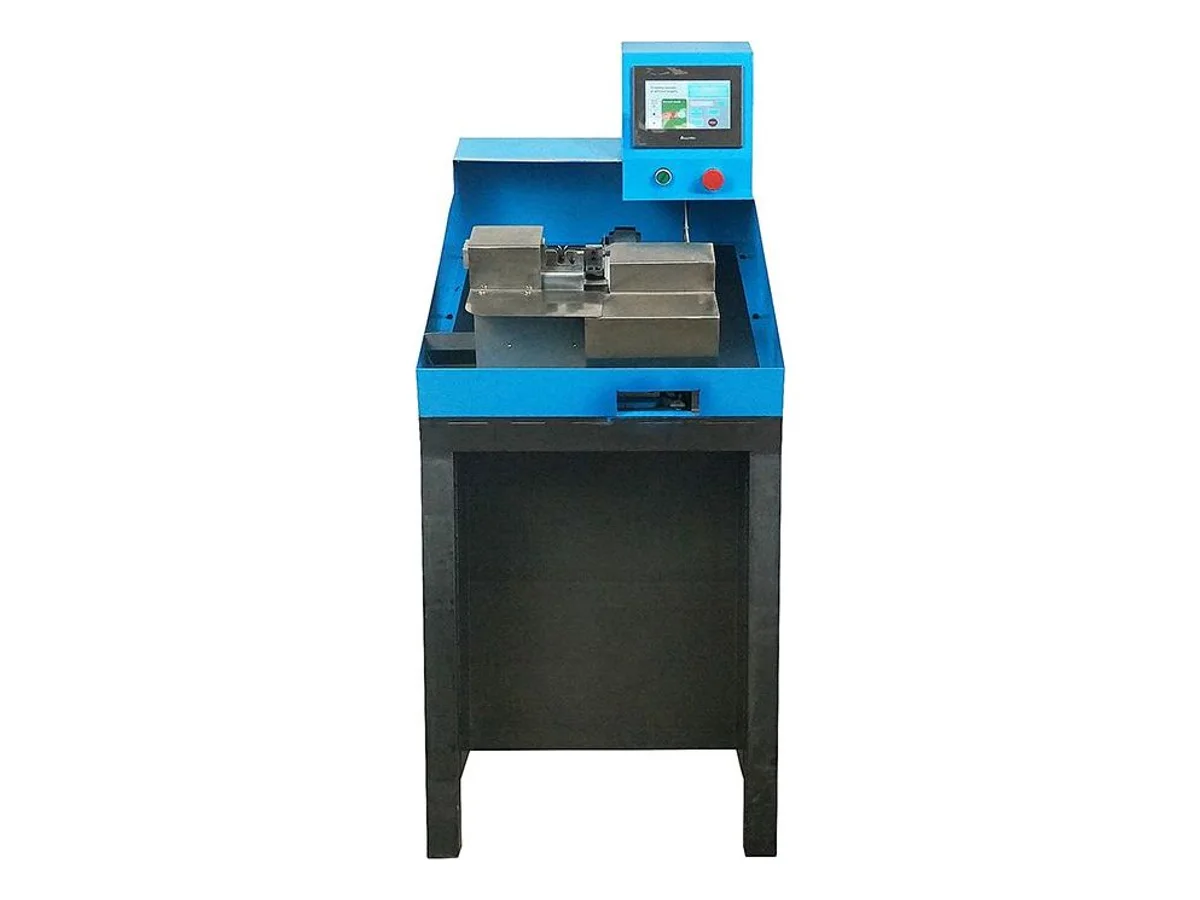
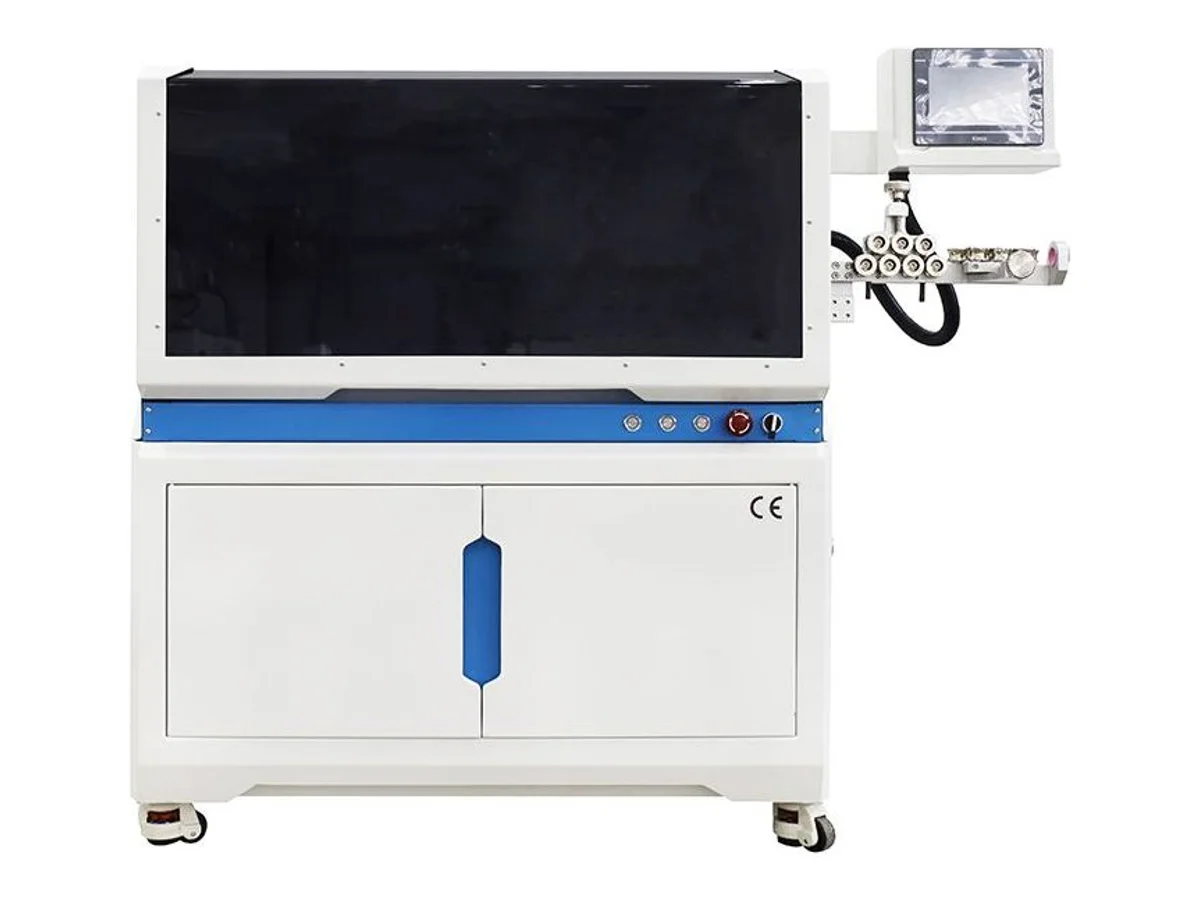
| WM-184 | Enameled wire | Φ0.7–3.0 mm | 2,400 pcs/h | Paint stripped, no chemicals |
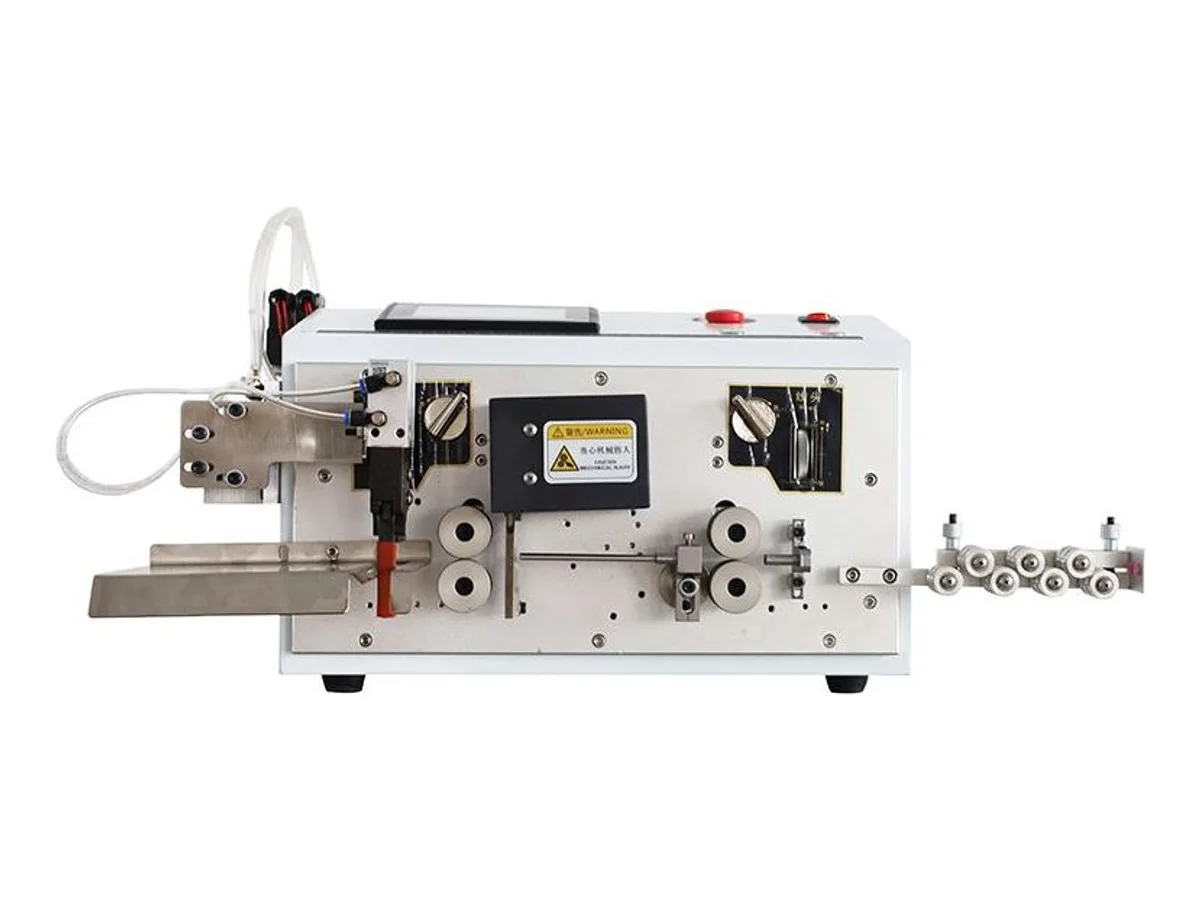
The benchtop 0.1–10 mm² class — on this site, the WM-167 at 3,000–8,000 pcs/h — covers the hookup-wire sizes that dominate most harness work. Add the twisting variant (WM-187) if your wire goes on to tinning or crimping, or the double-wire WM-188 if volume is the constraint. Move up the ladder only when a real cable in your book exceeds 10 mm².
Physics, not build quality. A 300 mm² jacket has hundreds of times the cross-section of a 1 mm² wire's insulation; the blade travel, gripping force and feed mass all scale with it. That is why the WM-197 holds 5,000–6,000 pcs/h at 6–70 mm² while the WM-175 publishes an honest 100–700 pcs/h at 30–300 mm². Any large-cable machine promising benchtop speeds deserves suspicion.
It strips each concentric layer at its own diameter and length in one clamping — jacket at one depth, shield at another, core insulation at a third. The WM-1545 and WM-1225 program four layers; the WM-172 opens three on large cable; and the WM-199 adds the EV-specific step of folding the shield braid back over the jacket for termination.
Yes — the sheathed multi-core family. The WM-168HT takes Φ3–10 mm cable with 2–8 cores at 1,100 pcs/h: jacket opened, every core stripped, one pass. The WM-198 strips each core to a different length for staggered terminations, and the WM-1223 and WM-1306 extend the family across other size ranges.
Wire or cable specification (mm² or AWG, plus outer diameter for sheathed and multi-layer cable), core count and layer build if any, cut length range, strip lengths per end, and target pieces per hour. Then courier 2–3 meters of the actual wire — insulation grip varies by brand, so we cut and strip yours on video before you order.
Engineering guidance for choosing this process and correcting the defects that affect finished-wire quality.
Selection guide
Plan wire harness production from the drawing: cutting, stripping, seals, crimping, housing insertion, taping and final electrical checks.
Read engineering guide →Troubleshooting guide
Diagnose rolled, torn, missing or misplaced wire seals by separating part fit, feeding, insertion and crimping checks.
Read engineering guide →Selection guide
Choose a copper busbar machine by operation-specific capacity, hole tooling, bend geometry and handling. Compare WM-9400 configurations and plan a sample trial.
Read engineering guide →Selection guide
Compare published pneumatic stripping limits for WM-1215C and UniStrip 2015, then identify what matched wire trials must establish before replacement.
Read engineering guide →Selection guide
Compare laser, blade and thermal wire stripping by insulation, conductor protection, strip geometry and sample evidence before choosing equipment.
Read engineering guide →Selection guide
Prepare wire samples, drawings and acceptance criteria for a useful machine trial. Record quality, accepted output and changeover without relying on a demo clip.
Read engineering guide →Selection guide
Select a wire cutting and stripping machine by conductor size, cable construction, strip geometry, length tolerance, batch size and downstream process.
Read engineering guide →Selection guide
Compare automatic lines and semi-automatic wire-processing cells using batch size, changeover, process integration, inspection and labor content.
Read engineering guide →Troubleshooting guide
Diagnose conductor nicks, incomplete strips, pulled strands, insulation stretch, length variation and feed marks in wire stripping operations.
Read engineering guide →Selection guide
Choose a wire prefeeder or pay-off system by reel mass, line speed, acceleration, allowable tension, accumulation, dereeling control and downstream interface.
Read engineering guide →Troubleshooting guide
Troubleshoot cable tension spikes, reel overrun, loops, jerking, twist, feed slip, encoder mismatch and downstream cut-length variation.
Read engineering guide →Troubleshooting guide
Why a machine that lists AWG 32 can still take strands off 22 AWG, what 'cutter diameter as a number' changes, and how to test a stable zone on your own wire before you write a procedure.
Read engineering guide →Troubleshooting guide
How to specify minimum strip length, distinguish a programmable setting from an achieved result, and verify the required preparation against the terminal drawing.
Read engineering guide →Troubleshooting guide
Why a cut-and-strip machine that held length on a loose coil walks 10–20 mm once a heavy reel goes on, how misfeed detection works, and how to check reel tension, straighteners, feed grip and encoder calibration.
Read engineering guide →Troubleshooting guide
Compare chain-fed and loose-ferrule crimping machines by wire preparation, changeover, terminal fit and batch output. Check WM-3243 and WM-3246 specifications.
Read engineering guide →Troubleshooting guide
Delivery checks cover the supply voltage, interface language, transport condition, operating manual and replacement wear parts. What we set before shipment, and what to check in the first hour.
Read engineering guide →