Round Power Cable Cutting and Stripping Machine for Cross-Sections up to 150 mm² WM-165
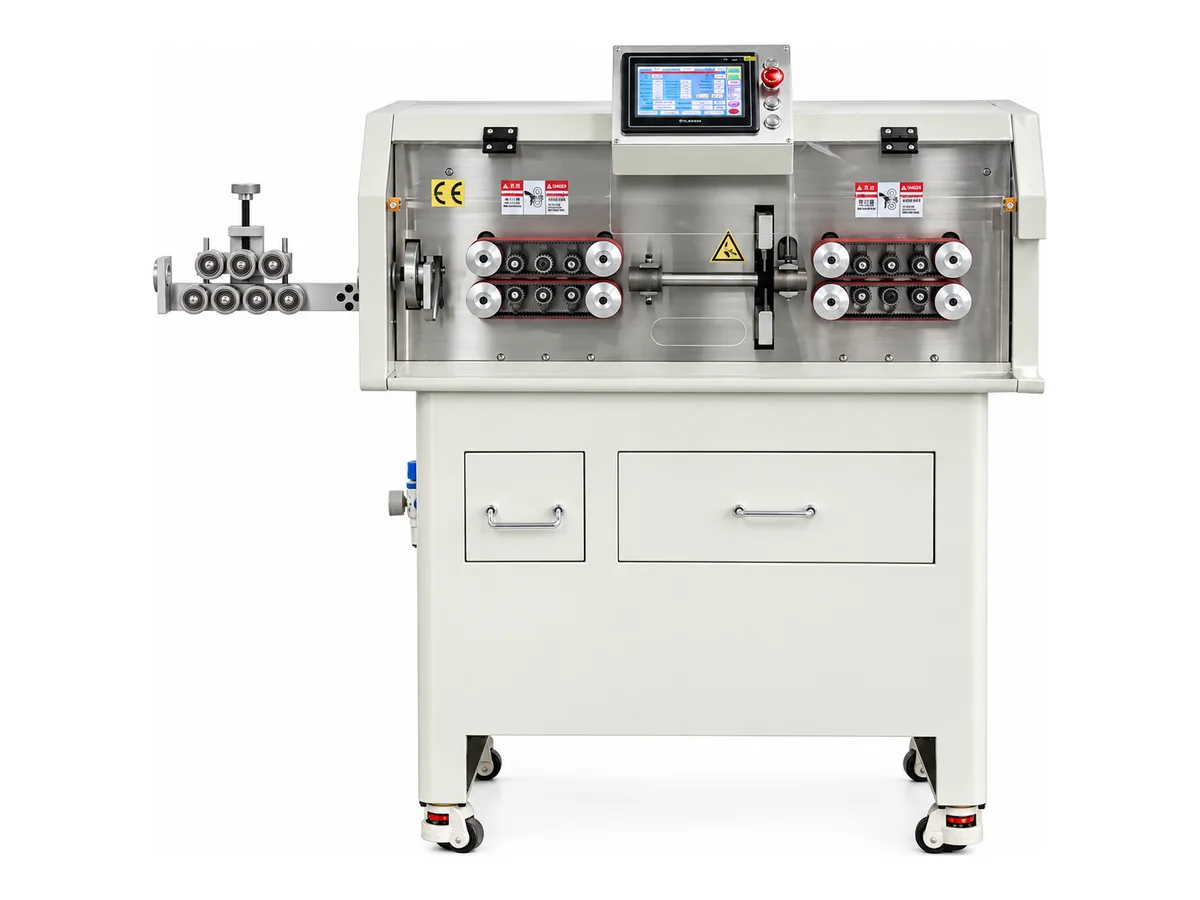
Our WM-165 automatically cuts and strips round cable up to 150 mm² with a 5–23 mm outside diameter. At 150 mm², the specified stripping range is 1–100 mm at each end; the separate round-cable range extends to 800 mm at the head. Send your cable and required strip lengths so we can demonstrate feeding, stripping and conductor condition before you order.
Specifications
| Function | Round cable cutting and stripping |
|---|---|
| Maximum cross-section | 150 mm² |
| Outer diameter of round cable | 5 – 23 mm |
| Cutting length | Up to 400 m |
| Stripping length (round cable) | Head 1 – 800 mm, tail 1 – 150 mm |
| Stripping length (at 150 mm²) | Head 1 – 100 mm, tail 1 – 100 mm |
| Stripping accuracy | ±0.2 mm |
| Max. guide tube diameter | φ25 |
| Stripping speed | 900 pieces/hour (length = 1,000 mm) |
| Drive mode | 8-wheel drive, motor ball screw drive |
| Blade material | Imported high-speed steel |
| Display | 7-inch touchscreen, Chinese and English interface |
| Air pressure | 0.8 MPa |
| Power | 2,300 W |
| Power supply | 220 V / 110 V, 50/60 Hz |
| Dimensions | 1060 × 640 × 1240 mm (L × W × H) |
| Weight | 230 kg |
| HS Code | 8463.90 (common reference — final classification confirmed by your customs broker) |
| Certification | CE (certificate provided with shipment) |
Key features
- Move repeated measuring and knife stripping into a programmed operation: automatic cutting and end stripping prepare round cable for the next assembly step.
- Set up feeding around the actual cable: the straightening rollers and belt-feed assemblies guide the stock through the cutting and stripping zone. We demonstrate the setup with your cable reel.
- Keep front and rear preparation in one job: the English touchscreen provides separate end-length fields and job selection, helping operators check the setup before starting a batch.
- Check conductor condition before committing: we run your cable samples and send a video showing the process and stripped ends against the acceptance criteria you provide.
- Choose strip length within the right cable condition: 150 mm² cable has a 1–100 mm range at both ends; the longer head-strip range requires checking with your actual cable.
What it processes
- Round power cable preparation for battery, energy-storage and electrical equipment assemblies, subject to cable and strip-length checks.
- Grounding and distribution cable cut to length before terminal or lug attachment.
- Cable workshops processing repeated lengths of PVC, PTFE, silicone or fiberglass-insulated stock after a material trial.
Start with the strip length required by your termination
Our WM-165 round cable cutting and stripping machine prepares repeated cable lengths for the next operation. Before choosing it for a large conductor, check the exposed length your terminal or assembly requires. At 150 mm², the specified head and tail stripping ranges are both 1–100 mm. Do not combine the maximum conductor area with the separate 800 mm head-strip figure when defining the job.
Send the cable cross-section, outside diameter and both end-preparation lengths. We check that combination and demonstrate your samples before you order. If the requirement falls outside this configuration, use our wire cutting and stripping category to discuss the appropriate process.
A clean-looking strip still needs a conductor check
Insulation that feeds and separates cleanly on one reel may need a different setup on another construction. Tell us whether you use PVC, PTFE, silicone or fiberglass insulation, and include conductor strand construction and your rejection criteria. We run the sample and show the exposed conductor as well as the removed insulation.
The listed ±0.2 mm stripping accuracy is not a guarantee that every material will emerge without a nick. Agree the inspection method with the trial, including the strand condition, strip length and any remaining insulation that matter to your assembly. This gives you a result to assess before buying tooling or planning production.
Check the feeding and the changeover together
The straightening rollers, belt-feed assemblies and guide bushing work along the same cable path. Evaluate them with your actual supply reel, including how the cable enters the machine and how the finished pieces are collected. Reel drag and material handling belong in the trial alongside the cut and strip operation.
The English touchscreen shows front and rear end settings, batch counts and job selection. When several cable jobs share the machine, ask to see the setup change and the first accepted piece for each representative cable. Saved settings still need a first-piece check after a material change.
Plan useful output for your own job
The specified 900 pieces/hour applies at 1,000 mm cable length. Use your required end lengths, cable construction and handling arrangements to evaluate the working rate. Include loading the reel, setting the job, checking stripped ends and collecting the batch in the cost comparison with your present process.
The machine dimensions are 1,060 × 640 × 1,240 mm and its weight is 230 kg. Allow working space for cable supply and collection, and prepare the specified 0.8 MPa air supply. We set the voltage for your country and ship the English interface and manual. For wear parts, every quote lists them with unit price and the location they ship from.
Engineering knowledge
Choose and troubleshoot this process
- Automatic vs Semi-Automatic Wire Processing EquipmentCompare automatic lines and semi-automatic wire-processing cells using batch size, changeover, process integration, inspection and labor content.
- Cut Lengths Drifting on a Full Spool: Pay-Off Tension, Straightener Bearings and MisfeedWhy a cut-and-strip machine that held length on a loose coil walks 10–20 mm once a heavy reel goes on, how misfeed detection works, and how to check reel tension, straighteners, feed grip and encoder calibration.
- How to Choose a Wire Cutting and Stripping MachineSelect a wire cutting and stripping machine by conductor size, cable construction, strip geometry, length tolerance, batch size and downstream process.
WM-165 — common questions
Can WM-165 strip 800 mm from a 150 mm² cable?
The specified range at 150 mm² is 1–100 mm at both ends. The separate round-cable range is 1–800 mm at the head and 1–150 mm at the tail. Send the cross-section, outside diameter, insulation and required lengths so we can confirm the applicable setup.
Is 150 mm² enough information to confirm cable compatibility?
No. We also need the outside diameter, insulation material, conductor construction and strip lengths. The listed round-cable diameter is 5–23 mm. A nominal conductor area alone does not establish how the cable will feed or strip.
Does ±0.2 mm stripping accuracy guarantee no conductor damage?
The specification lists ±0.2 mm stripping accuracy. Conductor condition is a separate acceptance check: send your inspection criteria, and we demonstrate the stripped ends on your actual cable. Blade and feed settings need to match the insulation and conductor construction.
How should we interpret the 900 pieces/hour figure?
It is the listed stripping rate at a cable length of 1,000 mm. The quote and trial should use your actual strip lengths, cable construction and handling arrangement. Include reel changes, first-piece inspection and unloading when planning shift output.
Can we use the same setup for PVC and PTFE cable?
The material list includes PVC, PTFE, silicone and fiberglass-insulated wire. Each material still needs an appropriate setup. Send a sample of every construction you intend to process so we can demonstrate feeding, insulation removal and conductor condition.
Does the 400 m cutting-length setting guarantee handling a 400 m finished cable?
Up to 400 m is the listed cutting-length range. Pay-off, cable support, collection and length verification must be agreed for the intended job. Tell us the finished length and how you need the cable collected before ordering.
What utilities and spare parts should we prepare?
The machine is rated at 2,300 W and requires 0.8 MPa air. The listed supply is 220 V / 110 V, 50/60 Hz; we set the voltage for your country and ship the English interface and manual. For wear parts, every quote lists them with unit price and the location they ship from.
Related machines in Wire Cutting & Stripping
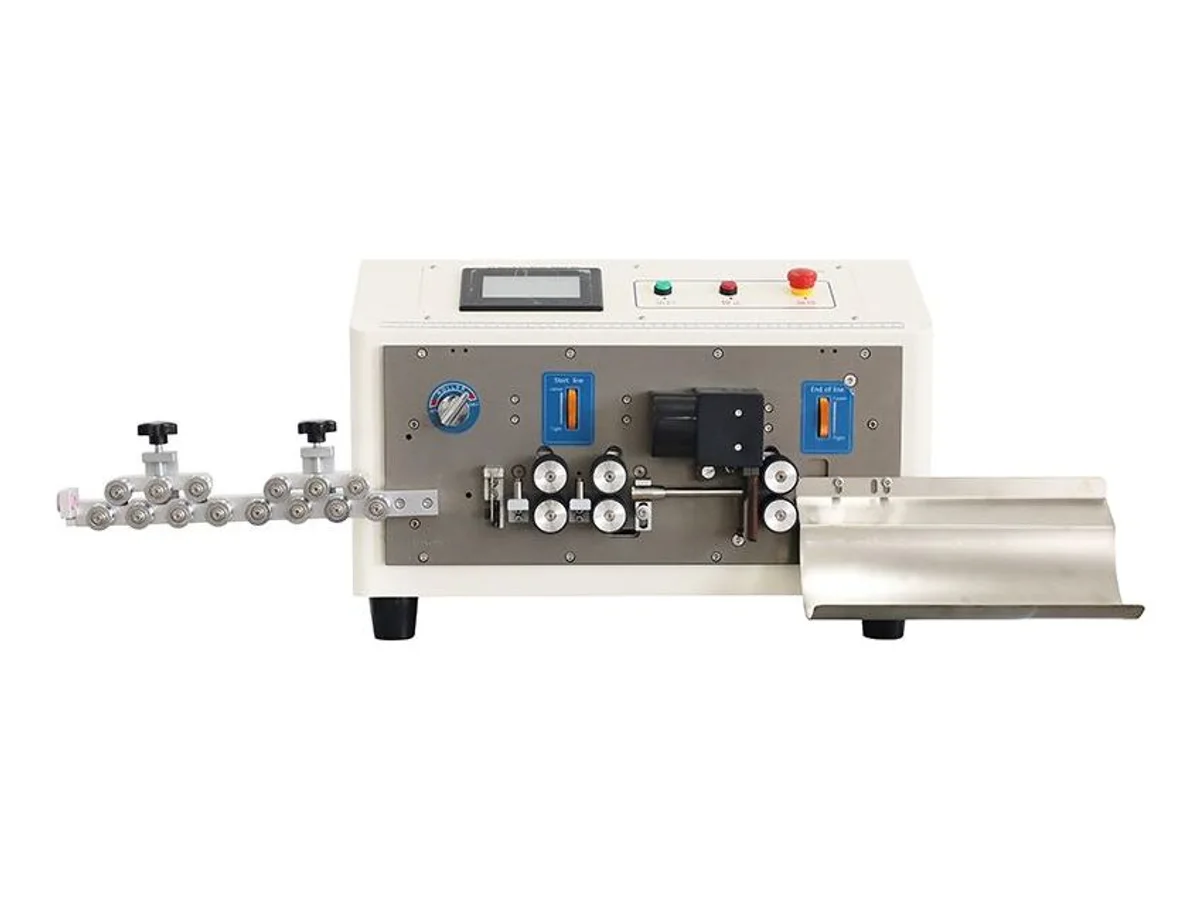
Automatic Cable Cutting and Stripping Machine for 1–12 mm Sheathed Cable
Model WM-1306
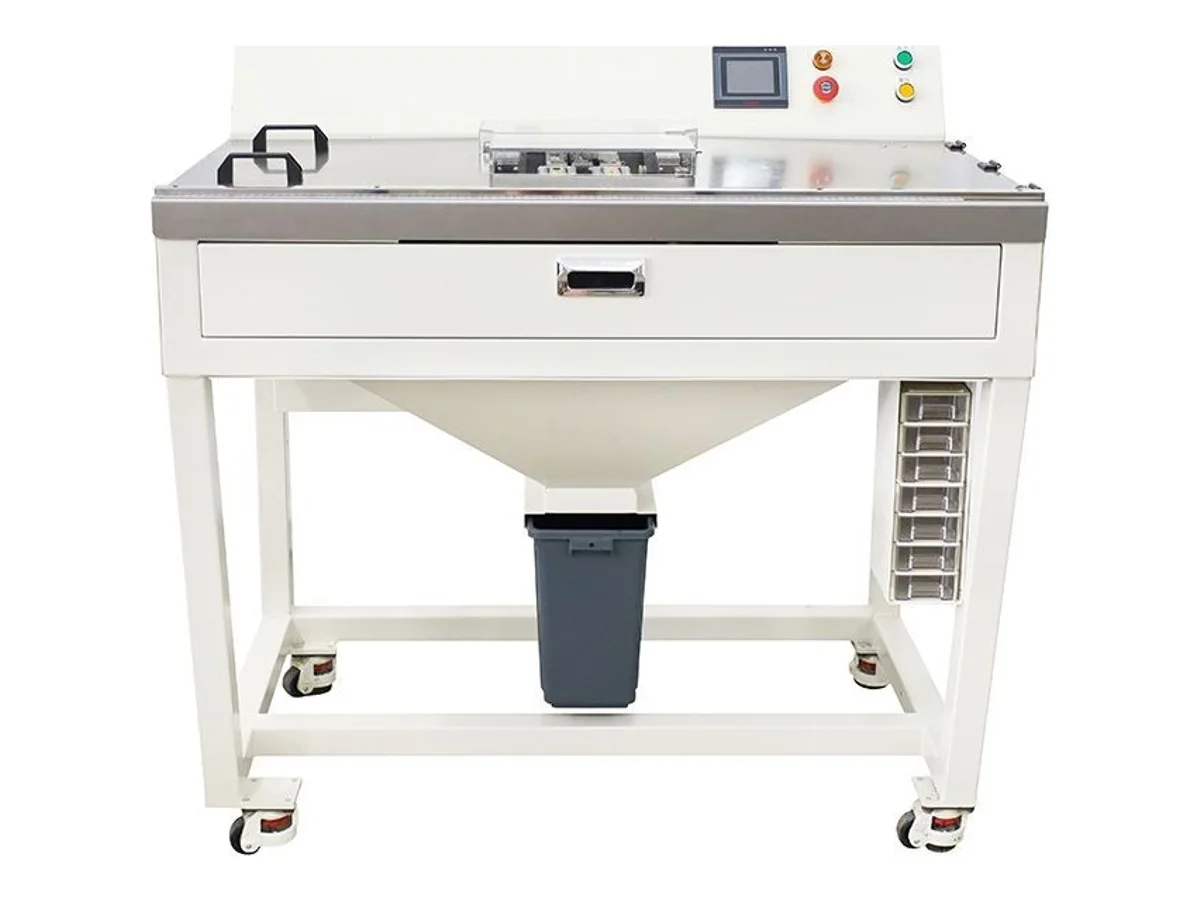
Automatic Cable Middle Stripping Machine for 0.5–4 mm² Wire, 20 mm Insulation Window
Model WM-1217
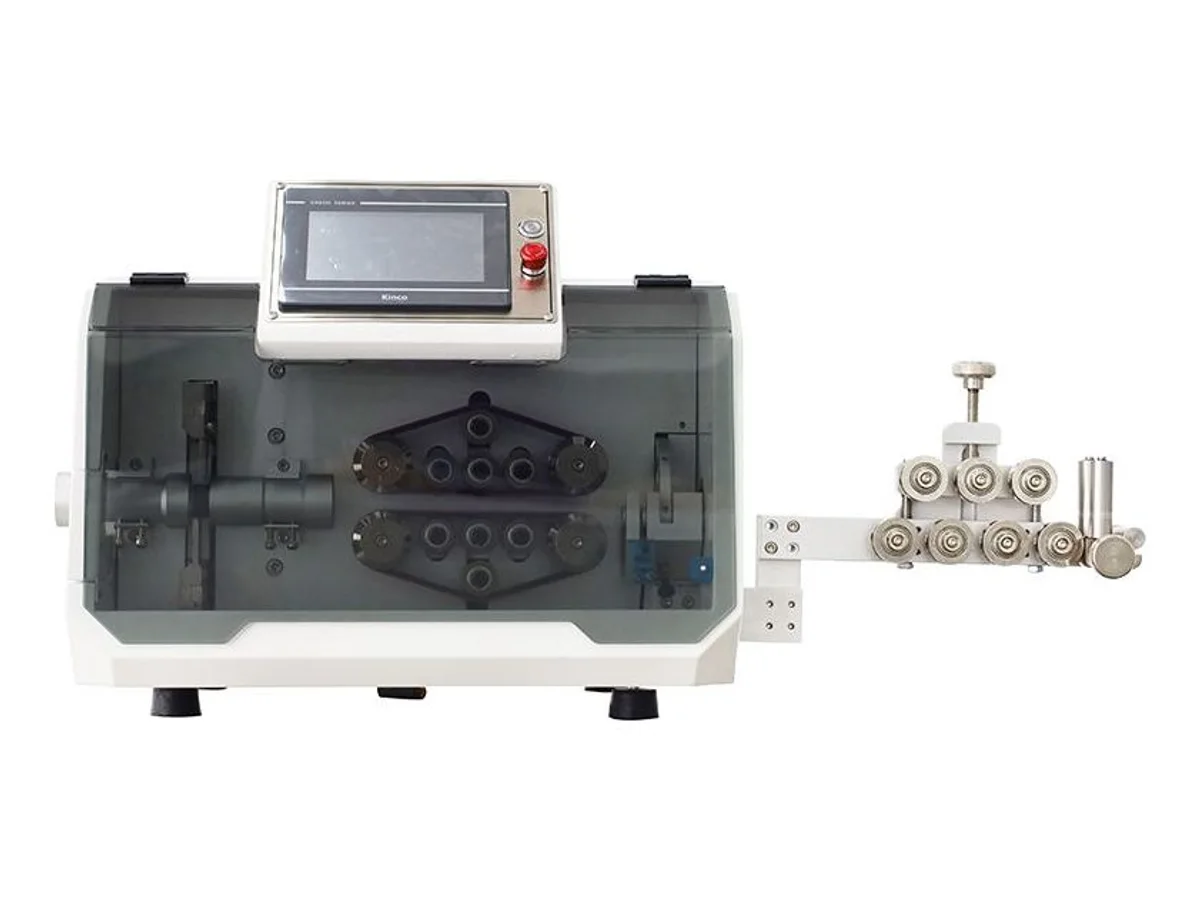
Automatic Cable Cutting Machine for 1–150 mm² Wire, Cable and Hose
Model WM-1222