Double-End Terminal Crimping and Housing Insertion Machine for 32–16 AWG Wire WM-376
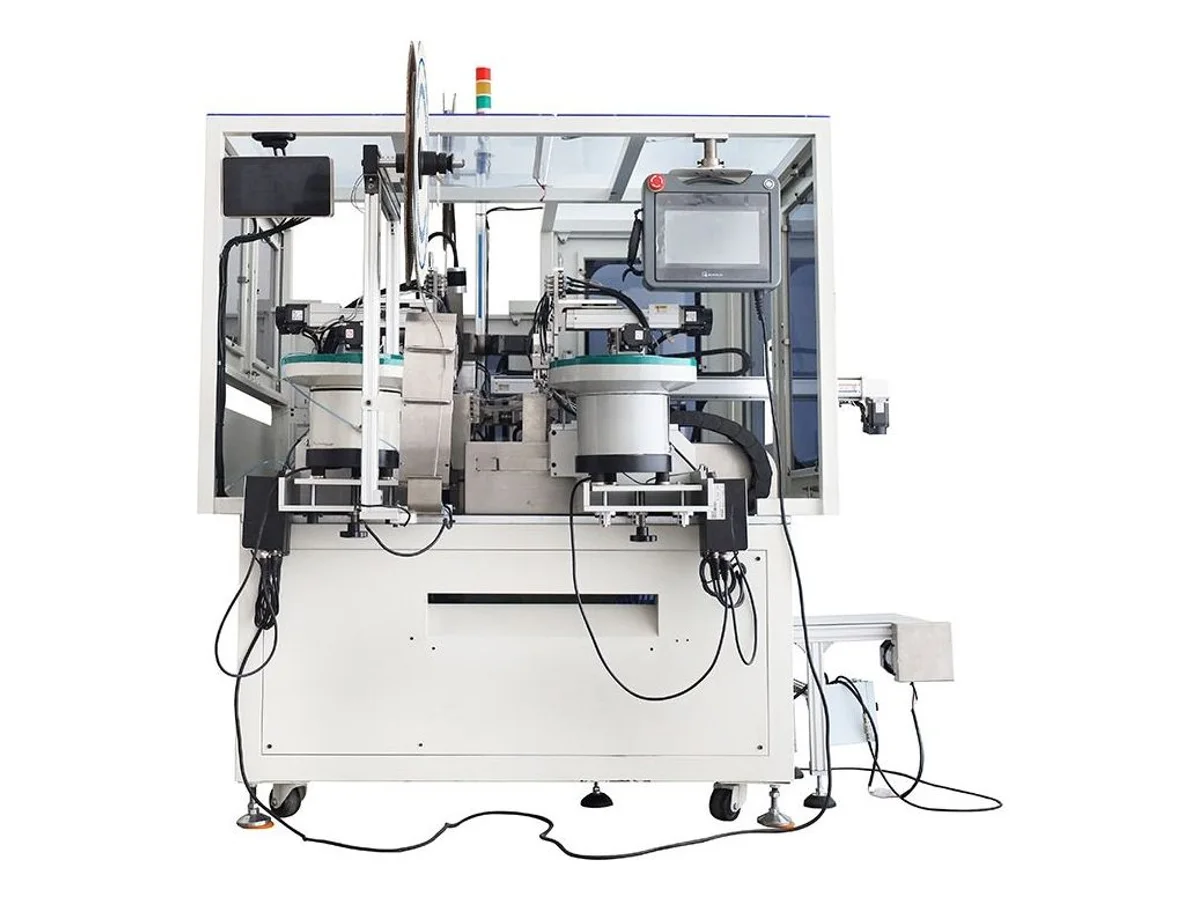
The WM-376 crimps terminals and inserts connector housings on both ends of the wire in one automated cycle — including harnesses where the two ends differ in length, housing type or pin count. It runs 32–16 AWG wire at up to 1,600 holes per hour, has its cutting-length configuration confirmed on the quote, and strips 1–6 mm at the front and 1–8 mm at the rear. A 10-inch touchscreen with PLC control manages programs, while crimp force monitoring, CCD terminal-size checking and housing pull-back detection guard every cycle. It draws single-phase 210–230 V and 0.6–0.8 MPa air.
Specifications
| Function | Terminal crimping and connector housing insertion on both wire ends |
|---|---|
| Applicable wire | AWG#32 – AWG#16 |
| Capacity | About 1,300 holes/h for AWG#32–30, about 1,600 holes/h for AWG#28–20 (wire length within 100 mm) |
| Cutting length | Standard 80–500 mm; customization entry 80–450 mm. Confirm the applicable configuration before ordering. |
| Cutting accuracy | Length under 100 mm — deviation under 0.3 mm; length over 100 mm — deviation under 0.3 mm + (length × 0.002) |
| Stripping length | Front end 1.0 – 6.0 mm (half strip 2.0 – 6.0 mm), rear end 1.0 – 8.0 mm (half strip 2.0 – 8.0 mm) |
| Insertion options | 90-degree flip insertion, staggered positions, jump pin, double-layer housings, unequal end lengths, multiple housings on one end (same housing type, different pin counts) |
| Applicable applicator | Horizontal feed applicator |
| Crimping unit | 2.0 T crimping machine |
| Control mode | 10-inch touchscreen, intelligent PLC control |
| Detection device | Wire absence, terminal absence, crimping force monitoring (CFM), terminal size (visual CCD), housing pull-back detection |
| Power supply | Single phase AC 210–230 V, 10 A; mains frequency confirmed on the quote |
| Compressed air | 0.6 – 0.8 MPa (clean, dry air source) |
| Dimensions | 1800 W × 1600 L × 1750 H mm |
| Weight | About 1,000 kg |
| HS Code | 8463.90 (common reference — final classification confirmed by your customs broker) |
| Certification | CE (certificate provided with shipment) |
Key features
- Both ends leave the machine finished — crimped and inserted into housings, with unequal lead lengths and different housings per end supported
- Supports specified insertion patterns including 90-degree flip insertion, staggered positions, jump pins and double-layer housings, subject to your connector configuration
- Four in-line guards — CFM crimp-force monitoring, CCD terminal-size vision, missing wire or terminal detection and housing pull-back testing
- Fine-wire capability down to AWG 32 for consumer electronics and small-signal harnesses
What it processes
- Consumer electronics and PCB-interconnect harnesses with housings on both ends, AWG 32–16
- Appliance looms where end A and end B carry different housings or pin counts
- Fine-gauge signal harnesses for instruments, sensors and small actuators
Suited for: double-end connector harnesses in fine to medium wire — AWG 32 to 16 — where both ends must be crimped and seated in housings, including asymmetric builds with different housings, pin counts or lead lengths per end. Not suited for: wire above AWG 16, lugs, or sheathed multicore cable — for heavier wire and lugs, pick the WM-371 double-end lug and ferrule crimping machine, which crimps 4–6 mm² lugs and ferrules on both ends; the other terminal crimping machines cover sheathed-cable and single-end models.
Housing tooling is matched to your exact connectors, so acceptance happens on your parts: send 2–3 meters of your wire with your terminals and housings, and we run the full double-end cycle on this machine on video before you commit.
Engineering knowledge
Choose and troubleshoot this process
- Ferrule Crimping: Strip Length, Terminal Fit and Chain-Fed vs Loose-Fed MachinesCompare chain-fed and loose-ferrule crimping machines by wire preparation, changeover, terminal fit and batch output. Check WM-3243 and WM-3246 specifications.
- How to Choose a Terminal Crimping MachineChoose a terminal crimping machine by terminal presentation, wire range, applicator standard, required process steps, inspection method and production mix.
- Terminal Back-Out After Housing Insertion: What to CheckFind why a crimped terminal backs out of its connector housing. Check part matching, orientation, crimp shape, primary retention and secondary locks.
WM-376 — common questions
Can the two ends of the wire be different?
Yes — that is this machine's specialty. The two ends can differ in length and pin count; one end can take a single housing while the other takes several of the same housing family, and 90-degree flip, staggered-position, jump-pin and double-layer insertion are all available. Send your harness drawing and we confirm the configuration before quoting.
What throughput should I plan for?
About 1,300 holes per hour on AWG 32–30 and about 1,600 holes per hour on AWG 28–20, both for wire lengths within 100 mm. Longer leads reduce the rate, so compare cycle times using your real wire lengths, not the headline figure.
What is the WM-376 not the right machine for?
Wire above AWG 16, lug-class terminals and sheathed multicore cable are outside its range, and for single-end quick jobs a compact single-end crimper pays back faster. Browse the rest of the terminal crimping machines category for single-end and heavy-wire models.
What cutting length and mains frequency should I specify?
The specification contains an 80–500 mm standard range and an 80–450 mm customization entry. We confirm the applicable cutting-length configuration and mains frequency on the quote before ordering. For lengths under 100 mm, the listed deviation is under 0.3 mm; over 100 mm it is under 0.3 mm plus length × 0.002.
Related machines in Crimping & Connector Assembly
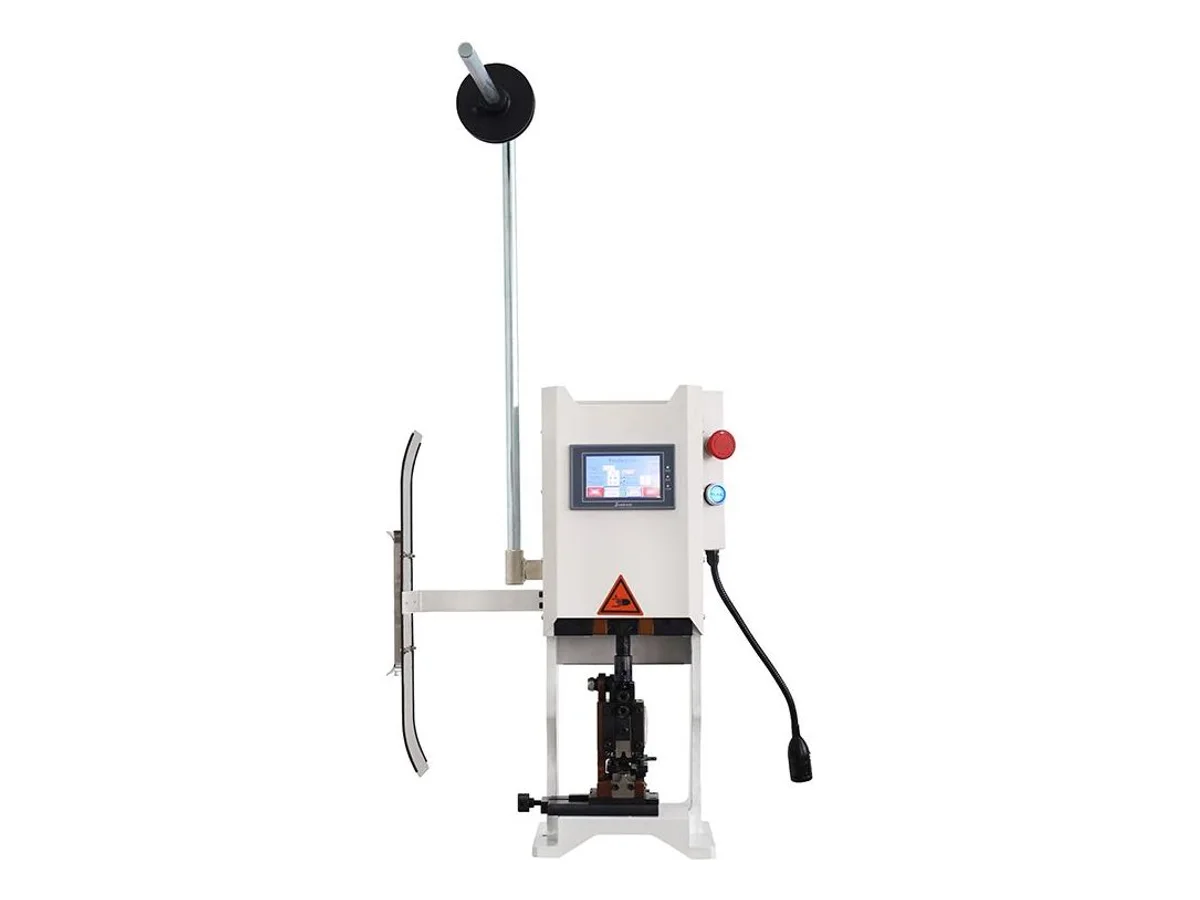
2-Ton Servo Terminal Crimping Machine, 20 kN Touchscreen Bench Press
Model WM-3102S
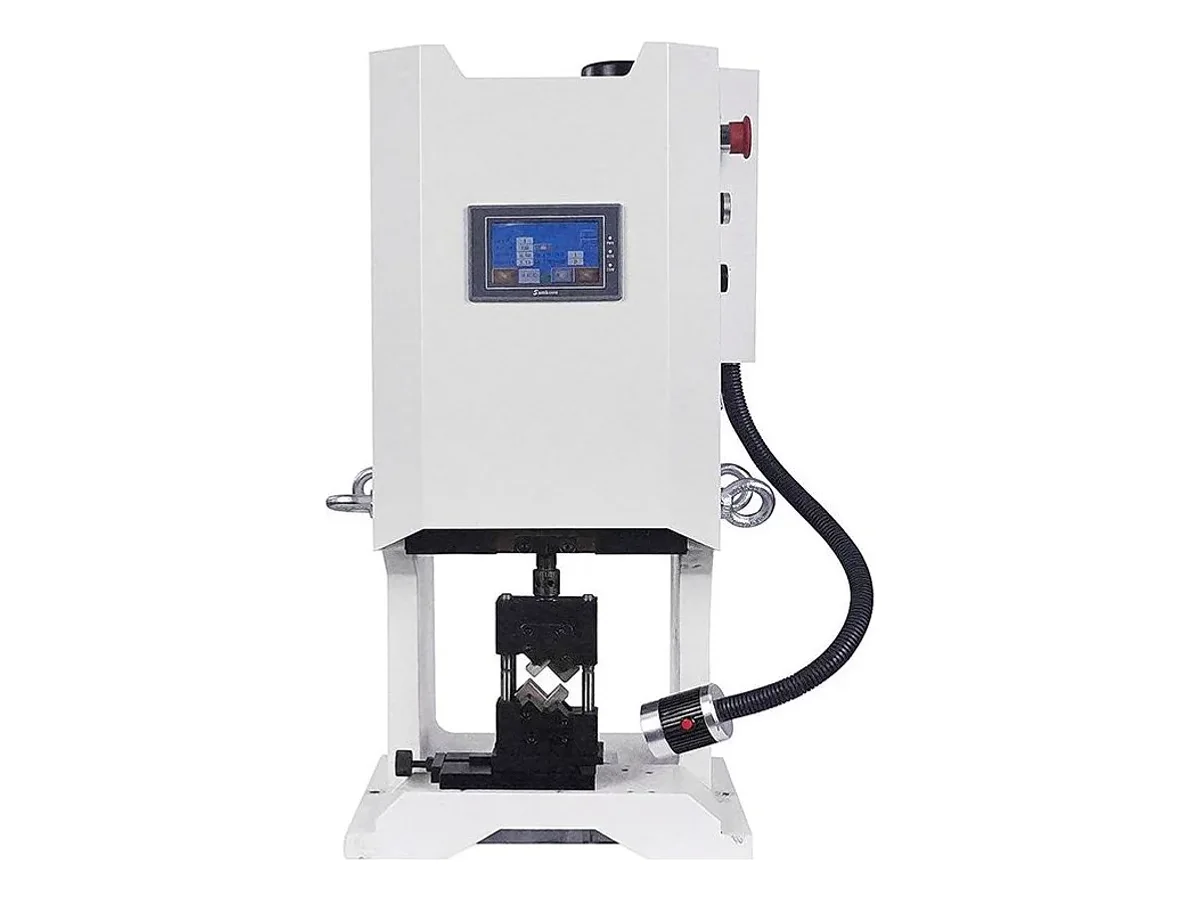
10-Ton Servo Terminal Crimping Machine, 100 kN Bench Press
Model WM-3110T
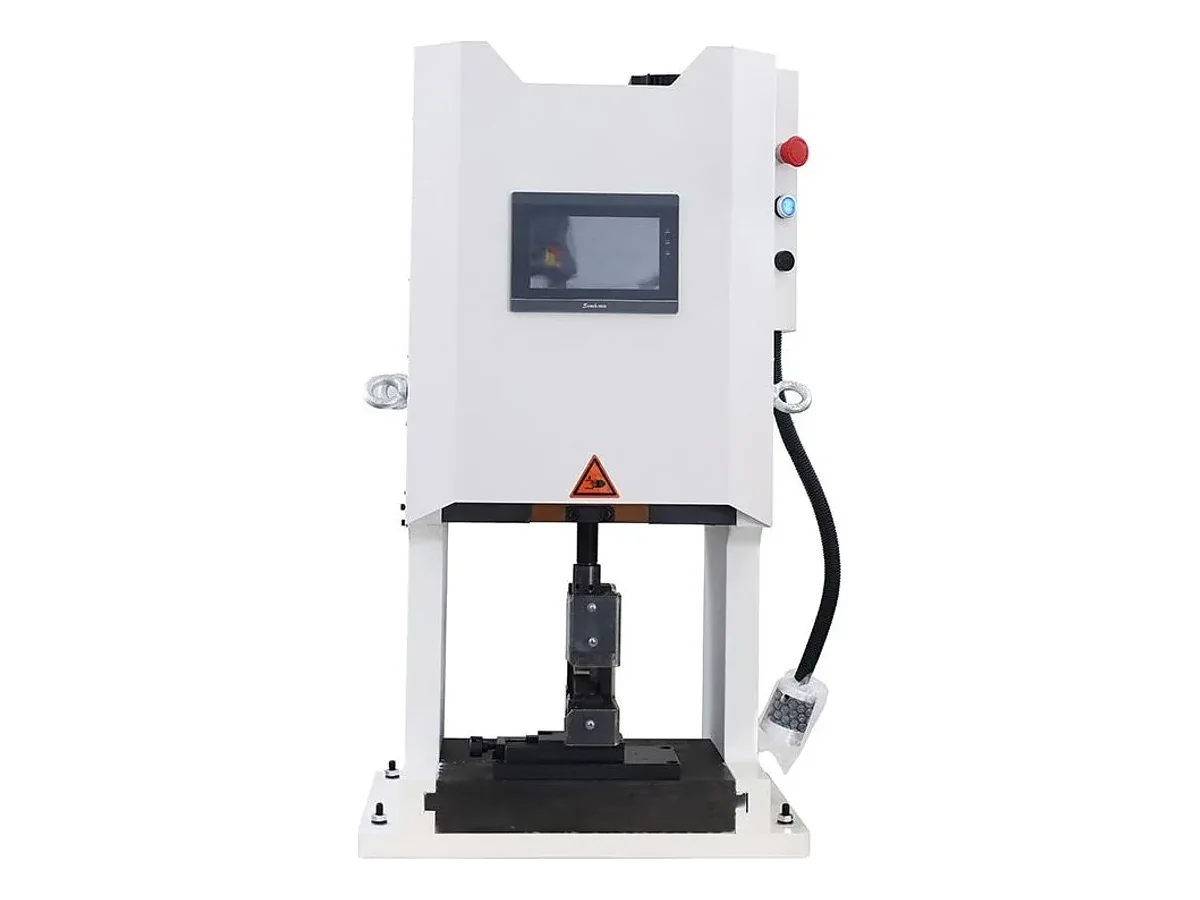
20-Ton Servo Cable Lug Crimping Machine, 200 kN and 40 mm Stroke
Model WM-3120T