Double-End Terminal Crimping Machine with Insulation Sleeve Insertion, 10–24 AWG WM-388
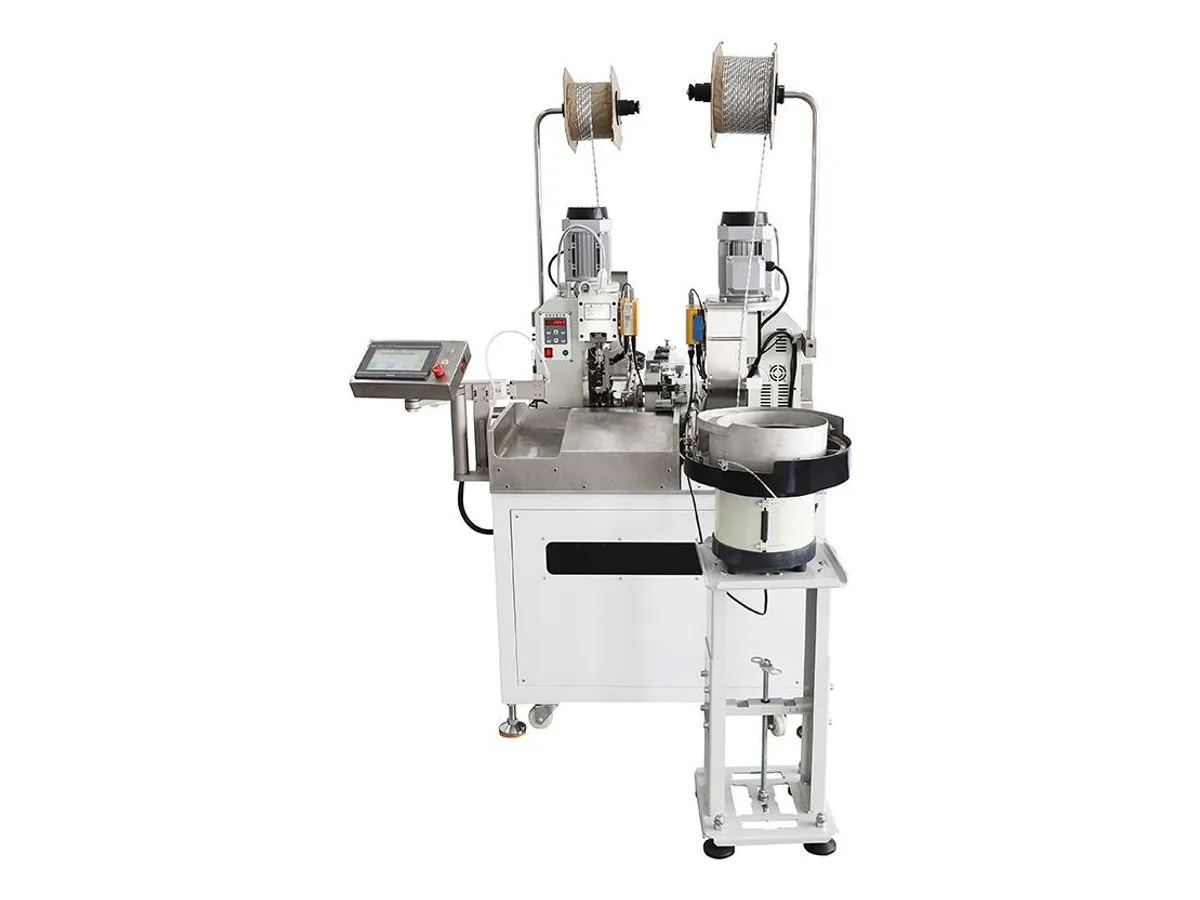
The WM-388 crimps terminals on both wire ends and slides an insulation sleeve over the crimped joint in the same automated cycle — a finish that otherwise costs a separate hand-sleeving bench. It processes 10–24 AWG wire at up to 1,700 pieces per hour with ±0.1 mm accuracy, strips 3–10 mm, and crimps from 2.0 to 4.0 tons under Mitsubishi PLC control. Sleeves are singulated from a vibratory bowl and placed automatically, while stripping, air-pressure and bad-terminal detection run on every cycle. The machine needs 0.4–0.5 MPa of clean air and stands 1300 × 800 × 1330 mm at 450 kg.
Specifications
| Function | Double-end terminal crimping and insulation sleeve insertion |
|---|---|
| Wire range | AWG#10 – AWG#24 |
| Capacity | 1,700 pcs/h |
| Accuracy | ±0.1 mm |
| Stripping length | 3 – 10 mm |
| Crimping force | 2.0 – 4.0 T |
| Control method | Mitsubishi PLC control |
| Detection | Stripping detection, air pressure detection, bad terminal detection |
| Air pressure | 0.4 – 0.5 MPa |
| Dimensions | 1300 × 800 × 1330 mm |
| Weight | 450 kg |
| HS Code | 8463.90 (common reference — final classification confirmed by your customs broker) |
| Certification | CE (certificate provided with shipment) |
Key features
- Crimp and sleeve in one pass — terminals on both ends arrive already insulated, removing the slowest manual station on the line
- 2.0 – 4.0 T crimping force spans small signal terminals up to AWG 10 power leads on one platform
- The specification lists ±0.1 mm machine accuracy; we confirm the measured parameter and acceptance method on the quote and check stripping and sleeve placement on your sample
- Mitsubishi PLC with stripping, air-pressure and bad-terminal detection stops faults at the station, not at final inspection
What it processes
- Appliance and power-tool leads with insulated spade or receptacle terminals, AWG 10–24
- Switchgear, lighting and HVAC jumper wires that specify sleeved crimp joints
- Export harnesses where exposed crimp barrels fail customer inspection
Suited for: double-ended leads that must ship with insulated crimp joints — appliance, switchgear, lighting and HVAC jumpers in 10–24 AWG with push-on insulation sleeves placed automatically over both crimps. Not suited for: heat-shrink insulation — for that, pick the WM-663 shrink tube inserting and heating machine, which cuts, places and shrinks Φ2–8 mm sleeve over wire ends and terminals — or wire outside 10–24 AWG and housing insertion; the other terminal crimping machines pick up out-of-range wire and housing work. If only one end needs the boot and the leads are short, the WM-3225 double-end crimping and soft sleeve inserting machine covers AWG 12–32 with 18–600 mm of insulation remaining between stripped ends and a specified 3,000 pieces per hour at 600 mm.
Sleeve tooling is matched to your sleeve and terminal dimensions, so prove-out happens on your parts: send 2–3 meters of your wire plus your terminals and sleeves, and we run the full crimp-and-sleeve cycle on this machine on video before you commit.
The ±0.1 mm accuracy entry is confirmed on the quote with its measured parameter and acceptance method; it does not independently establish stripping or sleeve-position repeatability.
Engineering knowledge
Choose and troubleshoot this process
- Ferrule Crimping: Strip Length, Terminal Fit and Chain-Fed vs Loose-Fed MachinesCompare chain-fed and loose-ferrule crimping machines by wire preparation, changeover, terminal fit and batch output. Check WM-3243 and WM-3246 specifications.
- How to Choose a Terminal Crimping MachineChoose a terminal crimping machine by terminal presentation, wire range, applicator standard, required process steps, inspection method and production mix.
- Terminal Back-Out After Housing Insertion: What to CheckFind why a crimped terminal backs out of its connector housing. Check part matching, orientation, crimp shape, primary retention and secondary locks.
WM-388 — common questions
Why insert sleeves on the machine instead of by hand?
Automatic sleeve feeding combines insulation placement with crimping and reduces manual handling. The specified rate is up to 1,700 pieces per hour. The separate ±0.1 mm accuracy entry is confirmed with its measured parameter on the quote; sleeve seating is checked on your actual parts.
Which wires, terminals and sleeves does it cover?
Wire from AWG 10 to AWG 24 with stripping lengths of 3–10 mm, crimped at 2.0–4.0 tons. Applicators and sleeve tooling are matched to your exact terminal and sleeve dimensions, so send samples of all three — wire, terminals and sleeves — for a confirmed tooling quote.
What jobs should go to a different machine?
Heat-shrink insulation is a different process — sleeves here are pushed on cold, not shrunk with heat; for shrink-tube cutting and heating see the heat shrink processing machines category. Wire outside AWG 10–24 and connector-housing insertion are also beyond this model.
Related machines in Crimping & Connector Assembly
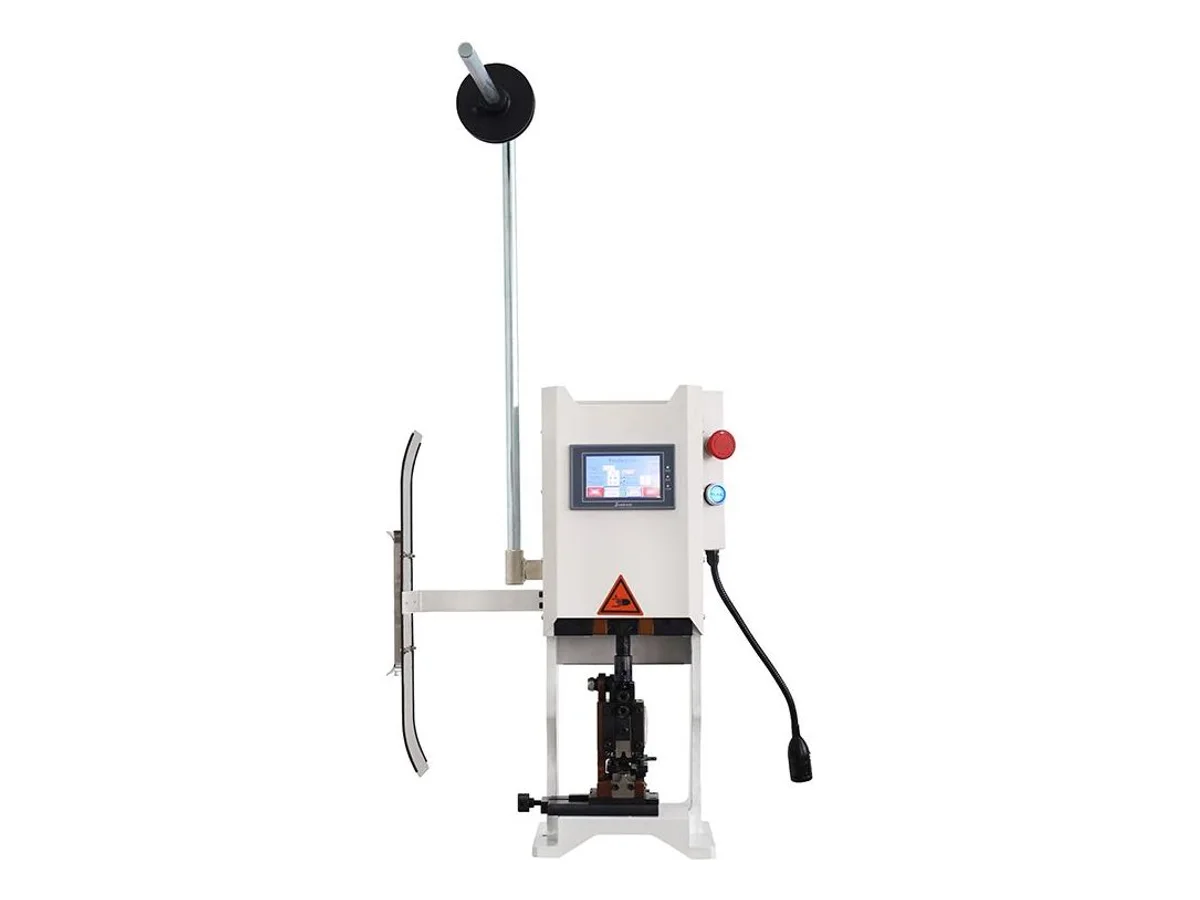
2-Ton Servo Terminal Crimping Machine, 20 kN Touchscreen Bench Press
Model WM-3102S
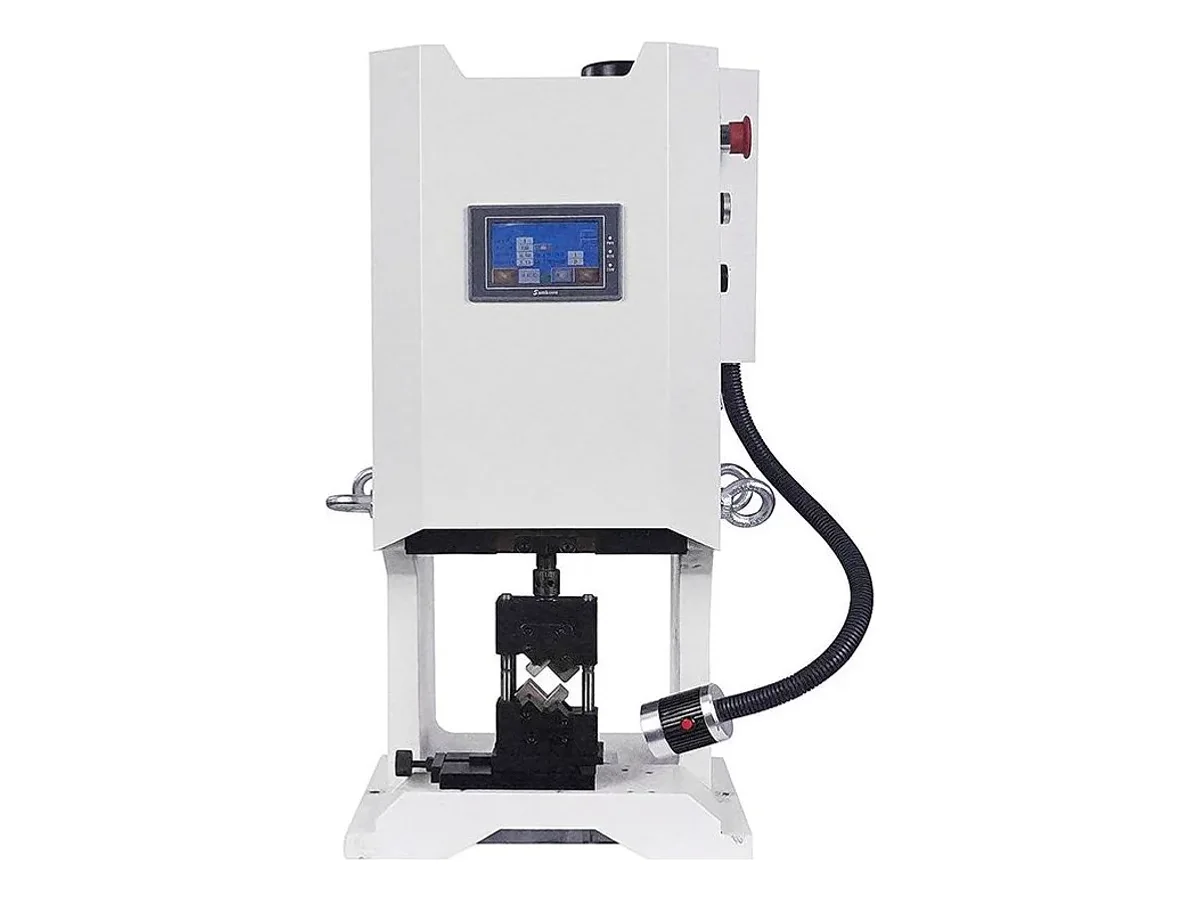
10-Ton Servo Terminal Crimping Machine, 100 kN Bench Press
Model WM-3110T
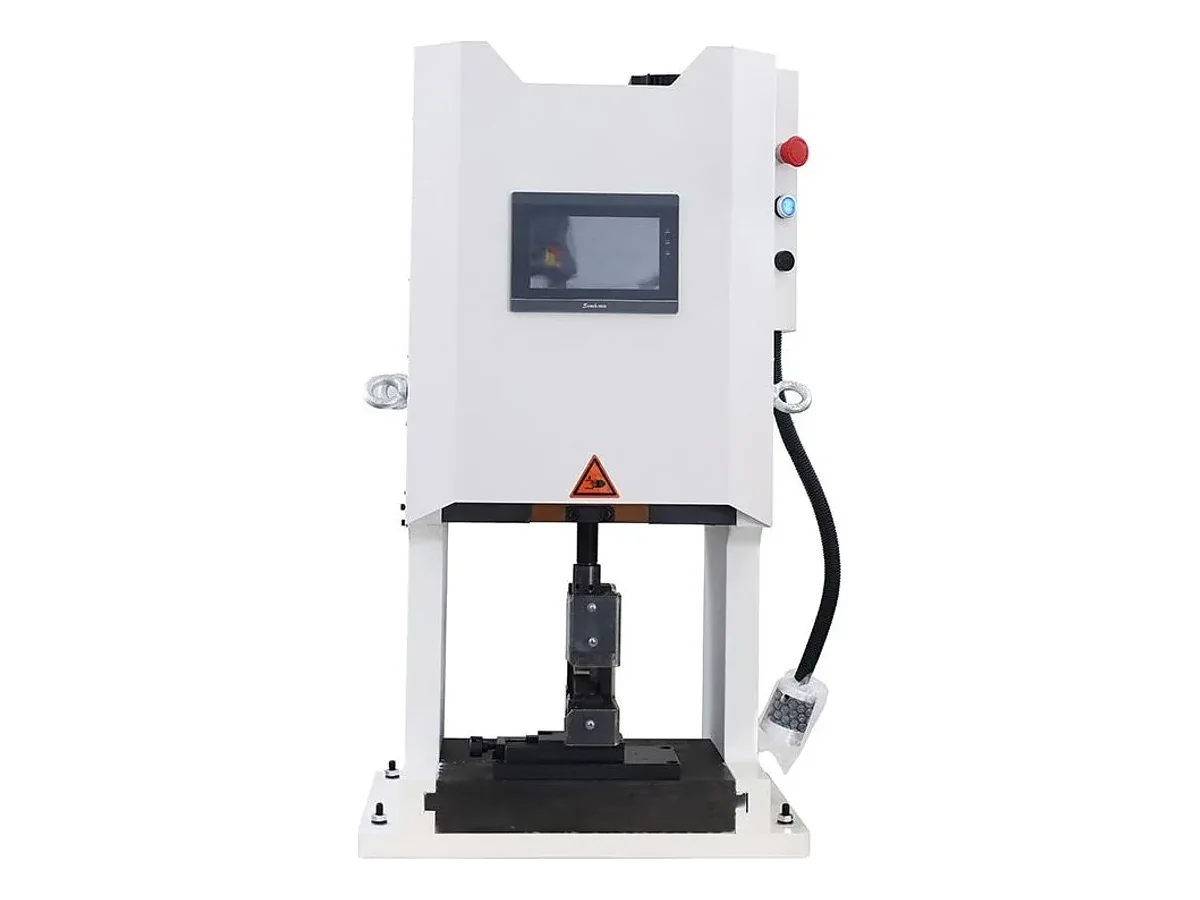
20-Ton Servo Cable Lug Crimping Machine, 200 kN and 40 mm Stroke
Model WM-3120T