Double Wire Seal Insertion and Terminal Crimping Machine, Rubber Seals for 0.2–2.5 mm² Waterproof Harnesses WM-3140FS
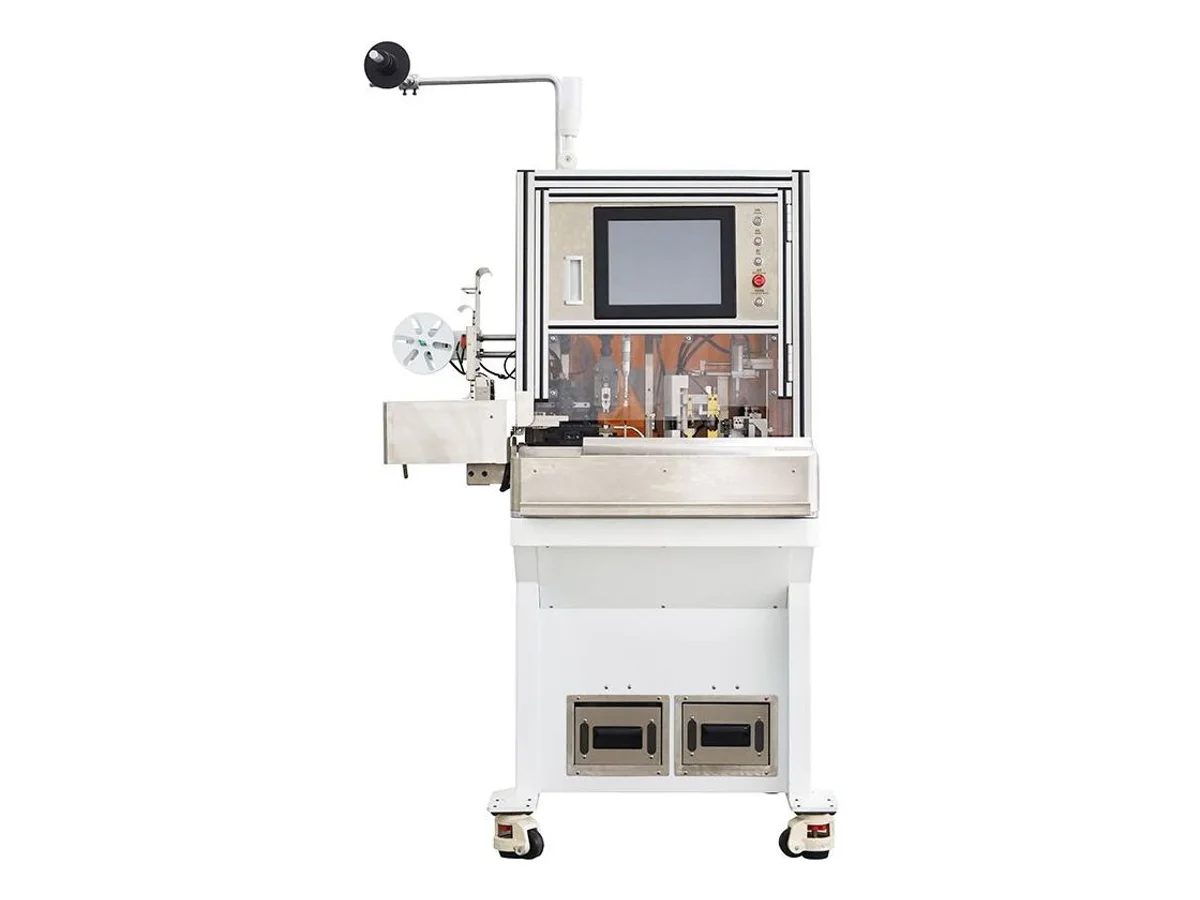
The WM-3140FS strips two pre-cut wires side by side, slides a rubber seal onto each and crimps both terminals in a 3-second cycle — 2 pieces per cycle, 1,000–1,200 sealed wires per hour from one operator. It covers 0.2–2.5 mm² wire and seals up to φ 10 × 10, with a listed cutting error of ±0.02 mm; seal seating is verified separately on the sample. The press delivers 3 T through a switchable 30 / 40 mm stroke; the floor-standing frame measures 125 × 123 × 179 cm at 450 kg and runs on 0.5–0.7 MPa shop air.
Specifications
| Function | Double-wire end stripping, rubber seal insertion and terminal crimping (semi-automatic) |
|---|---|
| Applicable wire size | 0.2 – 2.5 mm² |
| Suitable wire seals | φ ≤ 10 × 10 |
| Stripping length | 0 – 10.0 mm |
| Cutting error | ±0.02 mm |
| Crimping capacity | 3 T |
| Stroke | 30 / 40 mm |
| Output | 1,000 – 1,200 pcs/h |
| Cycle time | 2 pcs / 3 s |
| Air source | 0.5 – 0.7 MPa |
| Power supply | AC 110 / 220 V, 50/60 Hz |
| Dimensions | 125 × 123 × 179 cm |
| Weight | 450 kg |
| HS Code | 8463.90 (common reference — final classification confirmed by your customs broker) |
| Certification | CE (certificate provided with shipment) |
Key features
- Two wires per machine cycle — stripping, seal fitting and crimping run in parallel lanes with one operator
- Seal goes on before the crimp, so the rubber sits captive under the terminal barrel the way sealed connector systems are designed to be assembled
- The specified cutting error is ±0.02 mm; stripping repeatability and seal seating depth are checked separately using your wire, seal and terminal
- 3 T press with the stroke switchable between 30 and 40 mm to suit different applicator standards
- Touchscreen setting of stripping, insertion and crimping parameters at the machine
What it processes
- Automotive waterproof connector leads — engine bay, chassis and lighting harnesses built on wire seals
- Sensor and actuator pigtails of 0.2–2.5 mm² that must pass sealed-connector pull and leak requirements
- Any double-up batch job where one operator currently feeds a seal station and a crimping press separately
Suited for: double-wire production of sealed, waterproof terminations — 0.2–2.5 mm² wire with rubber seals up to φ 10 × 10, the construction behind automotive and outdoor-equipment connectors. Not suited for: everyday unsealed crimping (the WM-382 servo dual-end crimping machine runs plain AWG 14–28 leads with no seal station) or tubular ferrule work — for that, pick the WM-3116 bootlace ferrule crimping machine, which strips, twists and crimps 0.3–16 mm² tube terminals. For jobs outside the 0.2–2.5 mm² range, request a sample review rather than converting conductor area to outside diameter. For suitable inner conductors of sheathed cable, compare the single-lane WM-3222 semi-automatic strip, seal and crimp machine instead — it is sized in outside diameter (φ1.0–4.0 mm), takes sheathed cable down to a 22 mm stripping length and runs 1,200–1,500 pieces per hour from one station. If your presses and applicators are already in place and the only missing step is the seal, the WM-3221 semi-automatic wire seal insertion machine does seal fitting alone — seals up to 9 × 10 mm with a 0.6–3.0 mm bore on wire of 1–3.5 mm outer diameter, at up to 50 insertions per minute.
Send 2–3 meters of wire plus your seals and terminals — we program both lanes, run your combination on camera and return the video with sample leads before you order.
The 2 pcs / 3 s machine cycle and 1,000–1,200 pcs/h output are different references. Operator loading, unloading and inspection affect accepted hourly production.
Engineering knowledge
Choose and troubleshoot this process
- Ferrule Crimping: Strip Length, Terminal Fit and Chain-Fed vs Loose-Fed MachinesCompare chain-fed and loose-ferrule crimping machines by wire preparation, changeover, terminal fit and batch output. Check WM-3243 and WM-3246 specifications.
- How to Choose a Terminal Crimping MachineChoose a terminal crimping machine by terminal presentation, wire range, applicator standard, required process steps, inspection method and production mix.
- Terminal Back-Out After Housing Insertion: What to CheckFind why a crimped terminal backs out of its connector housing. Check part matching, orientation, crimp shape, primary retention and secondary locks.
WM-3140FS — common questions
Which seals and terminals can it run?
Wire seals up to φ 10 × 10 and reel terminals within the 3 T press window at 30 or 40 mm stroke. Seal feeding is the part that decides yes or no, so send us a bag of your seals with matching terminals and wire — we send back a feeding-and-crimping video plus sample leads before you order.
What does the double-wire layout actually save?
The specification lists 2 wires per 3-second machine cycle and a separate output of 1,000 to 1,200 sealed and crimped leads per hour. Loading and unloading affect accepted production. Combining stripping, seal insertion and crimping reduces transfers between separate stations.
How do I know the seal is not damaged during stripping and insertion?
The specification lists cutting error of ±0.02 mm. Stripping repeatability and seal seating are assessed separately on your wire, seal and terminal combination. We photograph the seated seals and return samples for your agreed leak or salt-spray acceptance test before ordering.
Related machines in Crimping & Connector Assembly
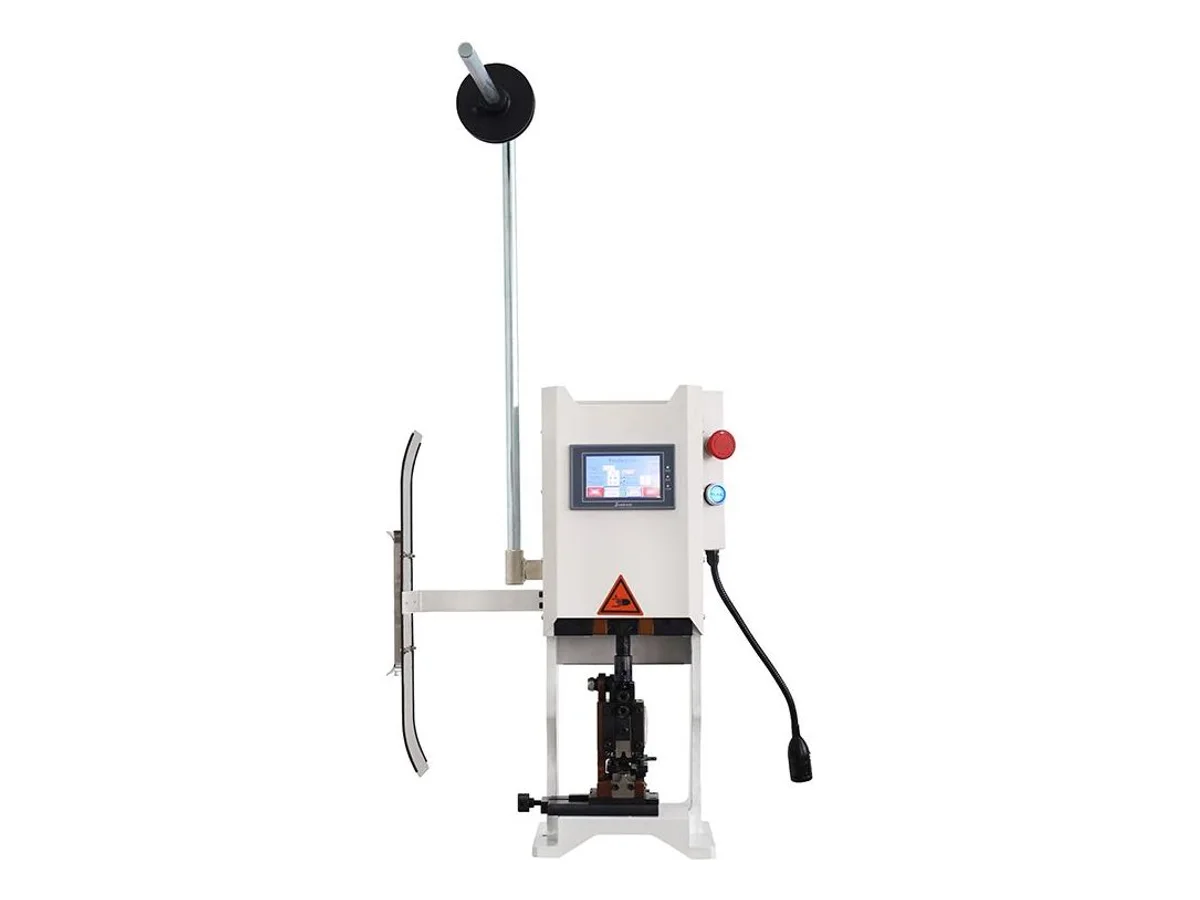
2-Ton Servo Terminal Crimping Machine, 20 kN Touchscreen Bench Press
Model WM-3102S
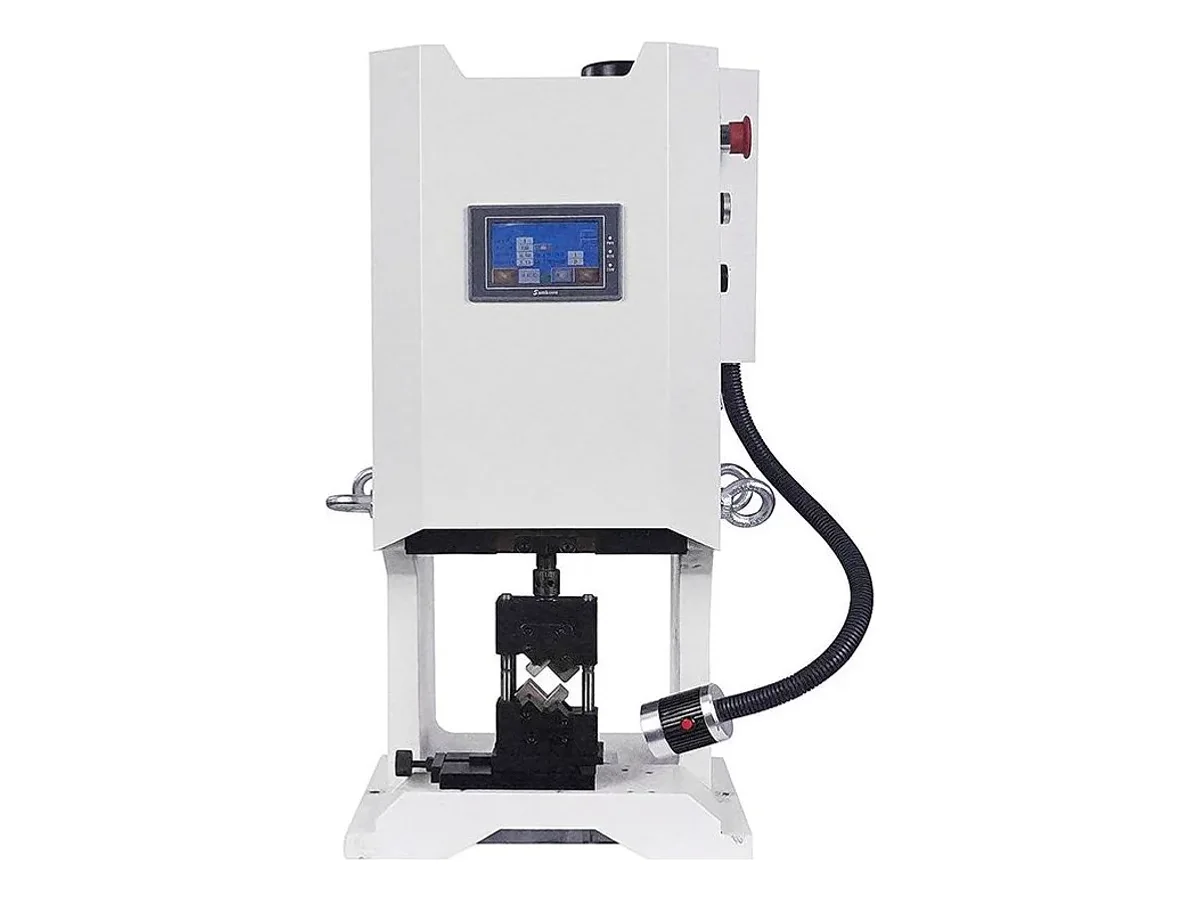
10-Ton Servo Terminal Crimping Machine, 100 kN Bench Press
Model WM-3110T
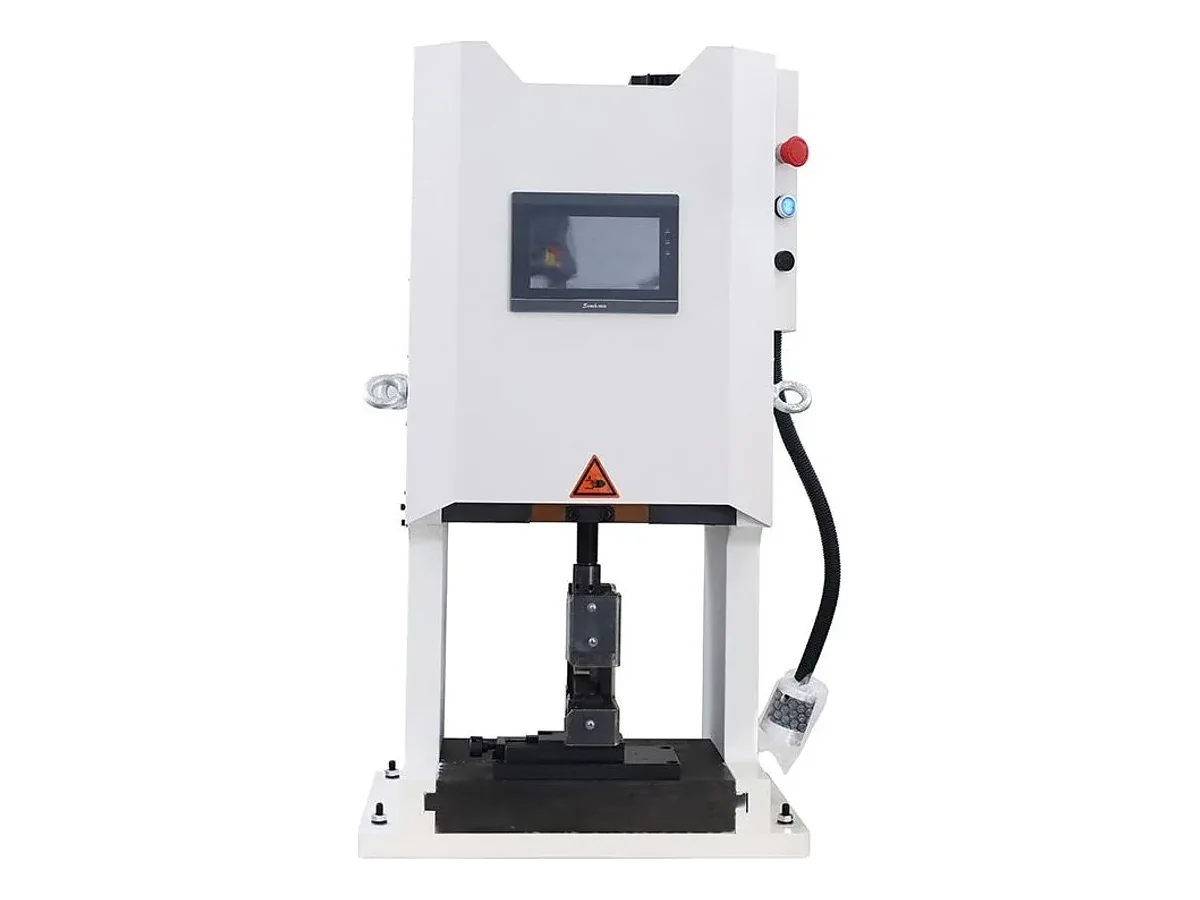
20-Ton Servo Cable Lug Crimping Machine, 200 kN and 40 mm Stroke
Model WM-3120T