Ultrasonic Rope and Webbing Cutting Machine with Custom Shape Dies, 1–80 mm WM-574
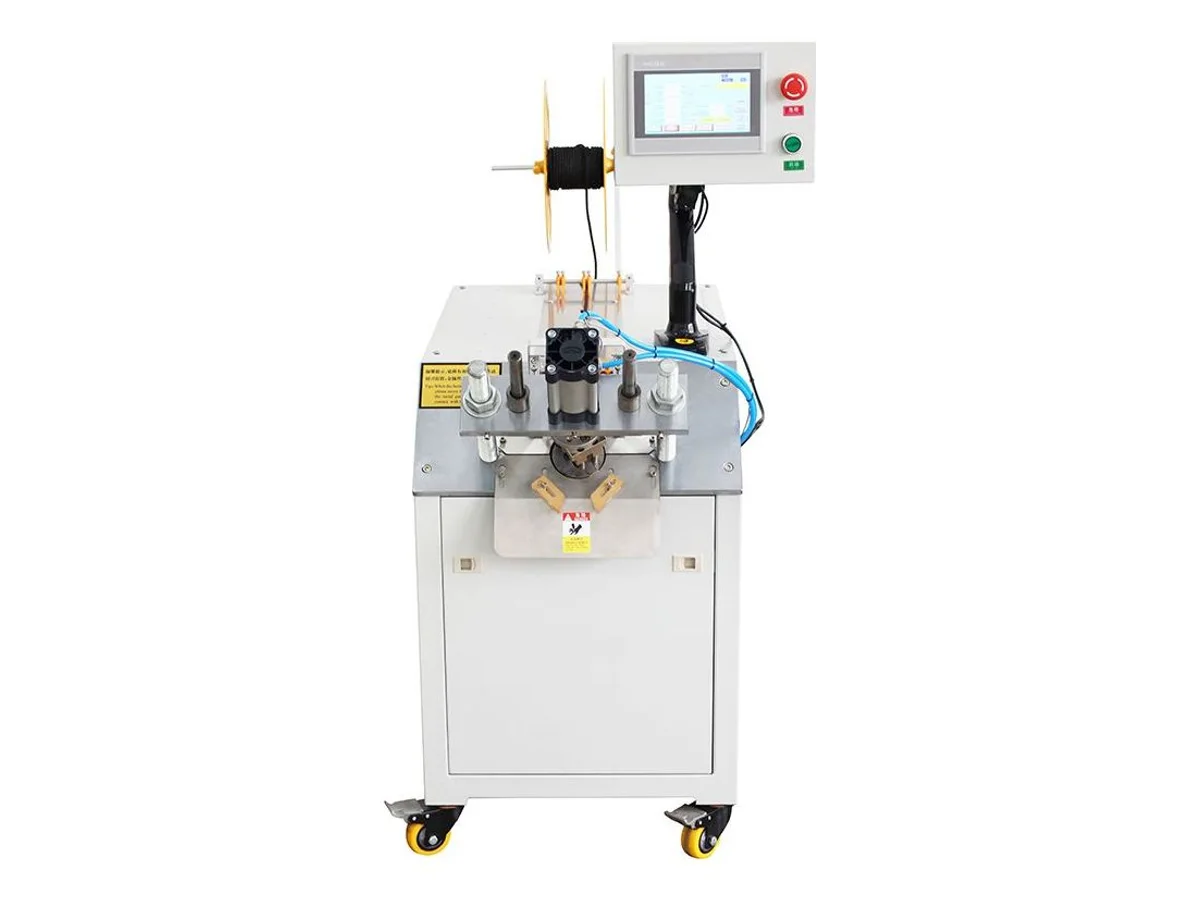
The WM-574 cuts rope, ribbon, elastic cord and webbing with a 15 kHz ultrasonic blade that fuses compatible synthetic fibers as it cuts to form a soft sealed edge. It handles material 1–80 mm wide and 0.1–8 mm thick in nylon, PP, polyester, spandex and cotton, with material compatibility confirmed by a trial. Pure cotton does not fuse; blends depend on their thermoplastic content. It cuts programmed lengths from 1 to 10,000 mm with length deviation within 0.3%, and feeds several strands side by side in one pass. Interchangeable cutting dies — plus an optional rotary knife unit — produce shaped cuts such as trapezoids and parallelograms. Throughput reaches 80–130 pieces per minute on short cuts. The floor unit measures 980 × 500 × 1,000 mm, weighs 120 kg and runs on 220 V at 2,600 W with compressed air at 0.6 MPa or above.
Specifications
| Function | Ultrasonic cutting of rope, webbing and ribbon |
|---|---|
| Cutting material | Nylon, PP (polypropylene), cotton, polyester, spandex, etc. |
| Cutting types | Rope, printed ribbon, elastic cord, epoxy webbing, hook-and-loop (Velcro) tape, velvet ribbon, etc. |
| Cutting length | 1 – 10,000 mm |
| Cutting width | 1 – 80 mm |
| Cutting thickness | 0.1 – 8 mm |
| Length deviation | Within 0.3% |
| Ultrasonic frequency | 15 kHz |
| Capacity | 80–130 pcs/min (cut length ≤100 mm); 40–90 pcs/min (100–300 mm); 20–70 pcs/min (300–500 mm) |
| Power | 2,600 W |
| Voltage | 220 V |
| Air source | ≥ 0.6 MPa |
| Weight | 120 kg |
| Dimensions | 980 × 500 × 1,000 mm |
| HS Code | 8515.80 (common reference — final classification confirmed by your customs broker) |
| Certification | CE (certificate provided with shipment) |
Key features
- Ultrasonic cutting can fuse compatible thermoplastic fibers into a soft sealed edge; natural fibers and blends require separate edge-quality checks
- Interchangeable cutting dies produce shaped cuts to your drawing; an optional rotary knife unit adds trapezoid and parallelogram cuts
- Adjustable guide clamps feed multiple strands side by side in one pass, with length deviation held within 0.3%
- Ultrasonic cutting uses no separate continuously heated blade; energy use depends on the material and working cycle
- Free sample test — send your rope or webbing, we cut it on this machine and send you the video before you order
What it processes
- Drawstrings, elastic cords and rope cut-to-length for bags, garments and outdoor gear
- Printed ribbon, velvet ribbon and gift ribbon for packaging and apparel trim
- Hook-and-loop straps and webbing pieces for footwear, medical braces and fastening products
Suited for: rope, cord, ribbon, elastic and webbing from 1 to 80 mm wide and up to 8 mm thick — nylon, polypropylene, polyester, spandex and cotton — wherever the cut end requires a soft sealed edge on compatible synthetic fibers, or where shaped die cuts are required. Pure cotton does not fuse, and blended materials depend on thermoplastic content; confirm the actual cut and fraying behavior in a material trial. Not suited for: rope thicker than 8 mm — for heavy cord up to Φ20 mm, pick the WM-561 hot rope cutting machine — nor webbing wider than 80 mm, which belongs on the WM-572A hot knife webbing cutting machine covering widths up to 220 mm. Shaped patches with punched holes are a different job again: this machine chops one piece per cycle with a die pressed against stopped material, so for a repeating profile cut without stopping the web — hook-and-loop pads with mounting holes, for instance — the WM-589 rotary die tape roll cutting machine rolls an engraved die against the running tape, up to 150 mm wide, though it cuts cold and leaves the edge unfused.
Ribbon and webbing constructions vary, so we prove the edge on your material: send 2–3 meters of your actual rope, ribbon or webbing and we run it on this machine on video — the actual cut faces and edge condition on camera — before you commit to the order.
Engineering knowledge
Choose and troubleshoot this process
- Webbing and Tape Cutting: Cold, Hot Knife or Ultrasonic?Compare cold, hot-knife and ultrasonic cutting for webbing and tape by fiber composition, edge finish, stretch, width and cut shape.
- How to Choose a Tube and Pipe Cutting MachineChoose tube and pipe cutting equipment by material, diameter, wall thickness, rigidity, cut mechanism, tolerance, end quality and chip-control requirements.
- Spiral Cutting vs Rotary Cut-Off for Silicone TubeA 5 mm silicone-tube inquiry shows why a rotating blade does not prove spiral-cut capability. Define the helix, support and sample acceptance.
WM-574 — common questions
How is ultrasonic cutting different from hot-knife cutting?
A hot knife can melt compatible synthetic material and leave a stiff fused ridge on the cut face. The ultrasonic blade vibrates at 15 kHz and can fuse compatible thermoplastic fibers under pressure as it cuts, forming a soft sealed end — which matters for ribbon, elastic and webbing that ends up in consumer products. For thick rope above this machine's 8 mm range, hot cutting is still the right tool — see the WM-561 below.
Can the WM-574 cut shapes, not just straight ends?
Yes — the cutting die is interchangeable and can be made to your drawing for special-shaped cuts. For angled geometry such as trapezoids and parallelograms, an optional rotary knife device is available. Tell us the shape you need with your inquiry and we confirm the die design before ordering.
Can it cut several strands at the same time?
Yes. The guide clamps on the feed table are adjustable and hold multiple strands side by side, so narrow cord and ribbon run in parallel through the same cut — with length deviation still held within 0.3%.
Related machines in Tube, Tape & Material Cutting
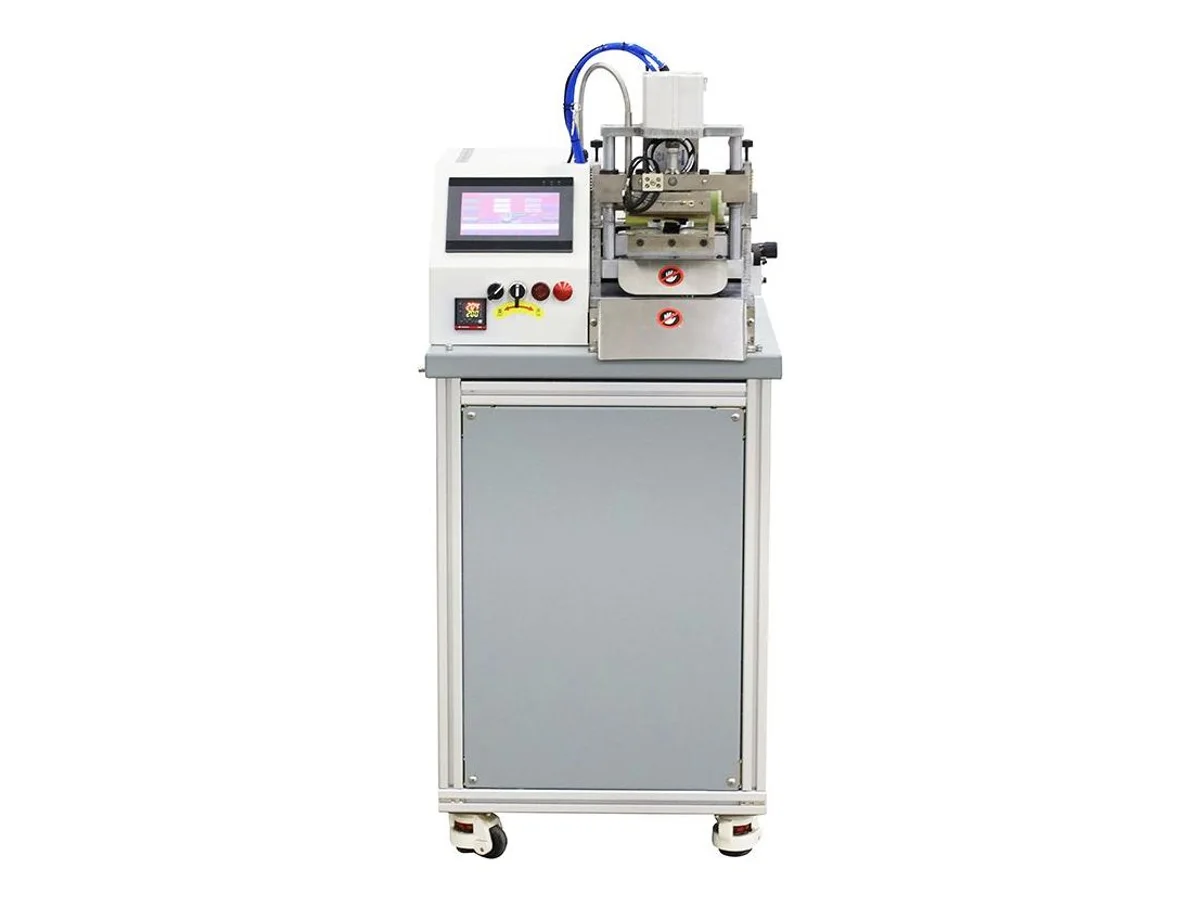
Rotary Blade Webbing Shape Cutting Machine with 45–135° Angle Adjustment
Model WM-566
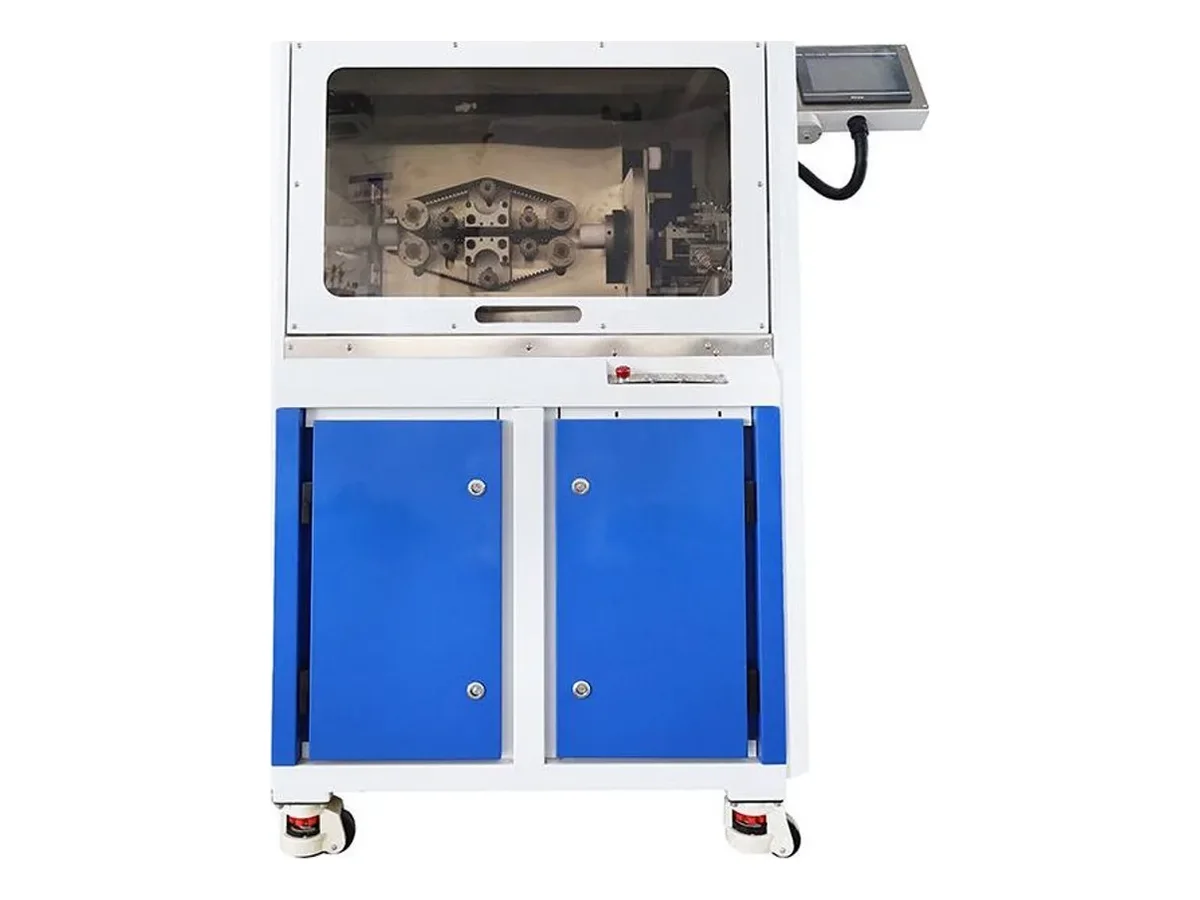
Automatic Braided Sleeve Taping and Cutting Machine for OD 8–30 mm Tube
Model WM-177
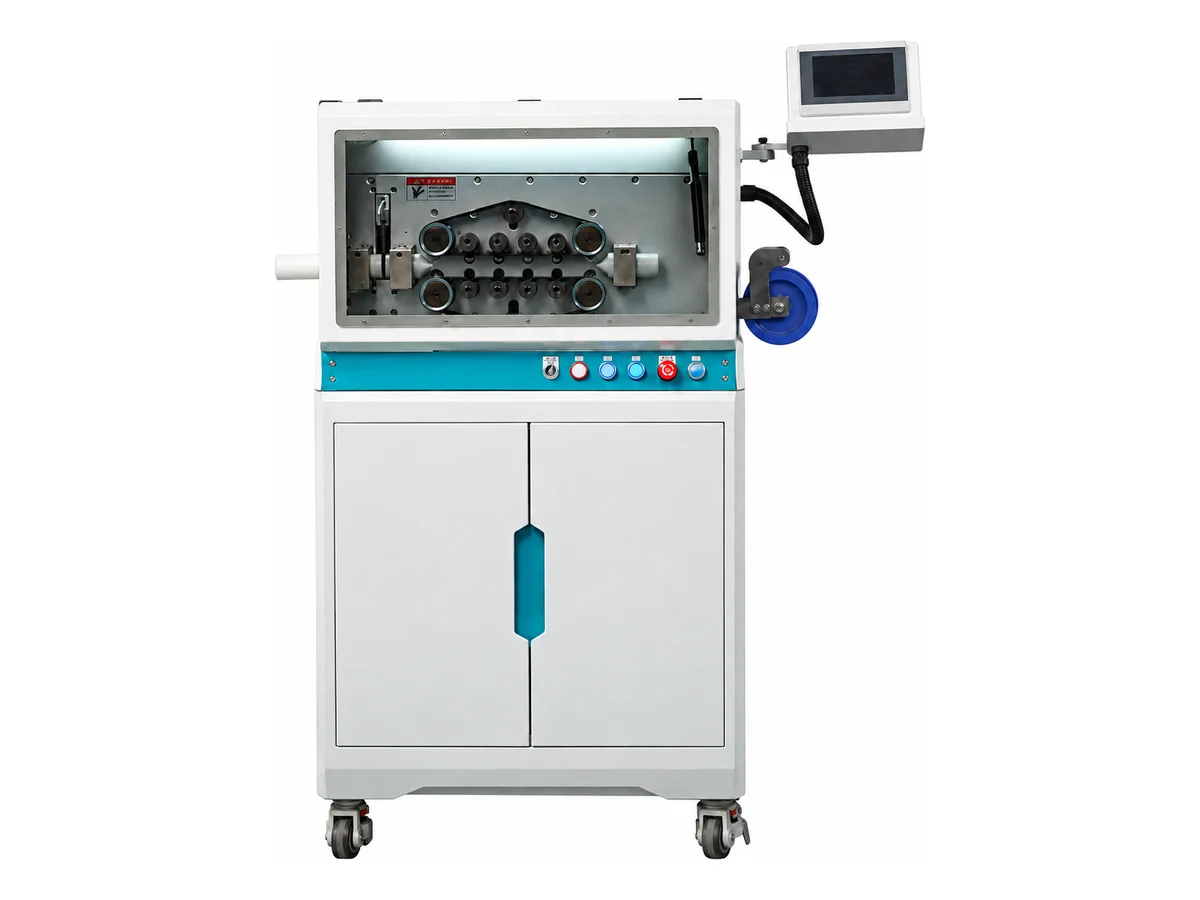
Automatic Belt-Feed Plastic Tube Cutting Machine, 4–30 mm
Model WM-606